South Korea recorded 28 heat-illness patients visiting emergency rooms nationwide on Sunday, marking an 82% drop from the previous day [1].
The decline suggests a break in the intense summer heat that has strained the national healthcare system and caused dozens of deaths since May.
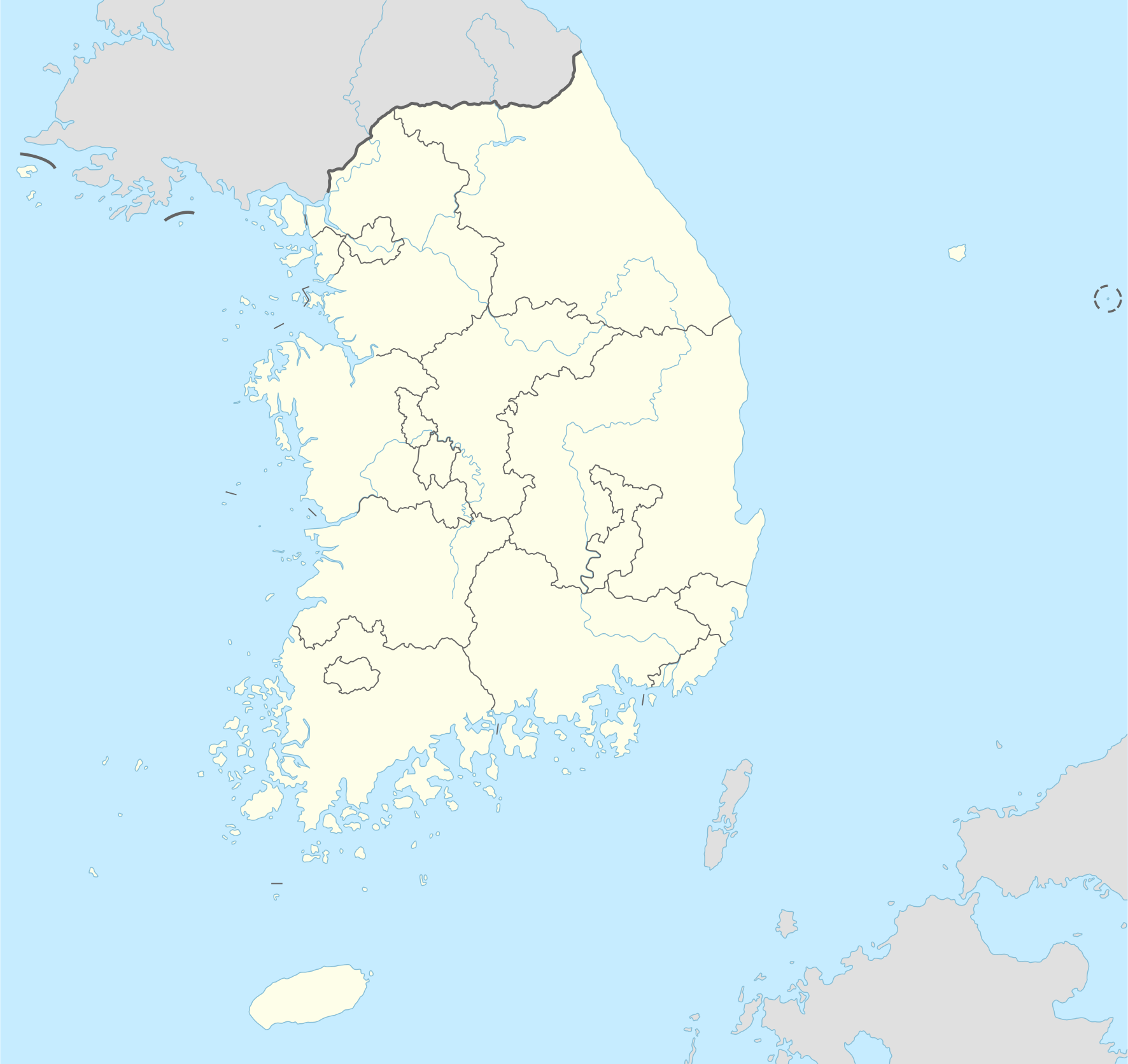
Health officials said that the number of patients fell into the double digits for the first time since the start of August [3]. On Sunday, Gyeonggi province recorded six cases, Seoul had five, and Chungbuk had four [1]. There were no deaths reported for the day [1].
The sharp decrease follows a period of extreme volatility. On Saturday, reporting on the number of patients varied between 131 [4] and 154 [1]. The 82% decrease is calculated based on the higher figure of 154 cases [1].
Weather patterns are shifting as the region passes the traditional start of autumn. The easing of the heat wave is credited with the reduction in emergency visits, according to reporter Kwon Min-seok [2].
Despite the recent dip, the overall toll for the season remains significant. Since May 15, 2026, South Korea has seen 3,320 cumulative heat-illness cases [1]. During that same period, 30 people died [1].
"As the momentum of the heat wave breaks after the start of autumn, it appears that the damage from heat-related illnesses is calming down somewhat," Kwon said [2].
“Nationwide heat-illness cases fell to 28, an 82% drop from the previous day.”
The sudden drop in emergency visits coincides with 'Ipchu,' the traditional onset of autumn in the lunar calendar. While the immediate pressure on emergency departments has eased, the cumulative death toll of 30 people underscores the severity of the 2026 summer heat wave and the ongoing vulnerability of the population to extreme temperature spikes.


