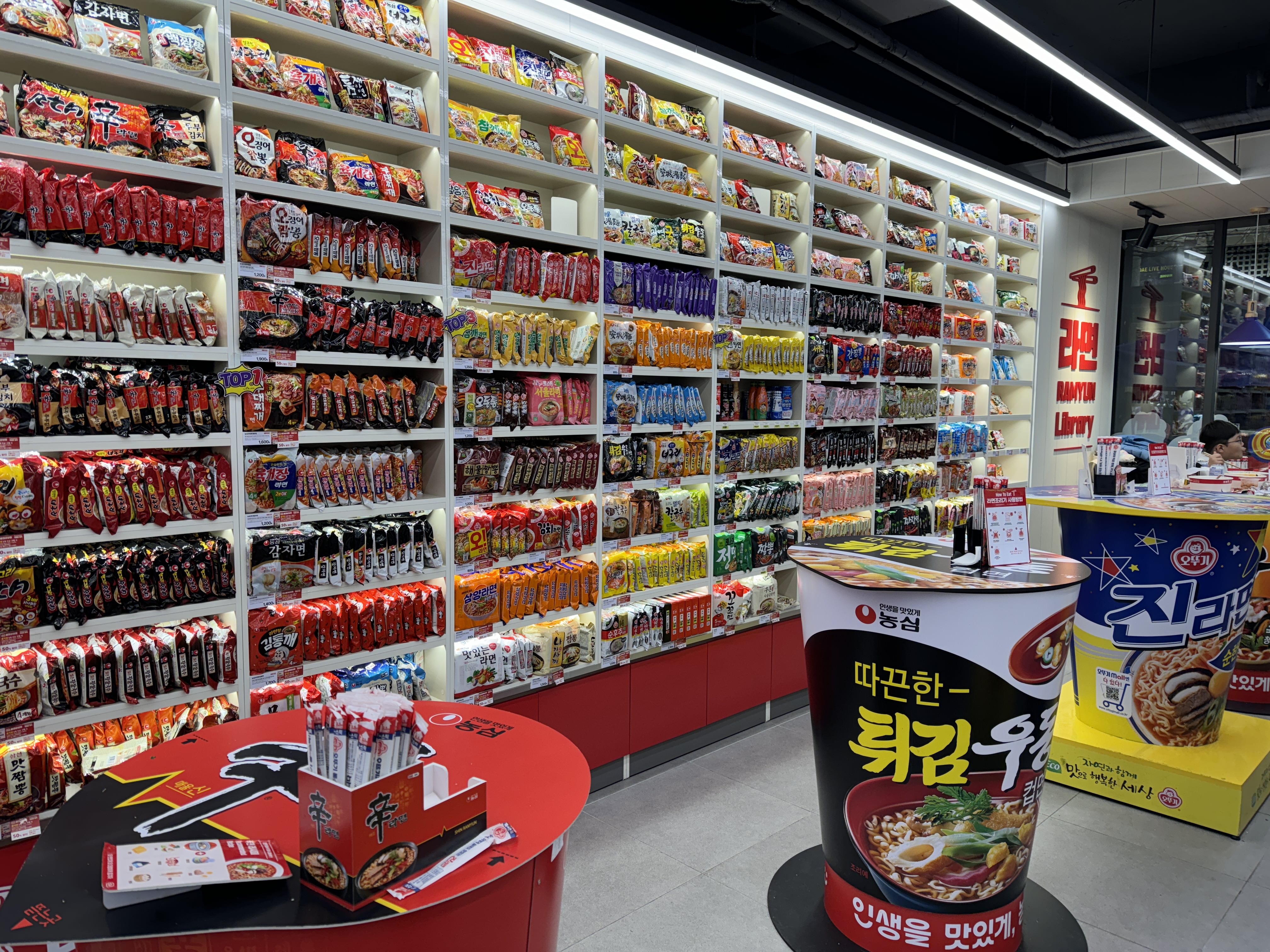
South Korean business operators are increasingly installing robots and self-service kiosks to maintain operations amid a severe national labor shortage [1].
This shift reflects a critical demographic crisis where a shrinking workforce cannot meet the demands of the service industry. As labor costs rise and available workers disappear, automation has moved from a luxury to a necessity for small business survival [1, 2].
Retailers are deploying these technologies across various sectors, including unmanned coffee shops, ramen eateries, and flower outlets [1, 3]. The scale of this transition is significant; by 2024, an estimated 9,000 unstaffed cafes and ramen shops had opened across the country [3].
The reliance on robotics is driven by the intersection of an aging population and a historically low birth rate [1, 2]. These factors have created a vacuum in the entry-level labor market, making it difficult for shop owners to find staff for routine service tasks [2, 3].
Demographic data highlights the urgency of the situation. The current population of South Korea stands at 51.8 million [2]. However, projections indicate a steep decline, with the population expected to drop to 36.2 million by 2072 [2].
This population collapse suggests that the trend toward unmanned retail is not a temporary phase but a long-term adaptation. Business owners are opting for kiosks and robotic arms to handle transactions and food preparation, reducing the need for human intervention entirely [1, 3].
“Automation has moved from a luxury to a necessity for small business survival.”
The rapid adoption of service robots in South Korea serves as a real-world case study for other nations facing demographic decline. The transition to unmanned retail suggests that when labor costs exceed the cost of technology, businesses will prioritize automation over human employment to remain viable, potentially permanently altering the nature of urban commerce and social interaction.

'%2F%3E%0A%20%20%20%20%3Crect%20width%3D'1600'%20height%3D'900'%20fill%3D'url(%23v)'%2F%3E%0A%20%20%20%20%3Cg%20opacity%3D'0.08'%20fill%3D'%23ffffff'%3E%0A%20%20%20%20%20%20%3Ccircle%20cx%3D'1420'%20cy%3D'180'%20r%3D'220'%2F%3E%0A%20%20%20%20%20%20%3Ccircle%20cx%3D'1500'%20cy%3D'760'%20r%3D'120'%2F%3E%0A%20%20%20%20%3C%2Fg%3E%0A%20%20%20%20%3Cline%20x1%3D'80'%20y1%3D'172'%20x2%3D'220'%20y2%3D'172'%20stroke%3D'%23ffffff'%20stroke-width%3D'3'%20stroke-opacity%3D'0.6'%2F%3E%0A%20%20%20%20%3Ctext%20x%3D'80'%20y%3D'140'%20font-family%3D'Inter%2C%20-apple-system%2C%20Helvetica%2C%20sans-serif'%20font-weight%3D'700'%20font-size%3D'28'%20fill%3D'%23ffffff'%20letter-spacing%3D'6'%3EHANNA%20%C2%B7%20NEWS%3C%2Ftext%3E%0A%20%20%20%20%3Ctext%20x%3D'80'%20y%3D'230'%20font-family%3D'Inter%2C%20-apple-system%2C%20Helvetica%2C%20sans-serif'%20font-weight%3D'600'%20font-size%3D'40'%20fill%3D'%23ffffffb3'%20letter-spacing%3D'4'%3EWORLD%3C%2Ftext%3E%0A%20%20%20%20%3Ctext%20x%3D'80'%20y%3D'622'%20font-family%3D'Playfair%20Display%2C%20Georgia%2C%20serif'%20font-weight%3D'800'%20font-size%3D'86'%20fill%3D'%23ffffff'%20letter-spacing%3D'-1'%3EComic-Con%20India%20Founder%3C%2Ftext%3E%3Ctext%20x%3D'80'%20y%3D'721'%20font-family%3D'Playfair%20Display%2C%20Georgia%2C%20serif'%20font-weight%3D'800'%20font-size%3D'86'%20fill%3D'%23ffffff'%20letter-spacing%3D'-1'%3EDiscusses%20Anime%20and%20Manga%3C%2Ftext%3E%3Ctext%20x%3D'80'%20y%3D'820'%20font-family%3D'Playfair%20Display%2C%20Georgia%2C%20serif'%20font-weight%3D'800'%20font-size%3D'86'%20fill%3D'%23ffffff'%20letter-spacing%3D'-1'%3EBoom%3C%2Ftext%3E%0A%20%20%20%20%3Ctext%20x%3D'80'%20y%3D'870'%20font-family%3D'Inter%2C%20-apple-system%2C%20Helvetica%2C%20sans-serif'%20font-weight%3D'500'%20font-size%3D'22'%20fill%3D'%23ffffff66'%20letter-spacing%3D'2'%3Enews.hanna-ai.com%3C%2Ftext%3E%0A%20%20%3C%2Fsvg%3E)