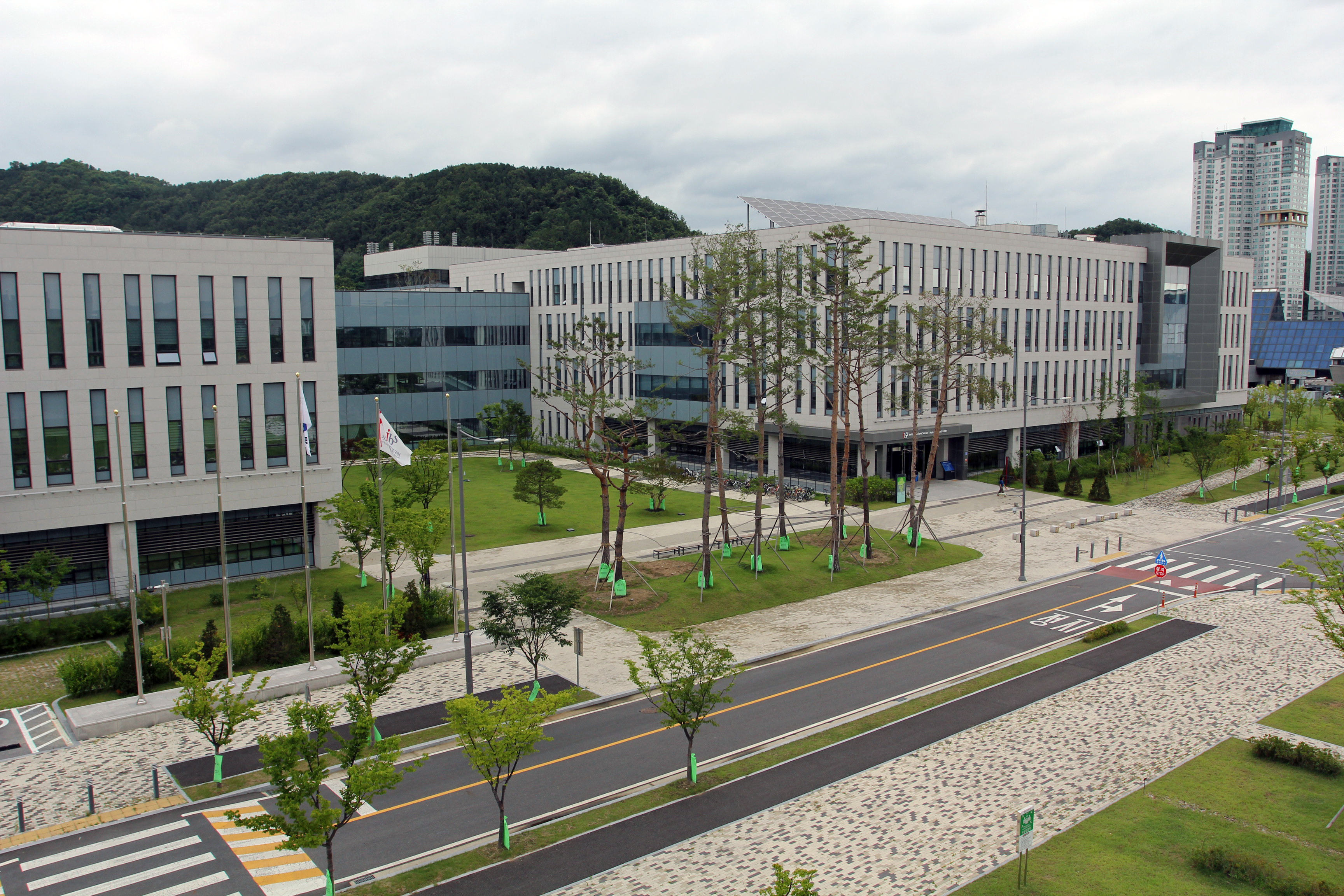
A team of South Korean scientists has unveiled a fully automated roll‑to‑roll manufacturing line that can produce large‑area visible‑light metalenses at a rate of 300 metalenses per second[1].
The breakthrough matters because it shifts metasurface flat‑optics technology from experimental proof‑of‑concepts toward scalable industrial production, opening pathways for lighter, thinner cameras and sensors in consumer and automotive markets.
The platform, built on a continuous‑film process, deposits nanostructured patterns onto flexible substrates that act as lenses. By synchronizing coating, patterning and inspection stages, the system achieves the quoted speed while maintaining sub‑wavelength accuracy across square‑meter‑scale areas. The roll‑to‑roll line can fabricate visible‑light metalenses at industrial speeds.
The effort is led by Professor Gyoujin Cho and Professor Inki Kim of Sungkyunkwan University, in partnership with Professor Junsuk Rho of POSTECH. All three said the collaboration combined expertise in nanophotonics, materials engineering and high‑throughput manufacturing to overcome the bottlenecks that have limited flat‑optics commercialization.
Metalenses are flat, nanostructured surfaces that focus light without the bulk of traditional curved glass lenses. Prior demonstrations required painstaking electron‑beam lithography on small chips, a process unsuitable for mass production. The new roll‑to‑roll approach applies the same metasurface principles to a continuous roll, enabling large‑area devices that can be cut to size for diverse applications.
Potential commercial uses include compact imaging modules for smartphones, lidar sensors for autonomous vehicles, and biomedical diagnostic scanners that benefit from the reduced weight and size of flat optics. Flat‑optics devices promise lighter, thinner imaging systems for next‑generation cameras.
The researchers plan to refine the line’s yield and explore partnerships with optics manufacturers. By demonstrating reliable, high‑speed production, the team hopes to attract investment that will scale the technology beyond academic pilots.
If the platform proves economically viable, it could usher in a new class of optical components that combine high performance with low material cost, reshaping supply chains that have long relied on glass‑based lenses.
**What this means**
The roll‑to‑roll metalens line signals a pivotal step toward commercializing flat‑optics, a field that promises to replace bulky traditional lenses with ultra‑thin alternatives. By achieving industrial‑scale throughput, South Korean researchers have addressed a key barrier—manufacturability—that has kept metasurface devices on the laboratory shelf. The development could accelerate adoption in consumer electronics, automotive sensing and medical imaging, potentially redefining how optical systems are designed and produced.
“The roll‑to‑roll line can fabricate visible‑light metalenses at industrial speeds.”
The roll‑to‑roll metalens line signals a pivotal step toward commercializing flat‑optics, a field that promises to replace bulky traditional lenses with ultra‑thin alternatives. By achieving industrial‑scale throughput, South Korean researchers have addressed a key barrier—manufacturability—that has kept metasurface devices on the laboratory shelf. The development could accelerate adoption in consumer electronics, automotive sensing and medical imaging, potentially redefining how optical systems are designed and produced.

'%2F%3E%0A%20%20%20%20%3Crect%20width%3D'1600'%20height%3D'900'%20fill%3D'url(%23v)'%2F%3E%0A%20%20%20%20%3Cg%20opacity%3D'0.08'%20fill%3D'%23ffffff'%3E%0A%20%20%20%20%20%20%3Ccircle%20cx%3D'1420'%20cy%3D'180'%20r%3D'220'%2F%3E%0A%20%20%20%20%20%20%3Ccircle%20cx%3D'1500'%20cy%3D'760'%20r%3D'120'%2F%3E%0A%20%20%20%20%3C%2Fg%3E%0A%20%20%20%20%3Cline%20x1%3D'80'%20y1%3D'172'%20x2%3D'220'%20y2%3D'172'%20stroke%3D'%23ffffff'%20stroke-width%3D'3'%20stroke-opacity%3D'0.6'%2F%3E%0A%20%20%20%20%3Ctext%20x%3D'80'%20y%3D'140'%20font-family%3D'Inter%2C%20-apple-system%2C%20Helvetica%2C%20sans-serif'%20font-weight%3D'700'%20font-size%3D'28'%20fill%3D'%23ffffff'%20letter-spacing%3D'6'%3EHANNA%20%C2%B7%20NEWS%3C%2Ftext%3E%0A%20%20%20%20%3Ctext%20x%3D'80'%20y%3D'230'%20font-family%3D'Inter%2C%20-apple-system%2C%20Helvetica%2C%20sans-serif'%20font-weight%3D'600'%20font-size%3D'40'%20fill%3D'%23ffffffb3'%20letter-spacing%3D'4'%3ESCIENCE%3C%2Ftext%3E%0A%20%20%20%20%3Ctext%20x%3D'80'%20y%3D'622'%20font-family%3D'Playfair%20Display%2C%20Georgia%2C%20serif'%20font-weight%3D'800'%20font-size%3D'86'%20fill%3D'%23ffffff'%20letter-spacing%3D'-1'%3EProf.%20Alim-Louis%20Benabid%3C%2Ftext%3E%3Ctext%20x%3D'80'%20y%3D'721'%20font-family%3D'Playfair%20Display%2C%20Georgia%2C%20serif'%20font-weight%3D'800'%20font-size%3D'86'%20fill%3D'%23ffffff'%20letter-spacing%3D'-1'%3ERecounts%20Discovery%20of%20Deep%3C%2Ftext%3E%3Ctext%20x%3D'80'%20y%3D'820'%20font-family%3D'Playfair%20Display%2C%20Georgia%2C%20serif'%20font-weight%3D'800'%20font-size%3D'86'%20fill%3D'%23ffffff'%20letter-spacing%3D'-1'%3EBrain%20Stimulation%3C%2Ftext%3E%0A%20%20%20%20%3Ctext%20x%3D'80'%20y%3D'870'%20font-family%3D'Inter%2C%20-apple-system%2C%20Helvetica%2C%20sans-serif'%20font-weight%3D'500'%20font-size%3D'22'%20fill%3D'%23ffffff66'%20letter-spacing%3D'2'%3Enews.hanna-ai.com%3C%2Ftext%3E%0A%20%20%3C%2Fsvg%3E)