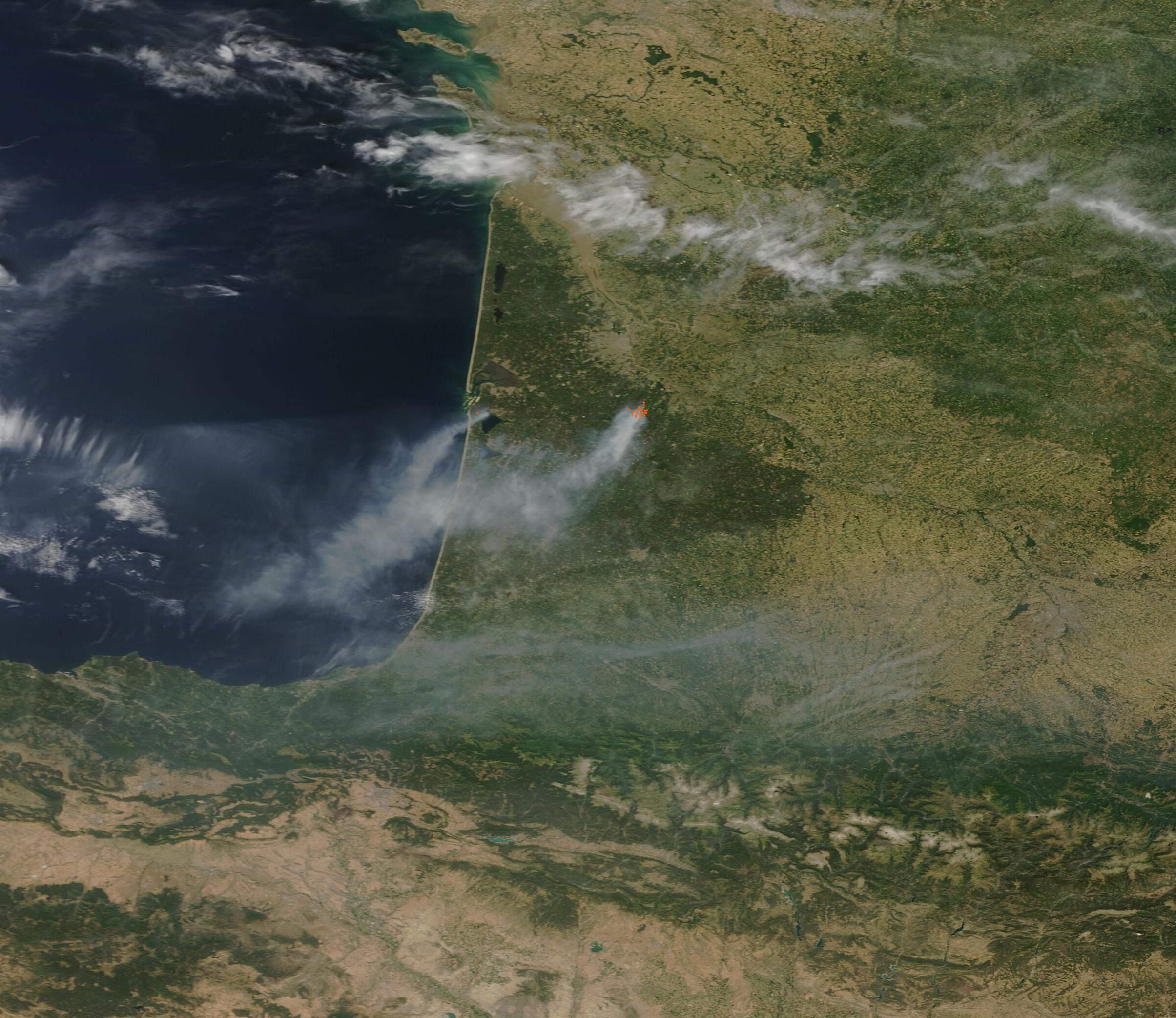
Wildfires across France, Spain, and Italy have forced more than 250,000 residents to evacuate their homes this weekend [1, 2].
The scale of the displacement underscores the increasing vulnerability of Mediterranean regions to extreme heat and rapid-onset environmental disasters. As temperatures climb, the ability of emergency services to contain blazes is being tested by tinderbox conditions.
Emergency crews are battling fires that have already burned thousands of hectares across the region. The crisis has claimed the life of one firefighter [3]. In France, significant activity has been reported around the Arcachon Bay, while other blazes continue to threaten residential areas in Spain and Sicily.
Officials said the fires were fueled by successive heat waves that pushed temperatures above 45°C [4]. These conditions have dried out vegetation, allowing flames to spread rapidly across the landscape, making containment efforts difficult for ground crews.
Evacuations have been widespread as authorities attempt to move civilians out of the path of the advancing fire lines. The displacement of over 250,000 people [1, 2] represents one of the more significant emergency mobilizations in the region this season.
Firefighters continue to work in hazardous conditions to protect urban centers and critical infrastructure. Coordination between the three affected nations remains a priority as they manage the cross-border nature of the environmental crisis.
“Wildfires across France, Spain, and Italy have forced more than 250,000 residents to evacuate.”
The simultaneous outbreak of high-intensity fires across three European nations suggests a systemic failure of regional climate resilience. When temperatures exceed 45°C, traditional firefighting methods become less effective as the environment itself becomes a fuel source, necessitating larger-scale evacuations and increasing the risk to first responders.


