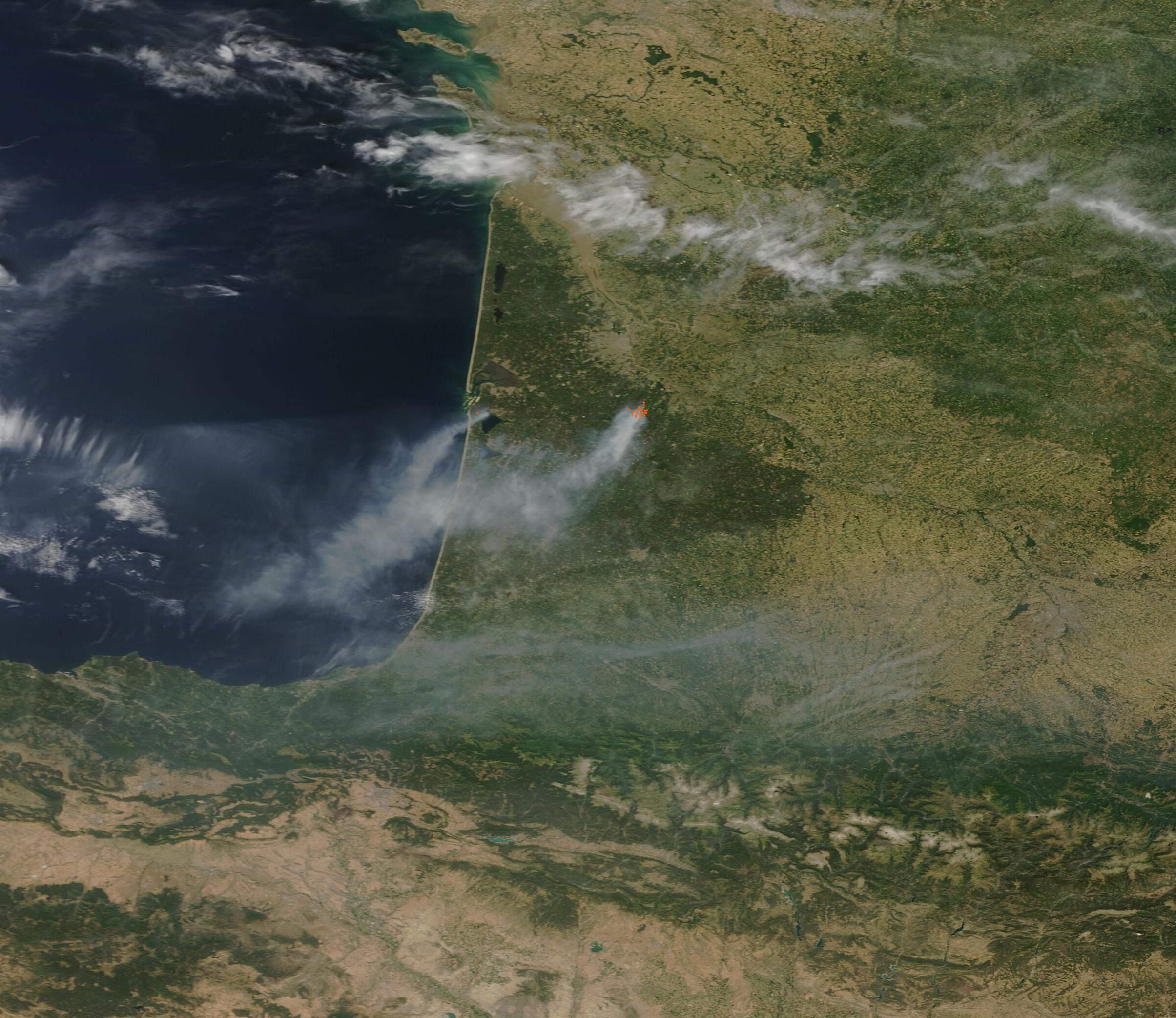
French firefighters are battling an intense wildfire in Lège‑Cap‑Ferret that has forced thousands of residents and tourists to evacuate their homes [1, 2].
The scale of the disaster highlights the increasing vulnerability of European forests to extreme weather. Record heatwaves and dry conditions have created a volatile environment where strong winds can rapidly spread flames across vast tracts of land [1, 4].
The blaze began Wednesday, July 22, in the Landes de Gascogne forest near the Arcachon Basin [1, 2]. This region, located west of Bordeaux, has seen three separate blazes emerge as crews struggle to contain the perimeter [5].
Reports on the extent of the damage vary. AFP said that more than 2,000 hectares of forest have burned [1], while Gulf News cited a lower figure of 800 hectares [6]. The discrepancy likely reflects the rapidly shifting front of the fire as firefighters work to establish containment lines.
Evacuation orders have been issued to protect civilians in the path of the smoke and flames. AFP said that nearly 12,000 residents and tourists were evacuated [1], while The Irish Times reported the number as more than 10,000 [2].
Hundreds of firefighters have been deployed to the scene to combat the flames [4]. The effort involves coordinated ground operations, and aerial support to prevent the fire from reaching more populated residential areas near the coast.
Local authorities continue to monitor wind patterns, as the dry undergrowth remains highly flammable. The combination of record heat and low humidity has made the forest an ideal fuel source for the current fires [1, 4].
“Nearly 12,000 residents and tourists were evacuated”
The intensity of the Lège‑Cap‑Ferret fire underscores a growing trend of 'mega-fires' in Southern Europe. As record heatwaves become more frequent, the traditional firefighting window is shrinking, forcing France to shift its strategy toward larger-scale preemptive evacuations and more aggressive forest management to protect coastal tourism hubs.


