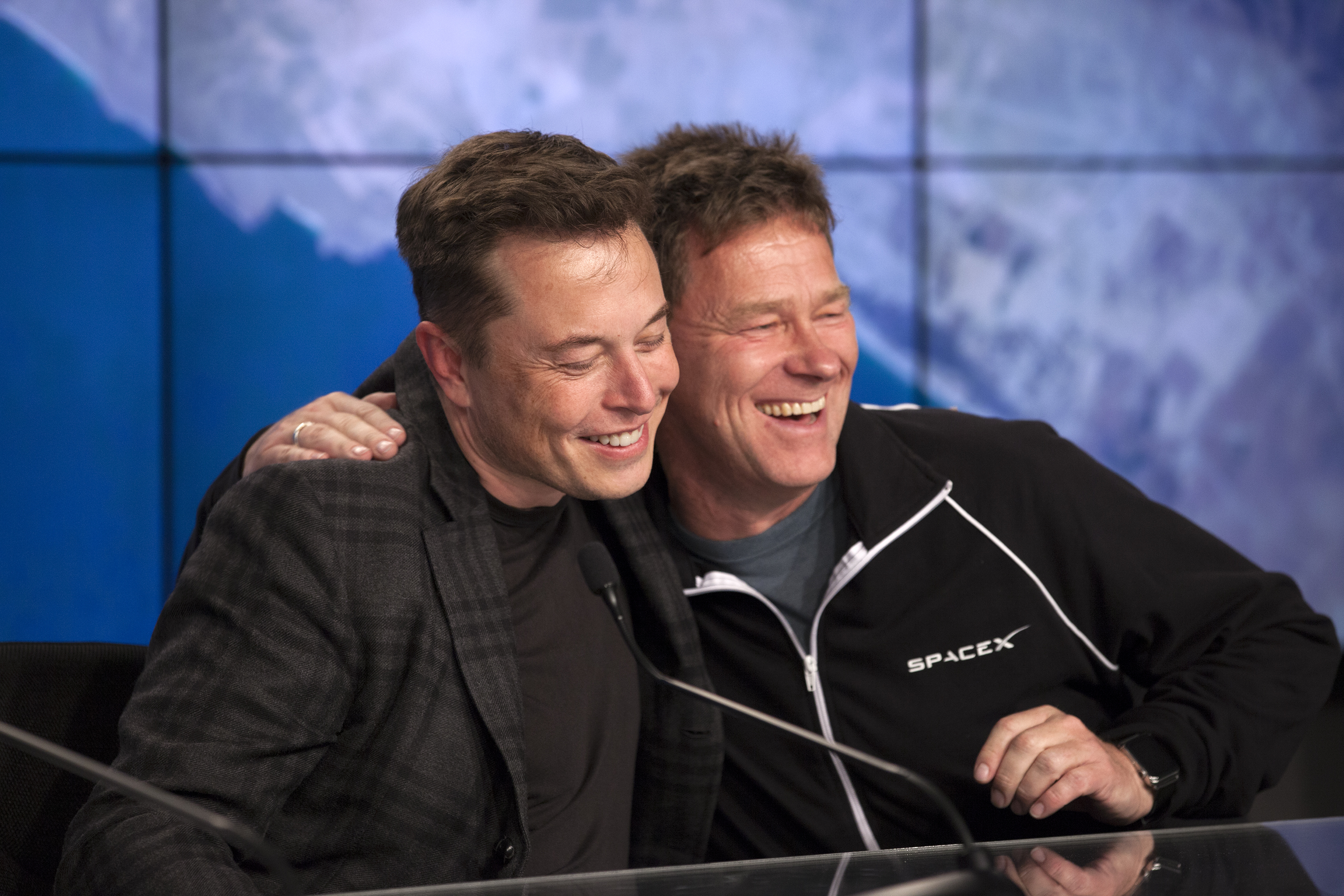
SpaceX launched the largest initial public offering in history on Friday, seeking $75 billion in proceeds [1].
The move signals a strategic pivot toward artificial intelligence infrastructure, leveraging the company's launch capabilities to support massive computing needs. By transitioning to a public entity, SpaceX aims to capitalize on investor appetite for AI and solidify Elon Musk's dominance across space, social media, and machine learning.
To raise the capital, the company offered 555.6 million shares at a price of $135 per share [1]. This pricing results in a market valuation of approximately $1.77 trillion [1]. The financial windfall is expected to push the net worth of Elon Musk to approximately $1 trillion [6], making him the first person to reach that milestone on paper.
Industry analysts said the IPO is as much about AI as it is about rockets. The capital infusion is intended to fund AI and launch ambitions, positioning the company as a critical layer of the AI ecosystem [3]. This shift comes as the broader AI sector faces volatile economics; for example, OpenAI reportedly sustains a $1.22 loss for every $1 of revenue it generates [4].
Investment flows across the sector are expected to accelerate following the IPO. Projected AI-related investments across SpaceX, OpenAI, and Anthropic are estimated at $240 billion [4]. This surge in capital is likely to trigger intense price competition as these firms vie for hardware and energy resources to power their models.
While SpaceX has traditionally focused on orbital transport and Starlink, the public offering allows it to scale its AI infrastructure rapidly. The company intends to use the funds to integrate its launch services with the growing demand for AI-driven data processing, and satellite-based intelligence [3].
“SpaceX launched the largest initial public offering in history”
The SpaceX IPO represents a convergence of aerospace and artificial intelligence. By securing a $1.77 trillion valuation, Musk is not merely funding rockets but is building a financial fortress to compete with other AI giants. The massive capital injection into the sector—totaling $240 billion across key players—indicates that the AI race is shifting from software development to the physical infrastructure and launch capabilities required to sustain global AI networks.


'%2F%3E%0A%20%20%20%20%3Crect%20width%3D'1600'%20height%3D'900'%20fill%3D'url(%23v)'%2F%3E%0A%20%20%20%20%3Cg%20opacity%3D'0.08'%20fill%3D'%23ffffff'%3E%0A%20%20%20%20%20%20%3Ccircle%20cx%3D'1420'%20cy%3D'180'%20r%3D'220'%2F%3E%0A%20%20%20%20%20%20%3Ccircle%20cx%3D'1500'%20cy%3D'760'%20r%3D'120'%2F%3E%0A%20%20%20%20%3C%2Fg%3E%0A%20%20%20%20%3Cline%20x1%3D'80'%20y1%3D'172'%20x2%3D'220'%20y2%3D'172'%20stroke%3D'%23ffffff'%20stroke-width%3D'3'%20stroke-opacity%3D'0.6'%2F%3E%0A%20%20%20%20%3Ctext%20x%3D'80'%20y%3D'140'%20font-family%3D'Inter%2C%20-apple-system%2C%20Helvetica%2C%20sans-serif'%20font-weight%3D'700'%20font-size%3D'28'%20fill%3D'%23ffffff'%20letter-spacing%3D'6'%3EHANNA%20%C2%B7%20NEWS%3C%2Ftext%3E%0A%20%20%20%20%3Ctext%20x%3D'80'%20y%3D'230'%20font-family%3D'Inter%2C%20-apple-system%2C%20Helvetica%2C%20sans-serif'%20font-weight%3D'600'%20font-size%3D'40'%20fill%3D'%23ffffffb3'%20letter-spacing%3D'4'%3EWORLD%3C%2Ftext%3E%0A%20%20%20%20%3Ctext%20x%3D'80'%20y%3D'694'%20font-family%3D'Playfair%20Display%2C%20Georgia%2C%20serif'%20font-weight%3D'800'%20font-size%3D'110'%20fill%3D'%23ffffff'%20letter-spacing%3D'-1'%3EKOSPI%20Surges%20After%20US-Iran%3C%2Ftext%3E%3Ctext%20x%3D'80'%20y%3D'820'%20font-family%3D'Playfair%20Display%2C%20Georgia%2C%20serif'%20font-weight%3D'800'%20font-size%3D'110'%20fill%3D'%23ffffff'%20letter-spacing%3D'-1'%3ECease-Fire%20Agreement%3C%2Ftext%3E%0A%20%20%20%20%3Ctext%20x%3D'80'%20y%3D'870'%20font-family%3D'Inter%2C%20-apple-system%2C%20Helvetica%2C%20sans-serif'%20font-weight%3D'500'%20font-size%3D'22'%20fill%3D'%23ffffff66'%20letter-spacing%3D'2'%3Enews.hanna-ai.com%3C%2Ftext%3E%0A%20%20%3C%2Fsvg%3E)