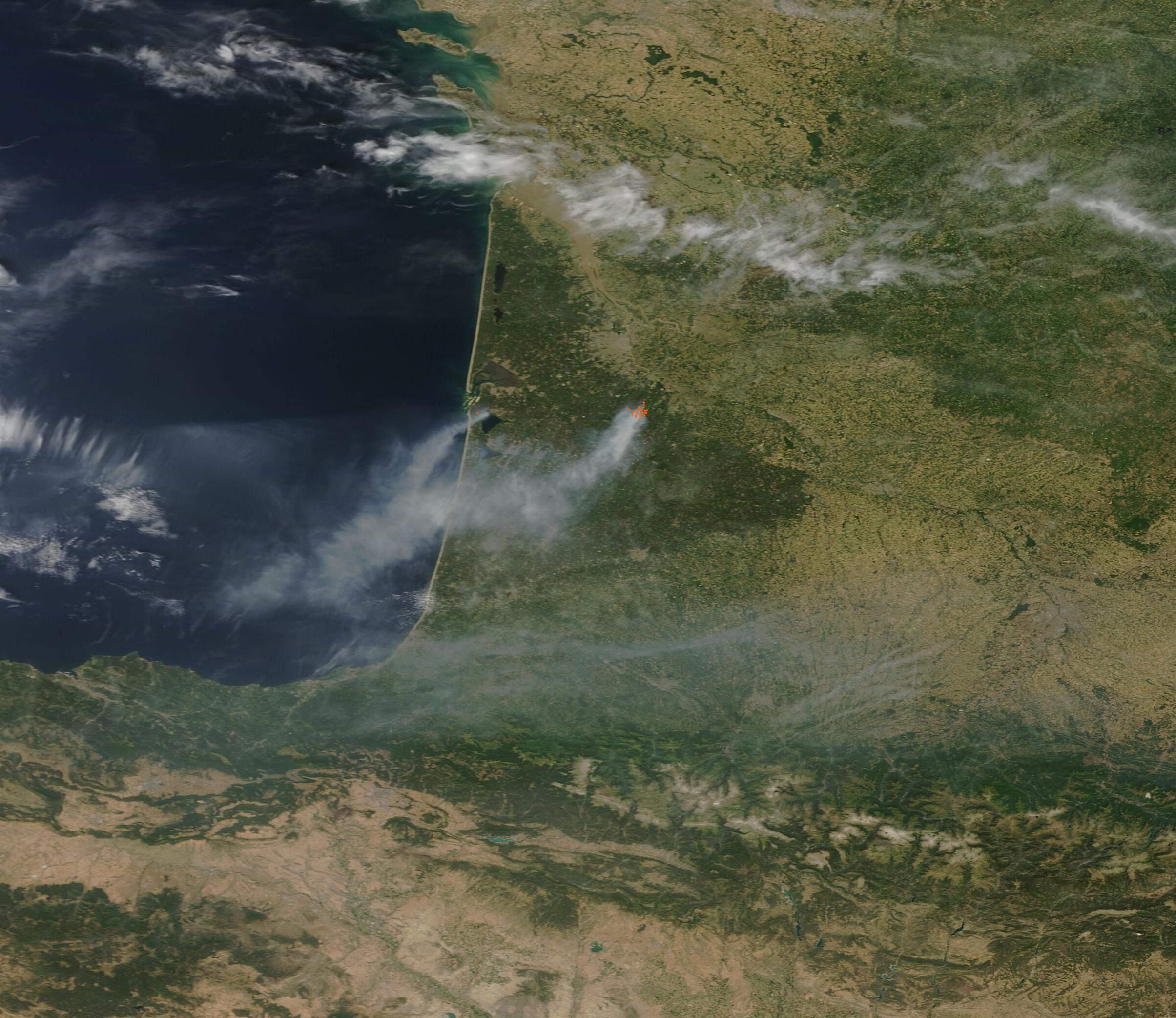
Firefighters in Spain and France are battling raging wildfires that have forced massive evacuations across central Spain and southwestern France [1].
These blazes represent a critical emergency as intense heatwaves create tinder-box conditions, allowing fires to spread rapidly through extremely dry fuel [4]. The scale of the displacement and the speed of the fire's growth have strained emergency resources across two nations.
In Spain, the fires have impacted the Guadalajara province, where a single wildfire has burned 32,000 hectares [5]. Other affected areas include the towns of Cenicientos in the Madrid region, and Cuevas de Cañart in the north-east [2]. The situation near Madrid has proven particularly dire, with a Spanish government spokesperson saying the blaze is "beyond the capacity" of firefighters to contain [7].
Spanish Prime Minister Pedro Sánchez said the country is facing "complex hours" ahead [6]. To combat the flames, Spain has deployed its military emergency unit to support civilian firefighting operations [1].
Across the border in France, wildfires have struck the southwestern towns of Saumos and Sainte-Hélène [2]. The displacement figures vary across reports. One BBC report indicates that 270,000 people have been displaced across both Spain and France [1]. Other reports suggest 200,000 people were forced to flee in France alone [3], while a separate BBC update cited more than 60,000 evacuations [2].
The fires occurred on Friday, July 22, 2024 [5]. Emergency crews continue to work under high-risk conditions as the region remains gripped by intense heat [2].
“"We are facing 'complex hours' ahead."”
The simultaneous eruption of uncontrollable fires in Spain and France highlights the increasing volatility of Southern Europe's climate. When blazes exceed the capacity of national firefighting services—requiring military intervention—it suggests that traditional emergency infrastructure may be insufficient for the frequency and intensity of heat-driven wildfires in the region.


