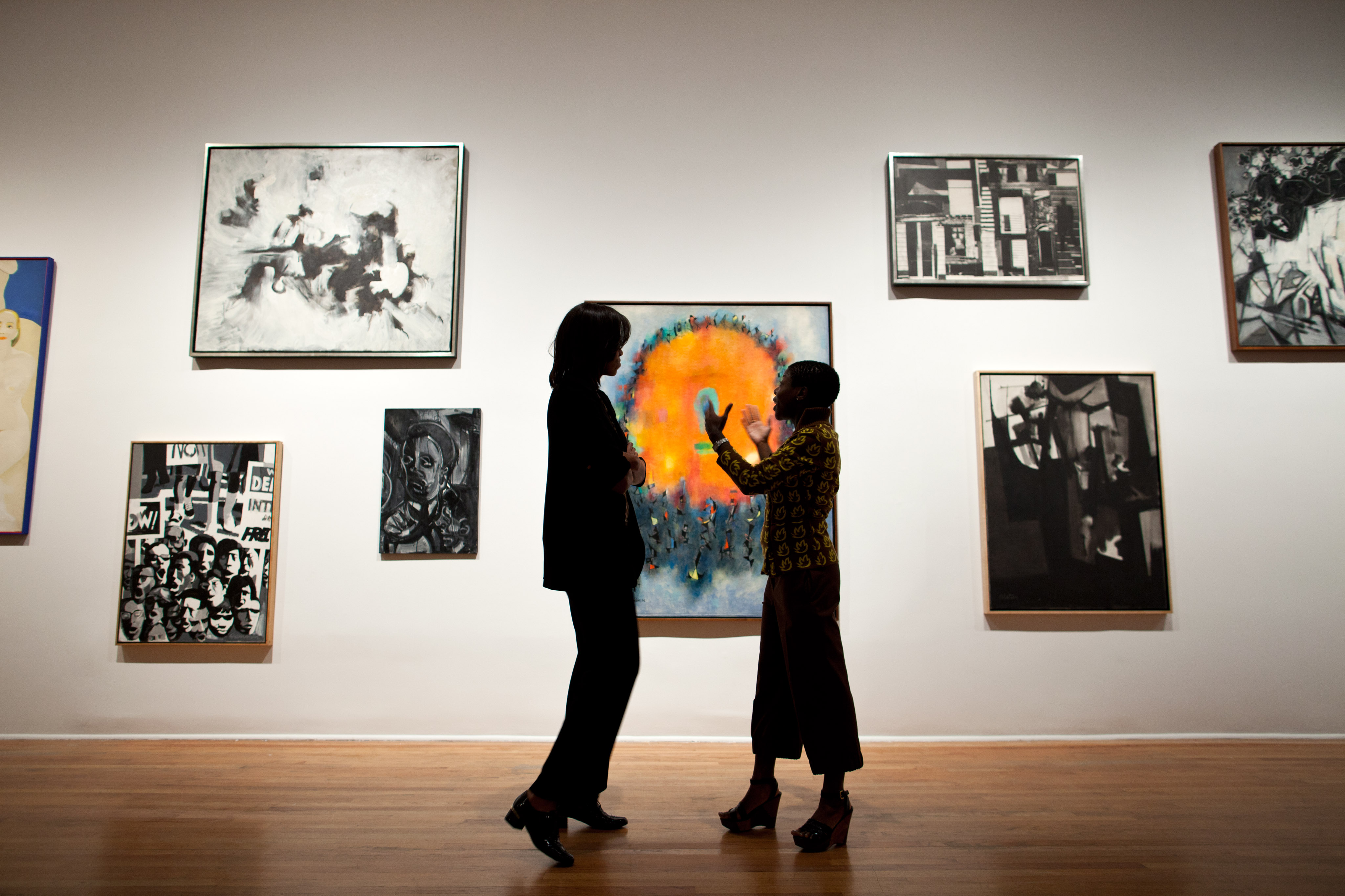
The Studio Museum in Harlem has reopened in a new building on the 125th Street corridor following a closure of seven years [1].
The reopening marks a significant shift for the institution as it seeks to establish an internationally recognized home for Black artists. By anchoring the historic Harlem corridor, the museum aims to serve as a vital civic institution that champions new scholarships, and cultural dialogue.
Thelma Golden, the museum's chief curator and a director at the Ford Foundation, said the launch of this new era occurred alongside Asahi Pompey, the global head of the Office of Corporate Engagement [2]. Golden said the museum's mission is to preserve Black culture through its expanded facilities and programming [2].
The facility closed for seven years [1] before returning to public service in fall 2023 [1]. This period of closure allowed for the construction of a new building designed to better accommodate the museum's growing role in the global art community [2].
Located in the heart of Harlem, the museum is positioned to be more than a gallery. It is designed to function as a hub for artistic development, and a site for the preservation of Black art history in the U.S. [3]. The institution intends to use its new space to foster deeper connections between artists and the community [2].
The museum's return to the 125th Street corridor is intended to reinforce the neighborhood's status as a center for Black intellectual and creative life [2]. By integrating scholarships and educational outreach into its new operational model, the museum seeks to ensure that the next generation of Black artists has the resources, and visibility required to succeed on a global stage [2].
“The Studio Museum in Harlem has reopened in a new building on the 125th Street corridor.”
The reopening of the Studio Museum in Harlem represents a strategic expansion of the infrastructure dedicated to Black art in the U.S. By moving into a larger, purpose-built facility, the institution transitions from a local gallery to a global anchor for Black cultural preservation, potentially increasing the economic and cultural visibility of the 125th Street corridor.


'%2F%3E%0A%20%20%20%20%3Crect%20width%3D'1600'%20height%3D'900'%20fill%3D'url(%23v)'%2F%3E%0A%20%20%20%20%3Cg%20opacity%3D'0.08'%20fill%3D'%23ffffff'%3E%0A%20%20%20%20%20%20%3Ccircle%20cx%3D'1420'%20cy%3D'180'%20r%3D'220'%2F%3E%0A%20%20%20%20%20%20%3Ccircle%20cx%3D'1500'%20cy%3D'760'%20r%3D'120'%2F%3E%0A%20%20%20%20%3C%2Fg%3E%0A%20%20%20%20%3Cline%20x1%3D'80'%20y1%3D'172'%20x2%3D'220'%20y2%3D'172'%20stroke%3D'%23ffffff'%20stroke-width%3D'3'%20stroke-opacity%3D'0.6'%2F%3E%0A%20%20%20%20%3Ctext%20x%3D'80'%20y%3D'140'%20font-family%3D'Inter%2C%20-apple-system%2C%20Helvetica%2C%20sans-serif'%20font-weight%3D'700'%20font-size%3D'28'%20fill%3D'%23ffffff'%20letter-spacing%3D'6'%3EHANNA%20%C2%B7%20NEWS%3C%2Ftext%3E%0A%20%20%20%20%3Ctext%20x%3D'80'%20y%3D'230'%20font-family%3D'Inter%2C%20-apple-system%2C%20Helvetica%2C%20sans-serif'%20font-weight%3D'600'%20font-size%3D'40'%20fill%3D'%23ffffffb3'%20letter-spacing%3D'4'%3EBUSINESS%3C%2Ftext%3E%0A%20%20%20%20%3Ctext%20x%3D'80'%20y%3D'622'%20font-family%3D'Playfair%20Display%2C%20Georgia%2C%20serif'%20font-weight%3D'800'%20font-size%3D'86'%20fill%3D'%23ffffff'%20letter-spacing%3D'-1'%3EFormer%20US%20Federal%20Reserve%3C%2Ftext%3E%3Ctext%20x%3D'80'%20y%3D'721'%20font-family%3D'Playfair%20Display%2C%20Georgia%2C%20serif'%20font-weight%3D'800'%20font-size%3D'86'%20fill%3D'%23ffffff'%20letter-spacing%3D'-1'%3EChair%20Alan%20Greenspan%20Dies%20at%3C%2Ftext%3E%3Ctext%20x%3D'80'%20y%3D'820'%20font-family%3D'Playfair%20Display%2C%20Georgia%2C%20serif'%20font-weight%3D'800'%20font-size%3D'86'%20fill%3D'%23ffffff'%20letter-spacing%3D'-1'%3E100%3C%2Ftext%3E%0A%20%20%20%20%3Ctext%20x%3D'80'%20y%3D'870'%20font-family%3D'Inter%2C%20-apple-system%2C%20Helvetica%2C%20sans-serif'%20font-weight%3D'500'%20font-size%3D'22'%20fill%3D'%23ffffff66'%20letter-spacing%3D'2'%3Enews.hanna-ai.com%3C%2Ftext%3E%0A%20%20%3C%2Fsvg%3E)