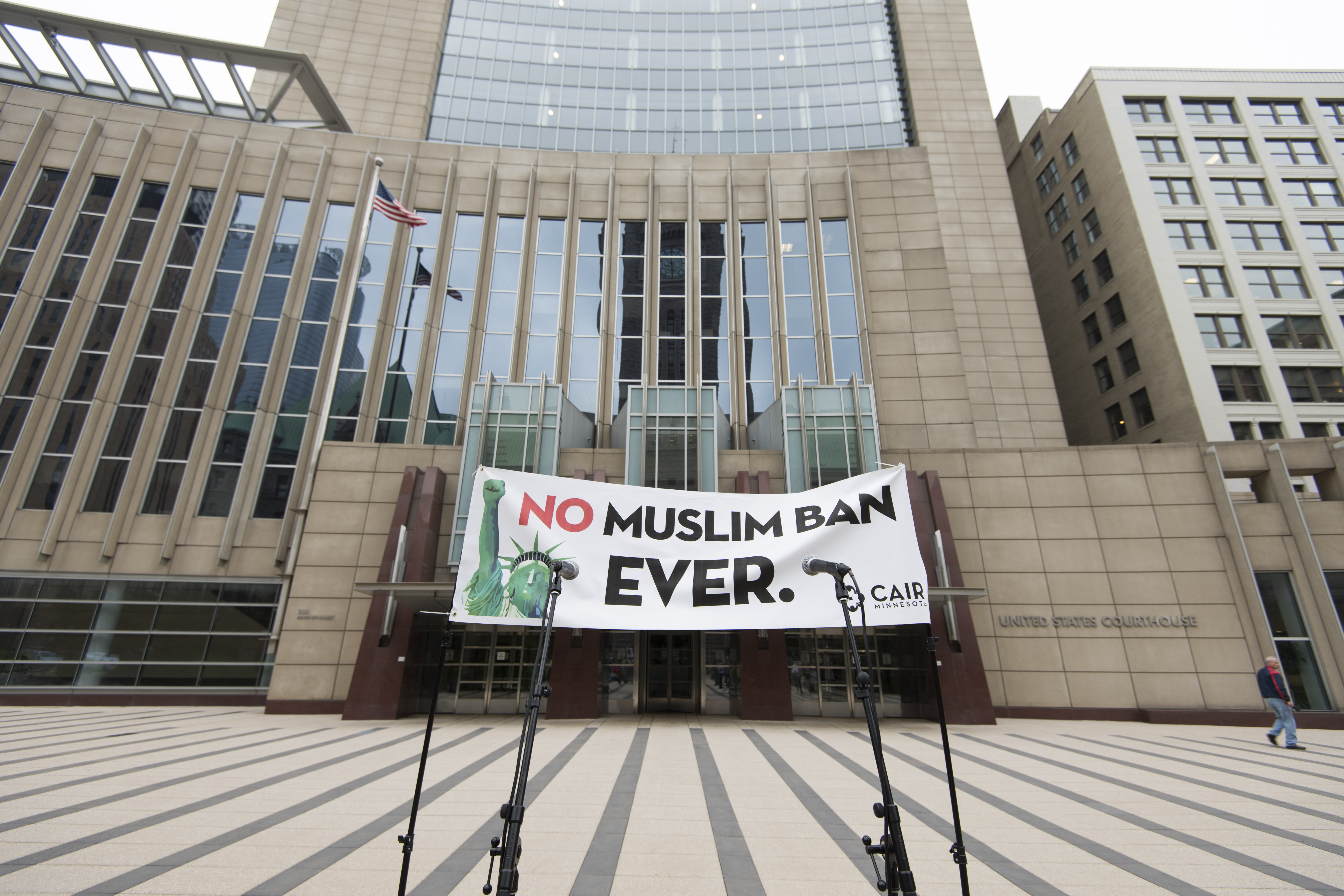
The U.S. Supreme Court rejected an executive order from President Donald Trump that sought to end birthright citizenship for children born in the U.S. [1].
The ruling preserves a long-standing constitutional interpretation of the 14th Amendment, ensuring that citizenship is guaranteed to anyone born on U.S. soil regardless of their parents' legal status [1, 2].
The decision came on Tuesday, effectively crushing the administration's attempt to deny citizenship to children born to parents who are in the country illegally or on a temporary basis [1, 2]. The Court's move prevents the executive branch from unilaterally altering the legal status of children born within the borders of the United States [1].
President Trump said that the executive order was necessary to curb illegal immigration and discourage individuals from entering the country specifically to secure citizenship for their children [2]. However, the Court found that the executive order conflicted with the constitutional mandate that grants citizenship by birth [1, 2].
Legal scholars said that the ruling reinforces the principle that the 14th Amendment is the definitive authority on citizenship. By rejecting the ban, the Court maintained the status quo for millions of families and future arrivals [2].
The ruling means that the current legal framework remains intact, and children born to non-citizen parents continue to be recognized as U.S. citizens from birth [1, 2].
“The Court upheld the principle of birthright citizenship.”
This decision affirms that the 14th Amendment's citizenship clause cannot be overridden by executive action. By ruling against the administration, the Supreme Court has closed a significant legal loophole that the executive branch attempted to use to redefine national identity and immigration incentives, cementing birthright citizenship as a fundamental constitutional right.
![Contains modified Copernicus Sentinel data [2023], processed by Pierre Markuse Mount Etna, Sicily, Italy - 29 October 2023 Image is about 26 kilometers wide Do you want to support this collection of s](https://upload.wikimedia.org/wikipedia/commons/6/66/Mount_Etna%2C_Sicily%2C_Italy_-_29_October_2023_%2853320439428%29.jpg)

