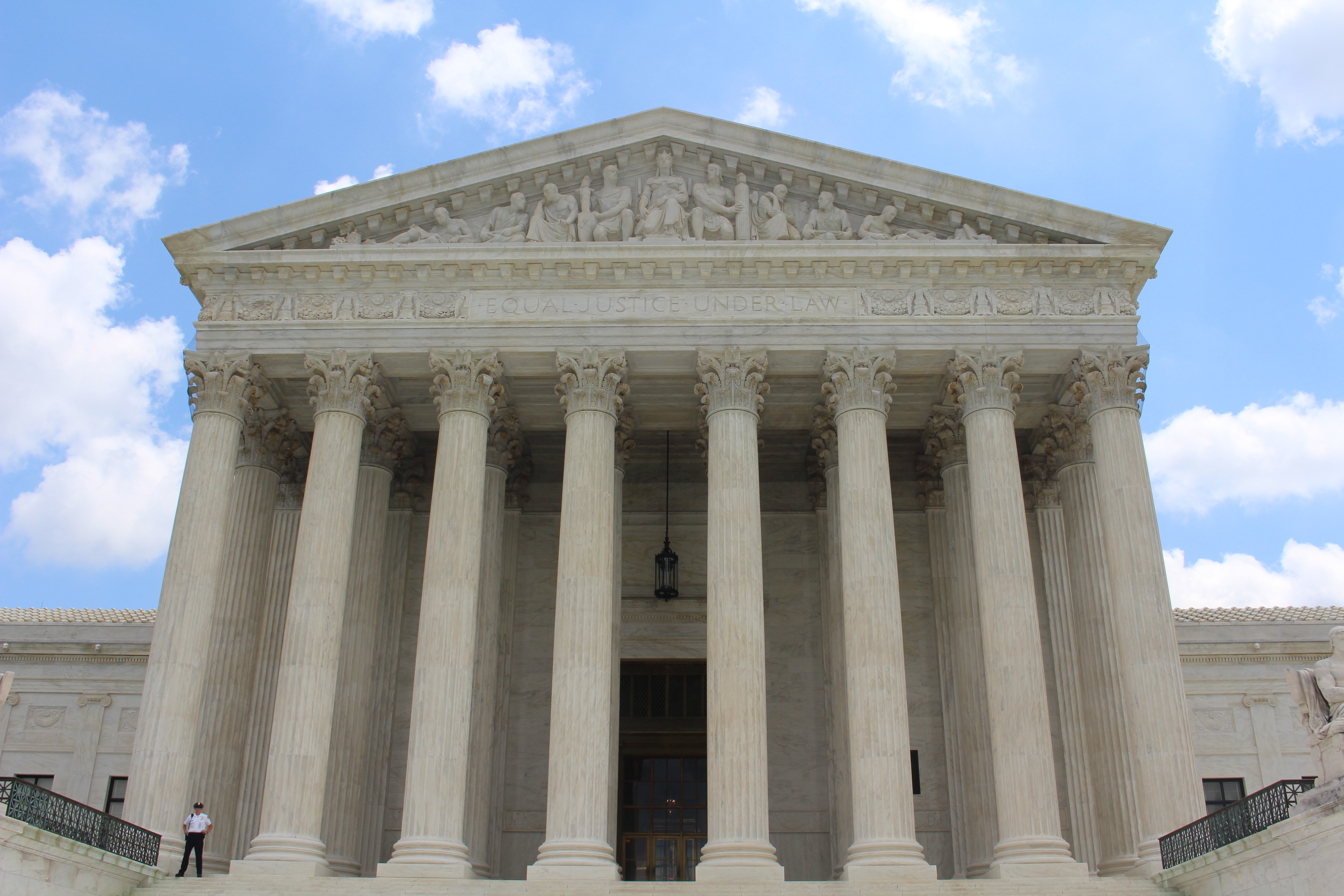
The U.S. Supreme Court rejected an effort by President Donald Trump to end birthright citizenship in a ruling issued Tuesday [1].
This decision preserves a long-standing interpretation of the 14th Amendment, ensuring that children born in the U.S. to undocumented immigrants, and certain temporary foreign visitors, retain automatic citizenship [3]. The ruling prevents the administration from using executive orders to bypass constitutional requirements regarding nationality.
In a 6-3 decision, the justices determined that the administration could not terminate birthright citizenship via executive order because such a move would be unconstitutional [1, 4]. The ruling affects hundreds of thousands of babies born on U.S. soil each year [5].
Cecillia Wang, the National Legal Director for the ACLU, argued the case against the administration. Following the announcement, Wang said the ruling was a "fundamental repudiation of Trump's effort" [1, 2].
President Trump had sought to ban birthright citizenship specifically for the children of undocumented immigrants, and some temporary foreign visitors [3]. The Court's decision serves as a legal barrier to those specific immigration goals, blocking the use of unilateral executive action to redefine citizenship status.
Legal analysts said that the decision represents a significant blow to the president's broader immigration agenda [5]. While a federal appeals court in San Francisco had previously ruled on the issue in July 2025, the Supreme Court's Tuesday decision provides the final judicial word on the matter [6, 3].
“"Fundamental repudiation of Trump's effort"”
This ruling reinforces the judiciary's role in limiting executive power over constitutional amendments. By affirming that birthright citizenship cannot be altered by executive order, the Court maintains the status quo of the 14th Amendment, meaning any future changes to who qualifies for citizenship at birth would likely require an act of Congress or a constitutional amendment rather than a presidential decree.

'%2F%3E%0A%20%20%20%20%3Crect%20width%3D'1600'%20height%3D'900'%20fill%3D'url(%23v)'%2F%3E%0A%20%20%20%20%3Cg%20opacity%3D'0.08'%20fill%3D'%23ffffff'%3E%0A%20%20%20%20%20%20%3Ccircle%20cx%3D'1420'%20cy%3D'180'%20r%3D'220'%2F%3E%0A%20%20%20%20%20%20%3Ccircle%20cx%3D'1500'%20cy%3D'760'%20r%3D'120'%2F%3E%0A%20%20%20%20%3C%2Fg%3E%0A%20%20%20%20%3Cline%20x1%3D'80'%20y1%3D'172'%20x2%3D'220'%20y2%3D'172'%20stroke%3D'%23ffffff'%20stroke-width%3D'3'%20stroke-opacity%3D'0.6'%2F%3E%0A%20%20%20%20%3Ctext%20x%3D'80'%20y%3D'140'%20font-family%3D'Inter%2C%20-apple-system%2C%20Helvetica%2C%20sans-serif'%20font-weight%3D'700'%20font-size%3D'28'%20fill%3D'%23ffffff'%20letter-spacing%3D'6'%3EHANNA%20%C2%B7%20NEWS%3C%2Ftext%3E%0A%20%20%20%20%3Ctext%20x%3D'80'%20y%3D'230'%20font-family%3D'Inter%2C%20-apple-system%2C%20Helvetica%2C%20sans-serif'%20font-weight%3D'600'%20font-size%3D'40'%20fill%3D'%23ffffffb3'%20letter-spacing%3D'4'%3EPOLITICS%3C%2Ftext%3E%0A%20%20%20%20%3Ctext%20x%3D'80'%20y%3D'694'%20font-family%3D'Playfair%20Display%2C%20Georgia%2C%20serif'%20font-weight%3D'800'%20font-size%3D'110'%20fill%3D'%23ffffff'%20letter-spacing%3D'-1'%3EMan%20Rescued%20from%20Rubble%3C%2Ftext%3E%3Ctext%20x%3D'80'%20y%3D'820'%20font-family%3D'Playfair%20Display%2C%20Georgia%2C%20serif'%20font-weight%3D'800'%20font-size%3D'110'%20fill%3D'%23ffffff'%20letter-spacing%3D'-1'%3EAfter%20Venezuela%20Earthquakes%3C%2Ftext%3E%0A%20%20%20%20%3Ctext%20x%3D'80'%20y%3D'870'%20font-family%3D'Inter%2C%20-apple-system%2C%20Helvetica%2C%20sans-serif'%20font-weight%3D'500'%20font-size%3D'22'%20fill%3D'%23ffffff66'%20letter-spacing%3D'2'%3Enews.hanna-ai.com%3C%2Ftext%3E%0A%20%20%3C%2Fsvg%3E)
