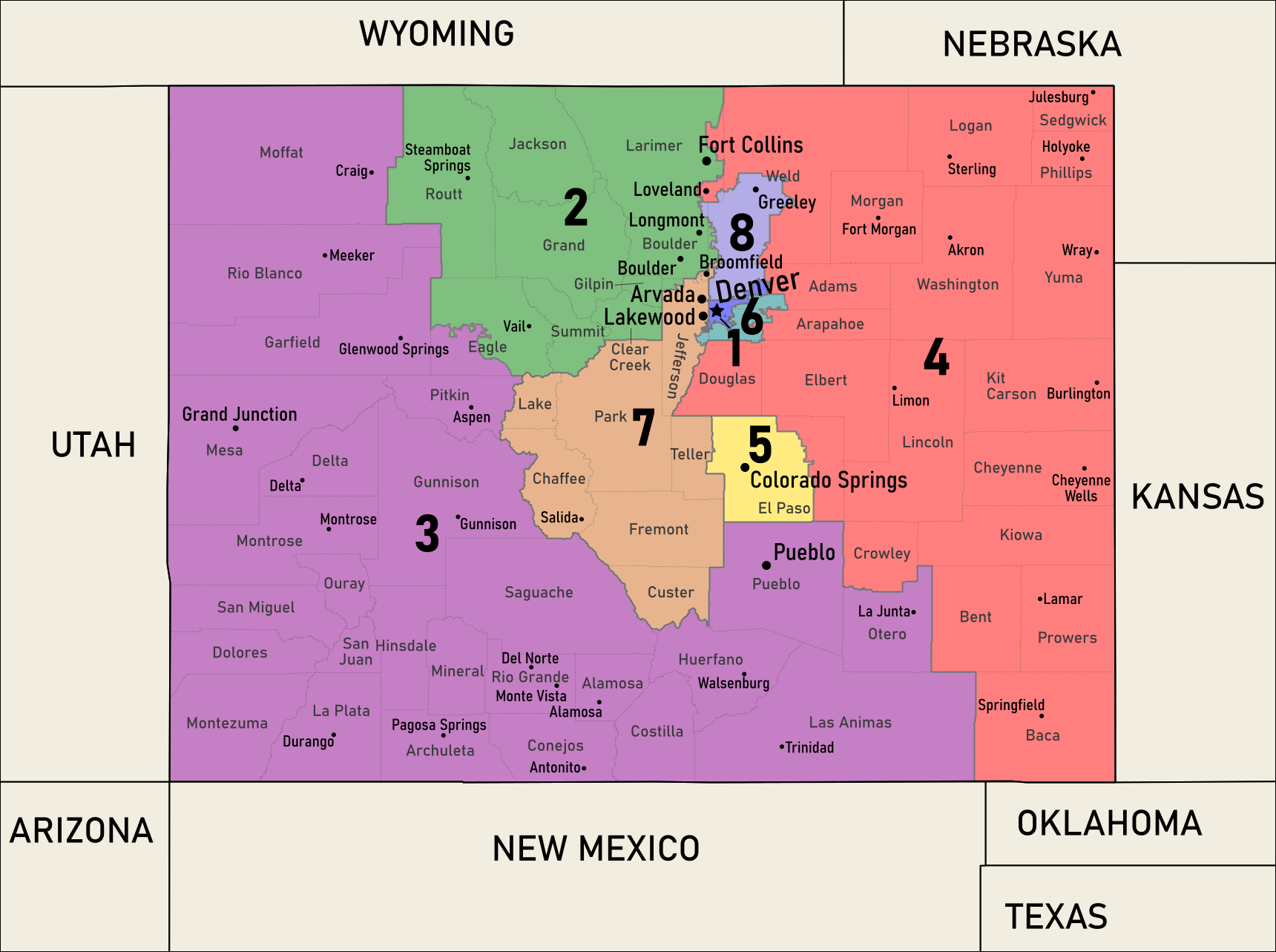
The U.S. Supreme Court issued a decision in April 2026 that weakens the Voting Rights Act [1].
This ruling alters the legal framework used to prevent voter discrimination, potentially changing how elections are administered across the country. The decision impacts the ability of federal authorities to oversee voting jurisdictions that have a history of discriminatory practices.
Reports on the specific roles of the justices vary. Some accounts said that Justice Samuel Alito and Justice Clarence Thomas signaled support for the effort to weaken the act [2]. However, other reports said that Justices Thomas, Alito, and Neil Gorsuch dissented from a related voting rights order [3].
The Voting Rights Act has served as a primary tool for ensuring minority participation in the democratic process since its inception. By limiting the scope of the act, the court may reduce the federal government's power to block state laws that are perceived as restrictive to certain voters.
Justice Alito's involvement remains a point of contention among legal analysts. While some view his actions as a consistent application of a strict interpretation of the law, others argue the decision undermines civil rights protections. The lack of consensus in reporting suggests a complex series of orders and opinions issued by the court during the month of April 2026 [1].
The court's current composition has led to several rulings that shift the balance of power from federal oversight to state-level control. This trend is evident in the recent handling of voting legislation and the interpretation of the 14th and 15th Amendments.
“The U.S. Supreme Court issued a decision in April 2026 that weakens the Voting Rights Act.”
The uncertainty surrounding the justices' specific positions reflects a broader ideological shift within the Supreme Court. If the Voting Rights Act is systematically weakened, the burden of proof for proving voter suppression shifts from the state to the individual citizen, making it more difficult to challenge restrictive election laws in federal court.