
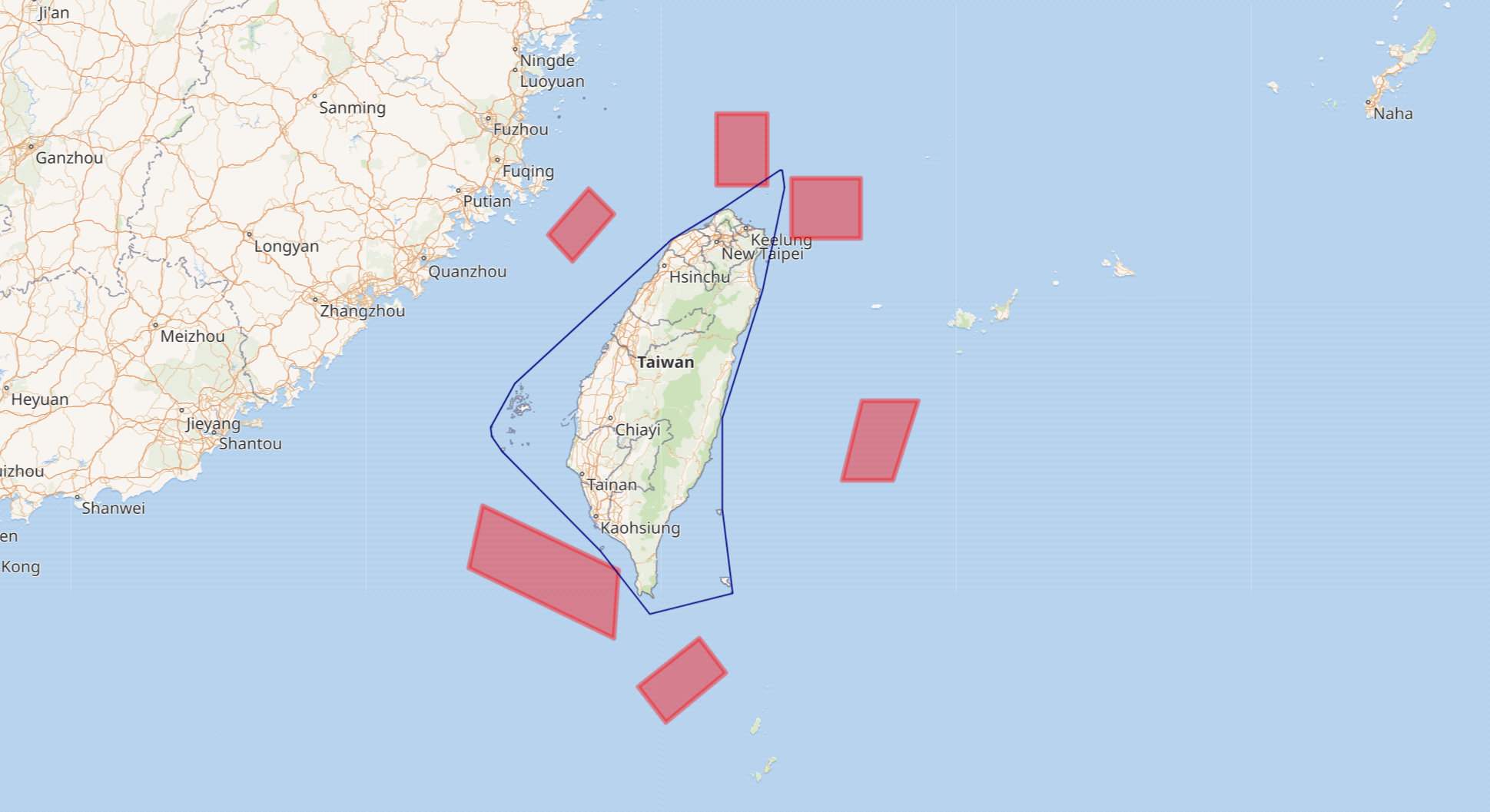
Taiwan's army conducted unscripted large-scale live-fire drills in Tainan and Pingtung counties in the southwest of the island [1].
These exercises signal a shift toward unpredictable training scenarios designed to test the military's ability to respond to sudden threats. By removing pre-planned scripts, the army aims to ensure that commanders and soldiers can operate effectively under the pressure of real-world combat conditions.
The drills featured the deployment of heavy artillery systems and Thunderbolt-2000 multiple rocket launchers [1]. Reports said the primary objective of the maneuvers was to emphasize rapid decision-making and enhance the overall combat readiness of the force [1]. The use of high-caliber weaponry in these specific regions allows the military to practice coordinated strikes across different terrains.
This activity follows a pattern of increased military readiness across the region. While these specific drills occurred in the southwest, other reports indicate the military has maintained a high tempo of operations, including a separate live-fire drill held in Kinmen County on May 13 [2].
By utilizing unscripted formats, the army reduces the reliance on rigid protocols that can be exploited by adversaries. The integration of the Thunderbolt-2000 systems demonstrates a focus on long-range precision, and volume of fire — capabilities essential for coastal defense.
The military did not provide a specific timeline for the duration of the southwest exercises, but the focus remained on the agility of the chain of command [1].
“Taiwan's army conducted unscripted large-scale live-fire drills in Tainan and Pingtung counties.”
The transition to unscripted drills indicates that Taiwan is prioritizing 'adaptive readiness' over traditional rehearsed maneuvers. By simulating the chaos of actual conflict, the military is attempting to close the gap between training and the unpredictability of a potential invasion or skirmish, particularly in the strategic southwestern corridors.


