The Taiwan Coast Guard drove four Chinese coast guard vessels out of waters near the Kinmen Islands on Monday [1].
This encounter highlights the escalating tension in the Taiwan Strait, where Beijing increasingly uses non-military maritime pressure to challenge Taipei's sovereignty. The use of coast guard vessels allows China to assert control without triggering a full-scale military conflict.
Taiwanese officials reported that Chinese gray-zone maritime operations have nearly doubled since 2022 [2]. These operations are designed to operate below the threshold of open warfare, creating a state of perpetual instability that wears down the opponent's resolve.
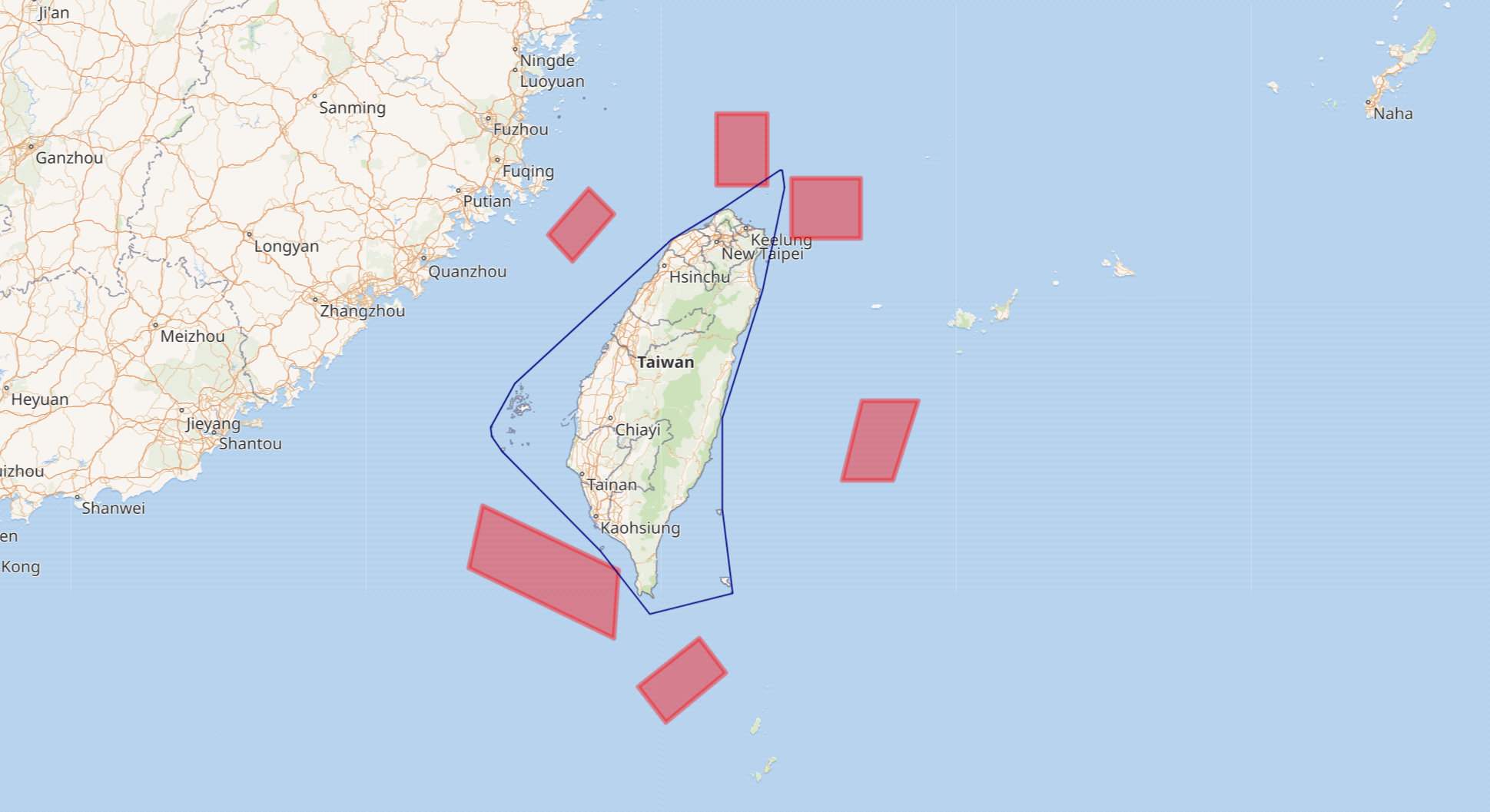
Officials said Beijing is conducting false law-enforcement patrols to assert jurisdiction over the waters surrounding Taiwan [1]. By framing these incursions as legal patrols, China attempts to normalize its presence in disputed areas and establish a new status quo of administrative control.
The Kinmen Islands are particularly sensitive due to their proximity to the Chinese mainland. The recent incursion is part of a broader pattern of behavior where China tests Taiwan's reactions and readiness through repeated, small-scale provocations.
Taipei continues to monitor these activities as part of its defense strategy. The drive-out of the four vessels [1] serves as a signal that Taiwan intends to maintain its authority over its outlying territories despite the increase in pressure.
“Taiwan Coast Guard drove four Chinese coast guard vessels out of waters near the Kinmen Islands”
The surge in gray-zone tactics represents a shift in Beijing's strategy toward 'salami slicing'—making small, incremental gains that collectively change the geopolitical landscape without sparking a major war. By utilizing coast guard vessels rather than navy warships, China attempts to legitimize its territorial claims under the guise of domestic law enforcement, forcing Taiwan to either concede the waters or risk escalating the encounter into a military confrontation.


'%2F%3E%0A%20%20%20%20%3Crect%20width%3D'1600'%20height%3D'900'%20fill%3D'url(%23v)'%2F%3E%0A%20%20%20%20%3Cg%20opacity%3D'0.08'%20fill%3D'%23ffffff'%3E%0A%20%20%20%20%20%20%3Ccircle%20cx%3D'1420'%20cy%3D'180'%20r%3D'220'%2F%3E%0A%20%20%20%20%20%20%3Ccircle%20cx%3D'1500'%20cy%3D'760'%20r%3D'120'%2F%3E%0A%20%20%20%20%3C%2Fg%3E%0A%20%20%20%20%3Cline%20x1%3D'80'%20y1%3D'172'%20x2%3D'220'%20y2%3D'172'%20stroke%3D'%23ffffff'%20stroke-width%3D'3'%20stroke-opacity%3D'0.6'%2F%3E%0A%20%20%20%20%3Ctext%20x%3D'80'%20y%3D'140'%20font-family%3D'Inter%2C%20-apple-system%2C%20Helvetica%2C%20sans-serif'%20font-weight%3D'700'%20font-size%3D'28'%20fill%3D'%23ffffff'%20letter-spacing%3D'6'%3EHANNA%20%C2%B7%20NEWS%3C%2Ftext%3E%0A%20%20%20%20%3Ctext%20x%3D'80'%20y%3D'230'%20font-family%3D'Inter%2C%20-apple-system%2C%20Helvetica%2C%20sans-serif'%20font-weight%3D'600'%20font-size%3D'40'%20fill%3D'%23ffffffb3'%20letter-spacing%3D'4'%3EWORLD%3C%2Ftext%3E%0A%20%20%20%20%3Ctext%20x%3D'80'%20y%3D'622'%20font-family%3D'Playfair%20Display%2C%20Georgia%2C%20serif'%20font-weight%3D'800'%20font-size%3D'86'%20fill%3D'%23ffffff'%20letter-spacing%3D'-1'%3ERescue%20Operation%20Underway%3C%2Ftext%3E%3Ctext%20x%3D'80'%20y%3D'721'%20font-family%3D'Playfair%20Display%2C%20Georgia%2C%20serif'%20font-weight%3D'800'%20font-size%3D'86'%20fill%3D'%23ffffff'%20letter-spacing%3D'-1'%3EAfter%20Boy%20Falls%20Into%3C%2Ftext%3E%3Ctext%20x%3D'80'%20y%3D'820'%20font-family%3D'Playfair%20Display%2C%20Georgia%2C%20serif'%20font-weight%3D'800'%20font-size%3D'86'%20fill%3D'%23ffffff'%20letter-spacing%3D'-1'%3EBorewell%20in%20Haryana%3C%2Ftext%3E%0A%20%20%20%20%3Ctext%20x%3D'80'%20y%3D'870'%20font-family%3D'Inter%2C%20-apple-system%2C%20Helvetica%2C%20sans-serif'%20font-weight%3D'500'%20font-size%3D'22'%20fill%3D'%23ffffff66'%20letter-spacing%3D'2'%3Enews.hanna-ai.com%3C%2Ftext%3E%0A%20%20%3C%2Fsvg%3E)