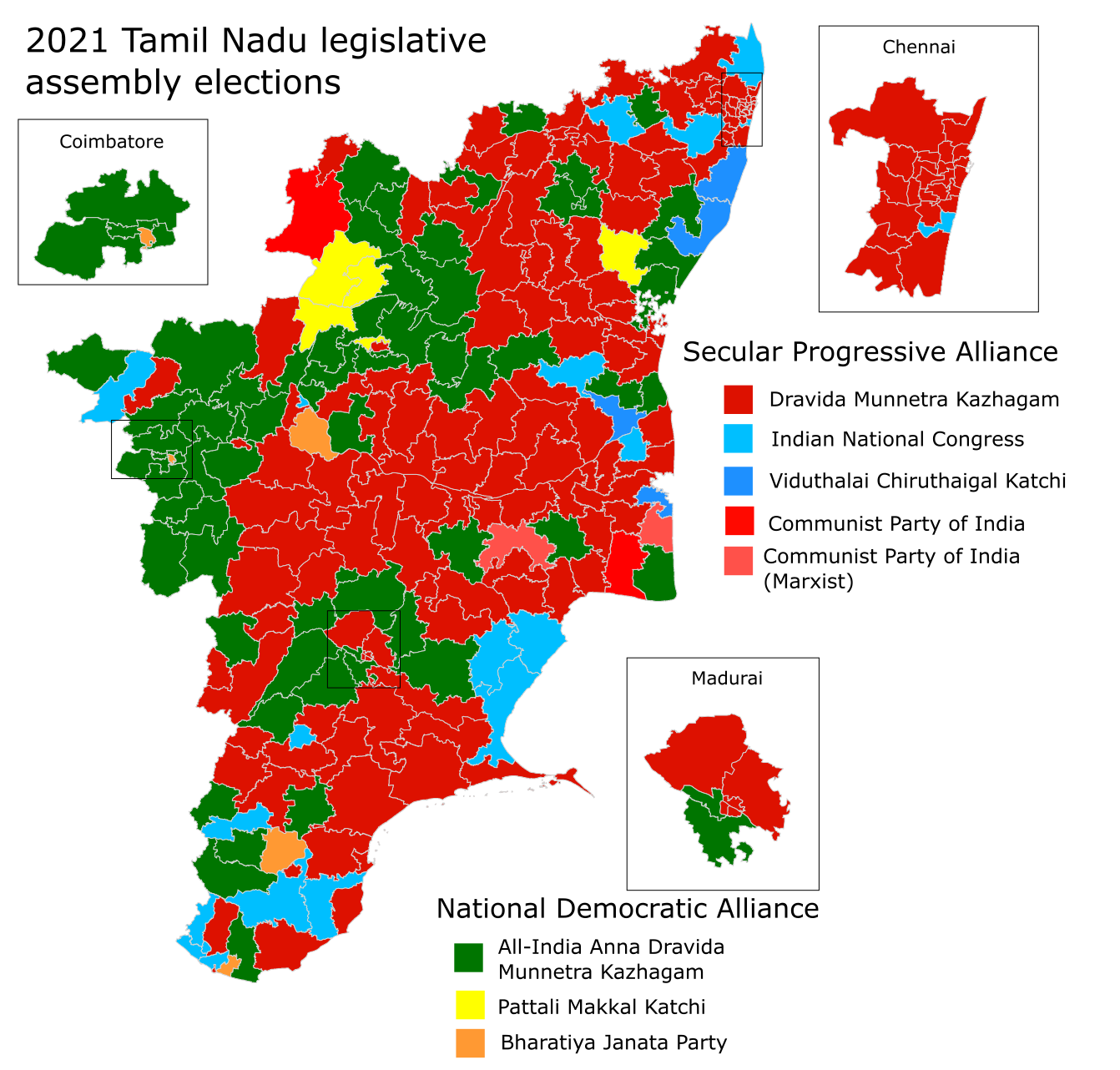
Tamil Nadu will hold its Assembly elections on April 23 [1].
This vote determines the state's political direction for the next five years and signals whether the ruling Dravida Munnetra Kazhagam (DMK) can maintain its hold on power against a consolidating national coalition.
Political analysts suggest the contest is essentially a battle between the DMK and the Bharatiya Janata Party (BJP). The BJP is reportedly struggling to unite its allies and counter the narrative established by the DMK. However, other reports indicate the stage is set for a high-stakes battle between the DMK and an AIADMK-led National Democratic Alliance (NDA).
Former Union Minister P. Chidambaram said the 2026 Tamil Nadu Assembly election will be a close battle, unlike the 2024 Lok Sabha polls. He noted that the dynamics of state elections differ from national polls, suggesting a tighter race for all parties involved.
Campaigns are focusing on state identity and the relationship between the Tamil Nadu government and the central government in New Delhi. The tension between the state's regional interests and the national agenda of the BJP is a central theme of the upcoming vote.
Candidates are also facing increased scrutiny regarding their financial disclosures. Recent data from candidate affidavits reveals the wealth of the richest and poorest candidates running for office, highlighting economic disparities within the political class.
“Tamil Nadu will hold its Assembly elections on April 23.”
The 2026 elections represent a critical test for the BJP's ability to penetrate the southern state's regionalist politics. While the DMK has historically dominated the Dravidian movement, the BJP's attempt to integrate regional allies like the AIADMK into a cohesive NDA coalition provides a potential path to challenging the ruling party's narrative of state autonomy versus central control.


