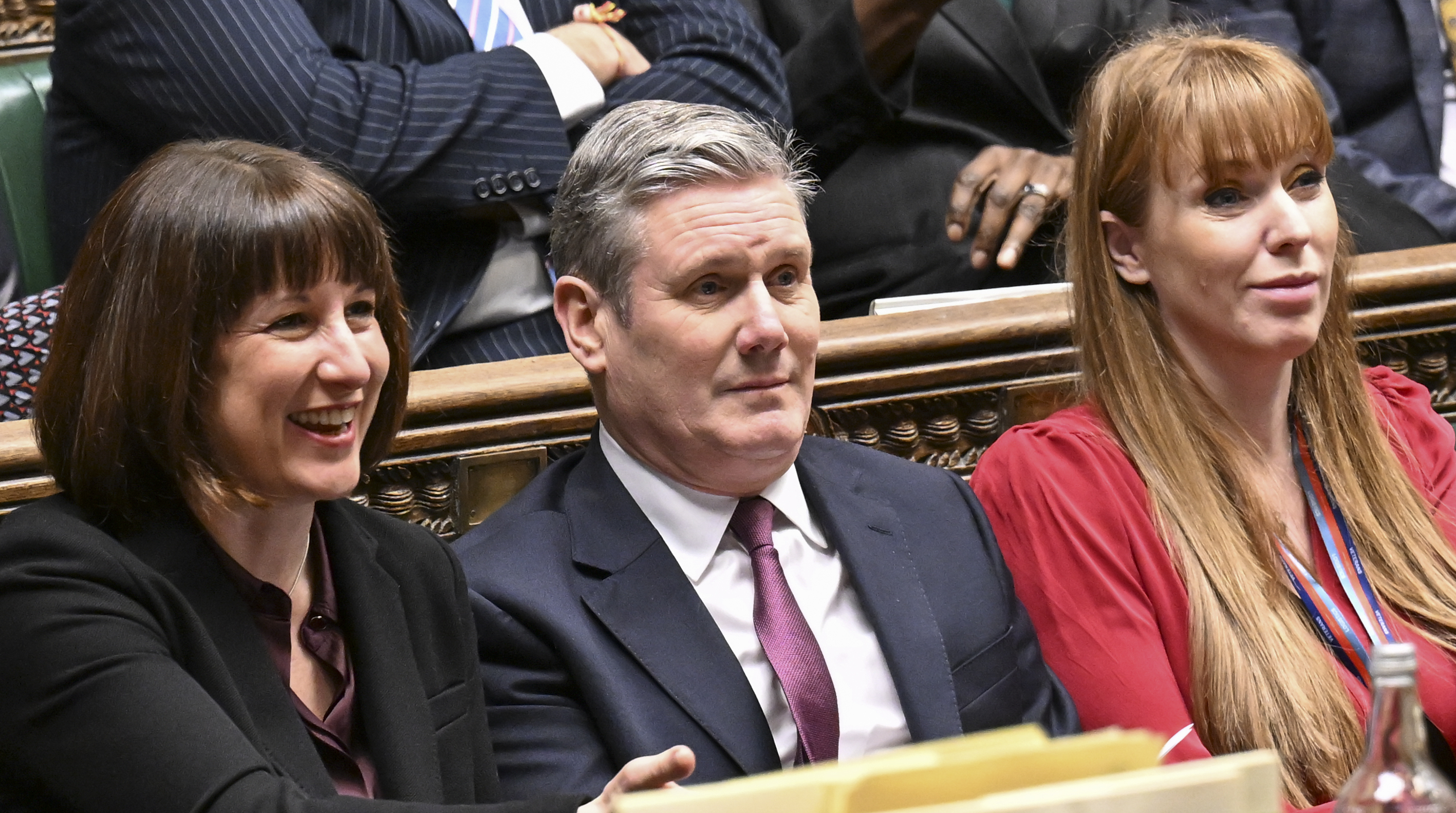
U.S. President Donald Trump posted on social media Sunday that British Prime Minister Keir Starmer will resign [1].
The statement introduces significant uncertainty regarding the stability of the UK leadership and the current state of U.S.-UK diplomatic relations. It suggests a deepening rift between the two leaders over critical geopolitical and domestic issues.
Trump used the platform X to announce the expected departure, and said that Starmer will "resign" [1]. In the same series of posts, the U.S. President targeted the Prime Minister's record, and said that Starmer "failed miserably" in two key areas: immigration and energy policy [1].
Beyond domestic policy failures, the posts highlighted growing friction regarding the situation in Iran [1]. This conflict over Iranian affairs appears to be a primary driver of the tension between the two heads of state.
While the U.S. President presented the resignation as a fact, the actual status of Starmer's position remains unclear. Some reports indicate the Prime Minister could potentially express an intent to resign on Monday, June 22, 2026 [2]. However, other media outlets said it is unknown if Trump possesses specific inside information regarding a resignation [1].
Trump did not provide a specific timeline for the transition of power in the UK, though his posts framed the move as an inevitable result of policy failures [1]. The White House has not issued a formal diplomatic statement to supplement the social media claims.
“"resign"”
This incident reflects a pattern of the US President using social media to influence foreign political landscapes and signal dissatisfaction with allied leaders. By publicly predicting Starmer's exit, Trump is applying external pressure on the UK government, specifically linking leadership viability to alignment with US preferences on Iran and restrictive immigration policies.