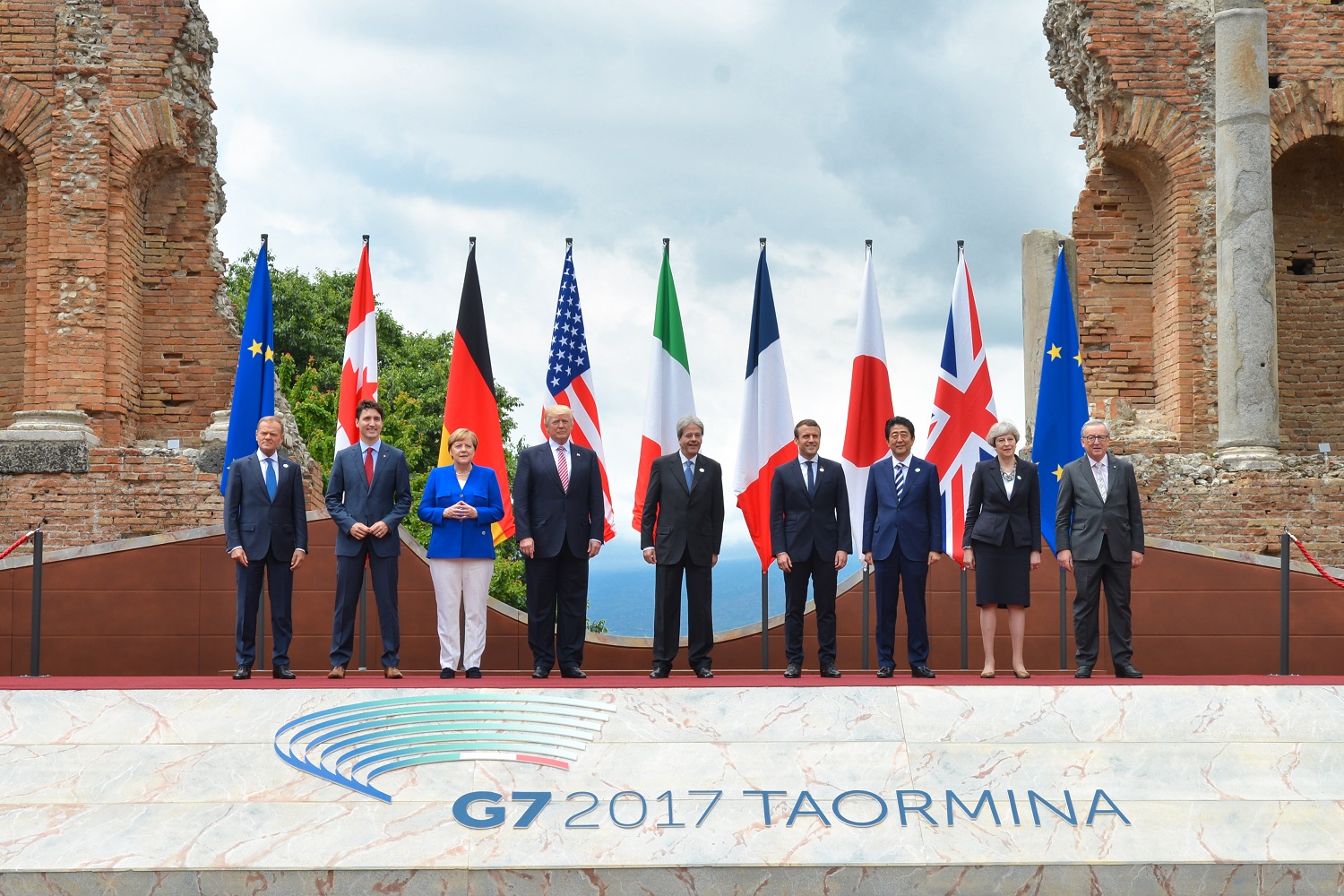
President Donald Trump (R-FL) said he will do whatever he can to help end Russia's war in Ukraine following the G7 summit.
This shift in rhetoric suggests a potential realignment of U.S. foreign policy toward Kyiv. If Trump moves away from previous skepticism regarding Ukrainian resilience, it could lead to more consistent Western military and diplomatic coordination against Moscow.
The change in position followed the G7 summit in Évian-les-Bains, France, which lasted three days [1]. During the event, Trump engaged in discussions with other world leaders regarding the conflict, which has now lasted four years [2].
French President Emmanuel Macron suggested that the summit changed the U.S. leader's perception of the battlefield. "I think President Trump realized that Ukraine is not losing," Macron said.
Trump indicated that he sees a diplomatic path forward and intends to support efforts to conclude the hostilities. "I'm going to do whatever I can," Trump said.
Other G7 leaders expressed a positive reception to the shift. Collective statements from the group noted that leaders welcomed President Trump's change on Ukraine [3]. The shift comes amid varying interpretations of the U.S. president's goals, with some observers previously suggesting he might favor a deal that conceded territory to Vladimir Putin.
However, the current signals from Évian-les-Bains suggest a willingness to maintain pressure on Russia to achieve a resolution. The updated stance aligns Trump more closely with the G7's broader strategy of supporting Ukraine's sovereignty, while seeking an end to the violence.
“"I'm going to do whatever I can."”
This pivot indicates that the G7's collective diplomatic pressure and the presentation of intelligence on Ukrainian resilience may have altered Trump's calculus. By moving from a position of perceived skepticism to one of active support for ending the war through increased pressure, the U.S. may avoid a fragmented Western front, which Russia has sought to exploit since the conflict began.


