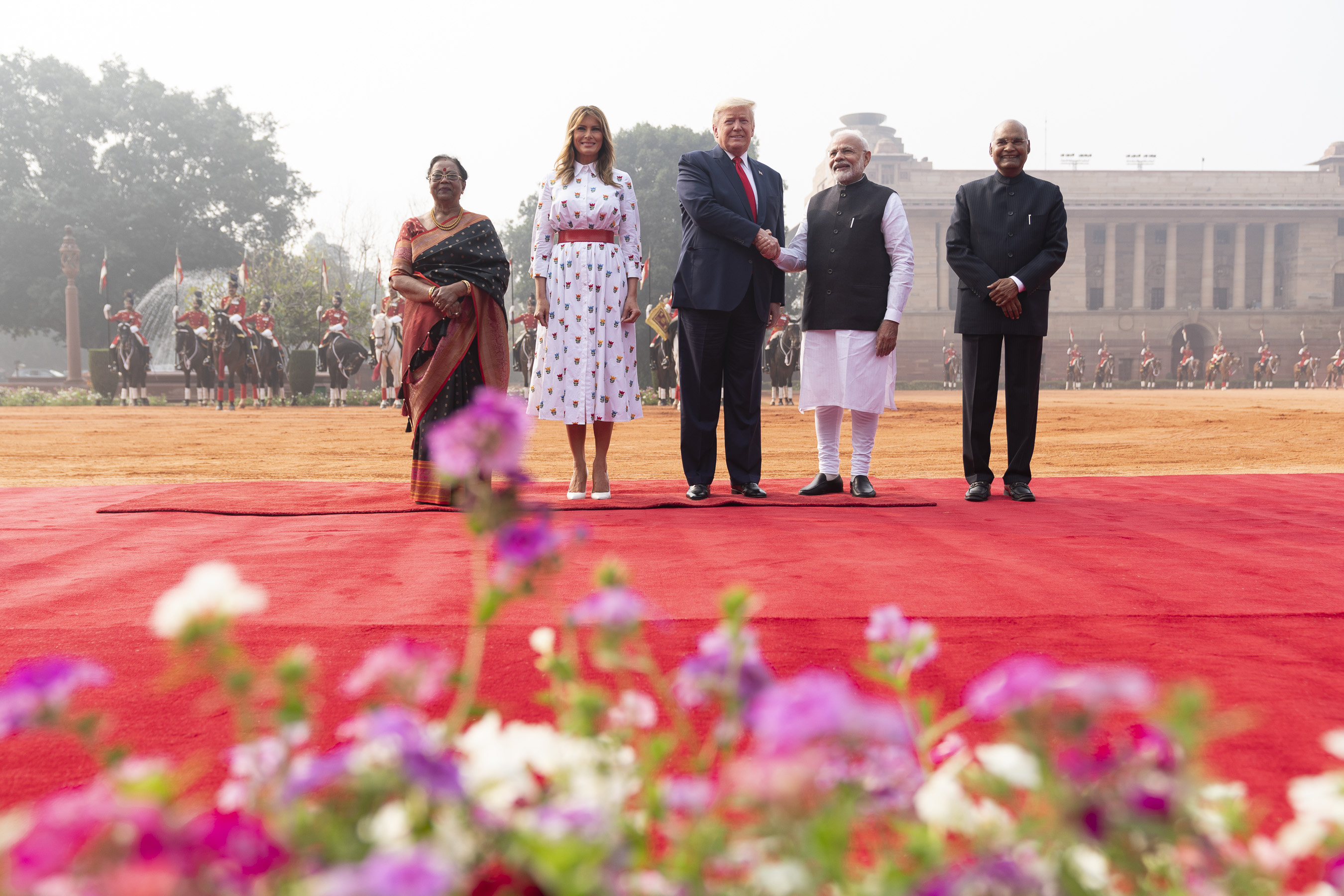
President Donald Trump plans to visit India early next year to strengthen diplomatic ties and advance a trade agreement [1, 2].
The visit signals a strategic push by the U.S. administration to solidify its relationship with one of its most significant partners in Asia. By prioritizing a face-to-face meeting with Prime Minister Narendra Modi, the U.S. hopes to resolve long-standing trade disputes and synchronize security interests.
U.S. Secretary of State Marco Rubio said the administration is working toward the visit, which is expected to take place in early 2027 [1, 2]. Rubio said the trip follows an invitation from Prime Minister Modi, adding that President Trump is "very keen to come" [2].
Central to the visit is the effort to finalize a pending trade deal. Rubio said that India is one of Washington's "closest partners," and he highlighted the strong personal chemistry between President Trump and Prime Minister Modi [1].
The proposed trip to New Delhi is intended to serve as a catalyst for economic cooperation. The U.S. government views the strengthening of these ties as a critical component of its broader foreign policy objectives in the region [1, 2].
Rubio said the administration is currently coordinating the logistics for the visit, which he described as being planned for "sometime early next year" [2].
“President Trump is "very keen to come" after Prime Minister Modi's invitation.”
A state visit by a U.S. president to India typically precedes major policy shifts or the signing of significant treaties. By focusing on a trade deal, the Trump administration is attempting to pivot from a purely security-based partnership to a more robust economic alliance, which could reduce trade friction and increase U.S. market access in South Asia.


