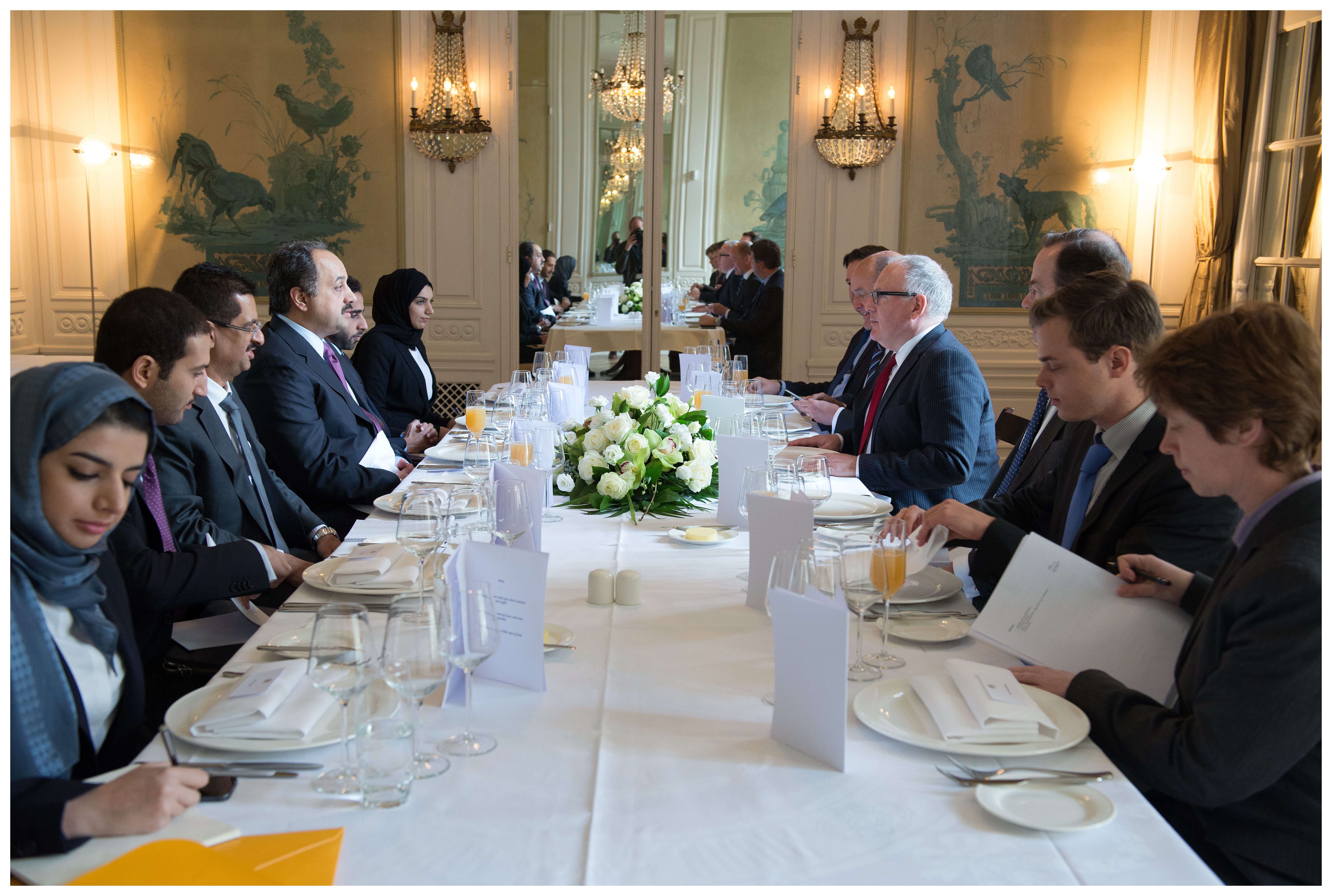
U.S. President Donald Trump met Chinese President Xi Jinping in Beijing to negotiate trade deals and discuss global security tensions [1].
The summit represents a critical effort to stabilize relations between the world's two largest economies. The outcome could shift global market dynamics through changes in tariffs and the securing of essential mineral supplies.
Trump traveled to China from March 31 to April 2, 2024 [2]. The discussions focused on a wide array of strategic issues, including artificial intelligence, Taiwan arms sales, and the conflict in Iran [1, 3].
Trade concessions formed a central part of the agenda. The leaders worked toward a rare-earths agreement and a reduction in tariffs on $200 billion of Chinese goods [4]. While the specific percentage of the tariff reduction was not disclosed, the move aims to ease long-standing trade disputes [4].
Security concerns regarding the Middle East also featured prominently in the talks. Trump said, "Xi told me China is not sending weapons to Iran" [5].
U.S. Trade Envoy Katherine Tai said the talks were paving the way for a productive meeting between the two presidents [6]. The visit included high-stakes negotiations to address escalating global tensions, particularly regarding Taiwan's security and the ongoing war in Iran [1, 3].
Trump previously said that he would be in China during the window of March 31 to April 2 to discuss trade, security, and other issues [2].
“Xi told me China is not sending weapons to Iran.”
This summit signals a pragmatic shift in U.S.-China relations, prioritizing economic stability and conflict mitigation over total decoupling. By addressing rare-earth minerals and tariff reductions, the U.S. seeks to secure critical supply chains while utilizing diplomatic pressure to limit China's military support for Iran.