
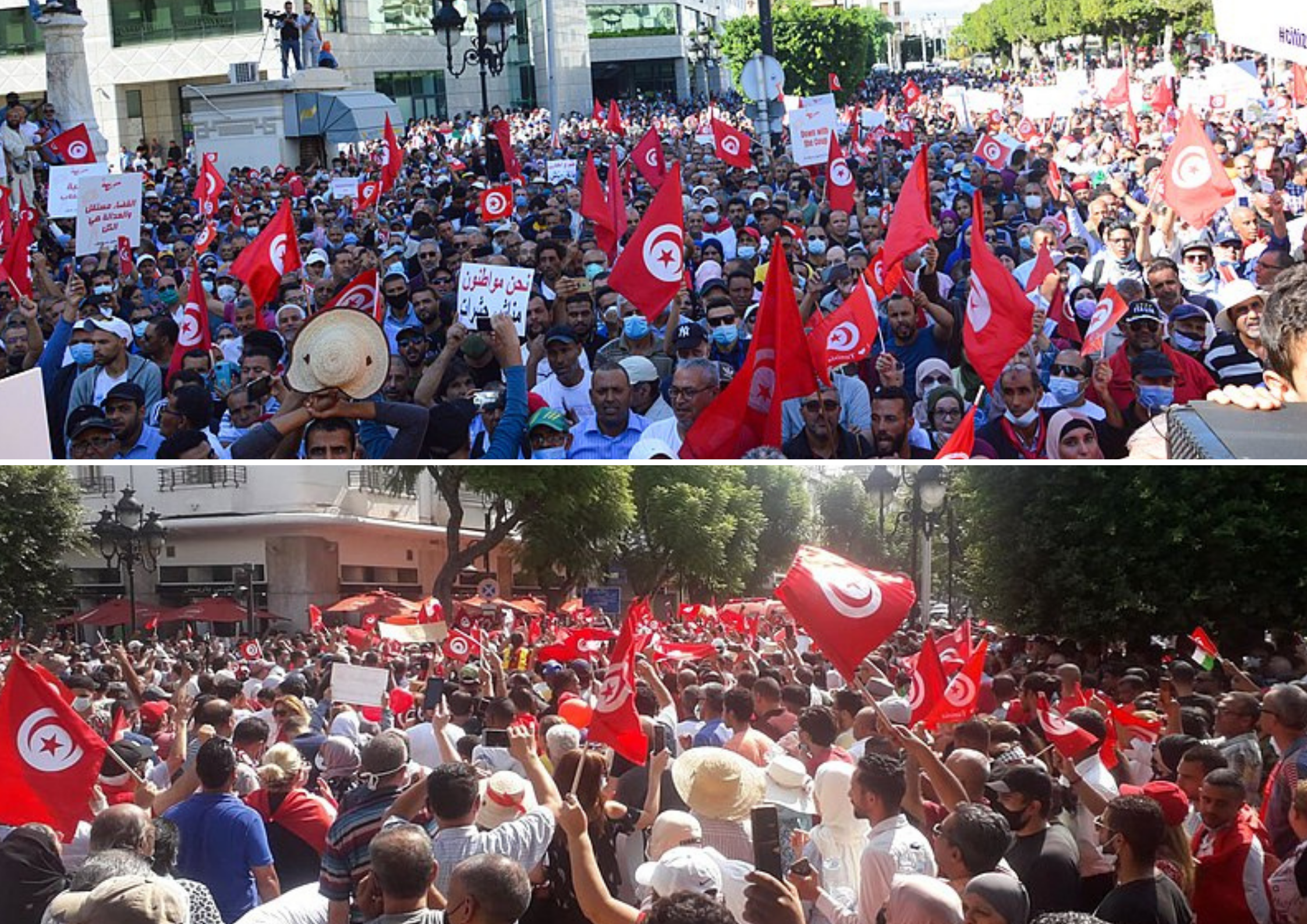
Protesters marched in Tunis on May 6, 2026 [1], demanding an end to the suppression of rights and freedoms in the Tunisian capital.
The demonstrations signal a growing tension between the state and civil society, a conflict intensified by the targeting of legal defenders and political opponents.
Demonstrators gathered outside the primary court in Tunis to voice their opposition to a broader wave of trials and sentences. These legal actions have targeted politicians and civil-society activists, which the protesters described as a crackdown on fundamental freedoms [2, 3, 4].
Central to the unrest is the suspension of the Tunisian League for the Defense of Human Rights [1, 2]. The league is a prominent organization dedicated to monitoring state abuses and protecting legal rights. Its suspension has served as a catalyst for recent public anger.
This event marked the third protest held in a single week [5]. The frequency of these gatherings suggests a coordinated effort by human rights defenders to challenge the current judicial trajectory, a trend that has seen an increase in the prosecution of those critical of the government [1, 4].
The marchers called for the immediate restoration of rights and the cessation of what they termed the suppression of freedoms [2, 3]. While the government has not issued a formal response to this specific march, the continued use of the court system to sentence activists remains a primary point of contention for the Tunisian League for the Defense of Human Rights [1, 4].
“Protesters marched in Tunis on May 6, 2026, demanding an end to the suppression of rights and freedoms.”
The escalation of protests in Tunis, specifically the frequency of three marches in one week, indicates a shrinking space for legal advocacy in Tunisia. By suspending the Tunisian League for the Defense of Human Rights and utilizing the primary court for trials of activists, the state is effectively dismantling the institutional buffers that typically protect civil liberties, potentially leading to further social instability.


