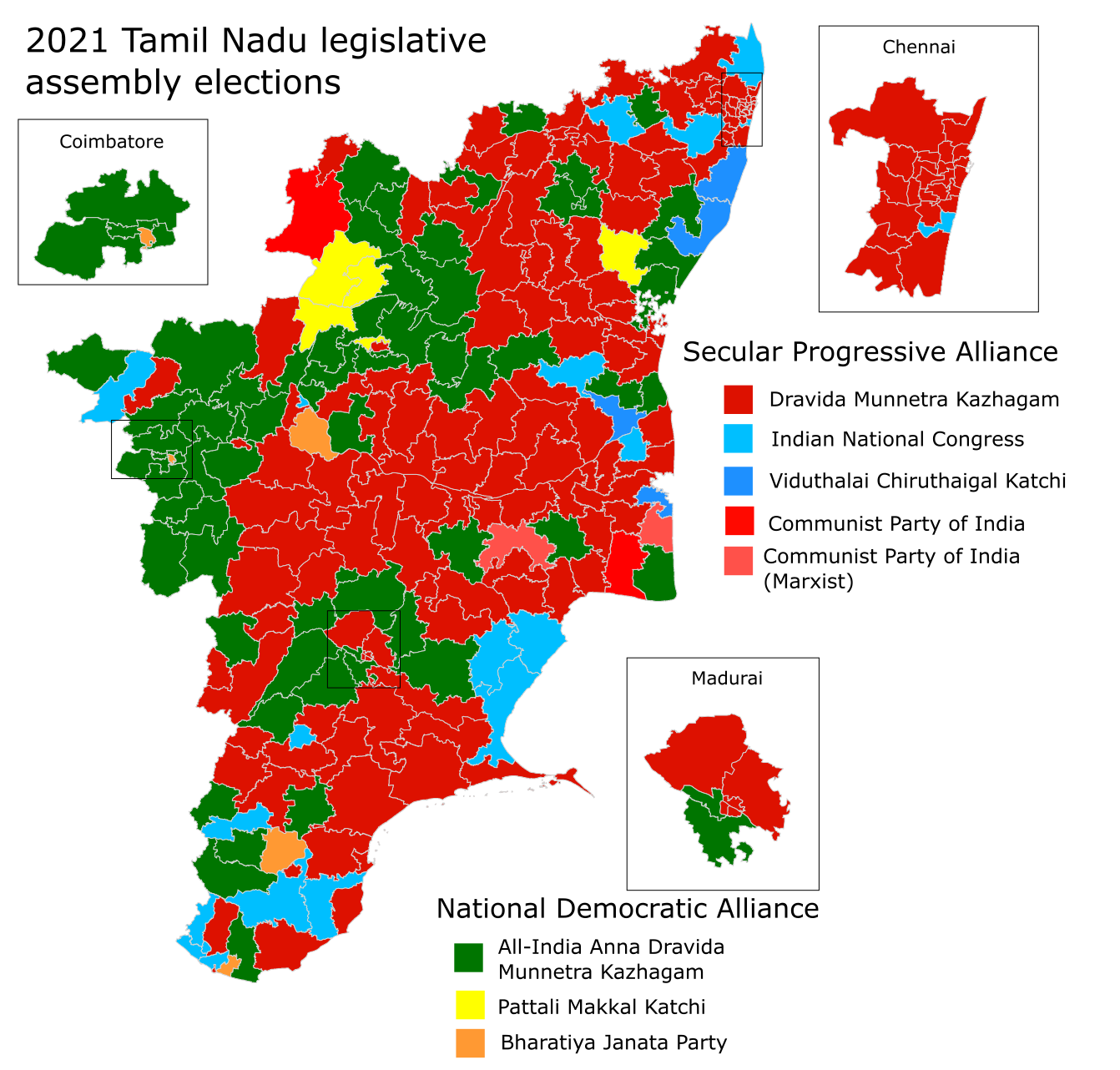
Opposition leaders in Tamil Nadu are calling for the ruling Tamilaga Vettri Kazhagam (TVK) and the DMK to unite within the INDIA bloc.
This potential alliance is seen as a strategic move to consolidate opposition power in South India. By bridging state-level rivalries, these parties aim to create a more formidable front to challenge the Bharatiya Janata Party (BJP) in national elections.
Thol Thirumavalavan, president of the Viduthalai Chiruthaigal Katchi (VCK), spoke on the necessity of this coalition during an event in Ariyalur. He said that both the DMK and the ruling TVK in Tamil Nadu must join the INDIA bloc to effectively defeat the BJP at the national level [1].
The VCK chief made these remarks on July 9, 2026 [1]. His call for unity emphasizes the need for regional parties to prioritize national interests over local political competition, a move intended to prevent the fragmentation of opposition votes.
The Congress party has expressed support for this alignment. A Congress spokesperson said the party backs the call for DMK-TVK unity [2]. This endorsement suggests a desire from the national leadership to see a streamlined opposition structure in Tamil Nadu.
Despite these calls for cohesion, the political landscape remains complex. While some reports emphasize the need for the DMK to join the bloc alongside TVK, other accounts indicate internal friction. In some instances, the DMK has launched a scathing attack on Rahul Gandhi, accusing him of weakening opposition unity [2].
No official decision has been announced by Chief Minister Vijay or the DMK leadership regarding a formal merger or alliance within the bloc. The tension between the desire for national cooperation and the reality of state-level competition continues to define the region's political strategy.
“Both the DMK and the ruling TVK in Tamil Nadu must join the INDIA bloc to effectively defeat the BJP at the national level.”
The push for a DMK-TVK alliance within the INDIA bloc represents an attempt to synchronize regional power with national strategy. If successful, it would eliminate significant vote splitting among opposition supporters in Tamil Nadu, potentially increasing the bloc's leverage in New Delhi. However, the reported friction between the DMK and Congress leadership suggests that ideological and personal clashes may hinder the formation of a seamless coalition.


