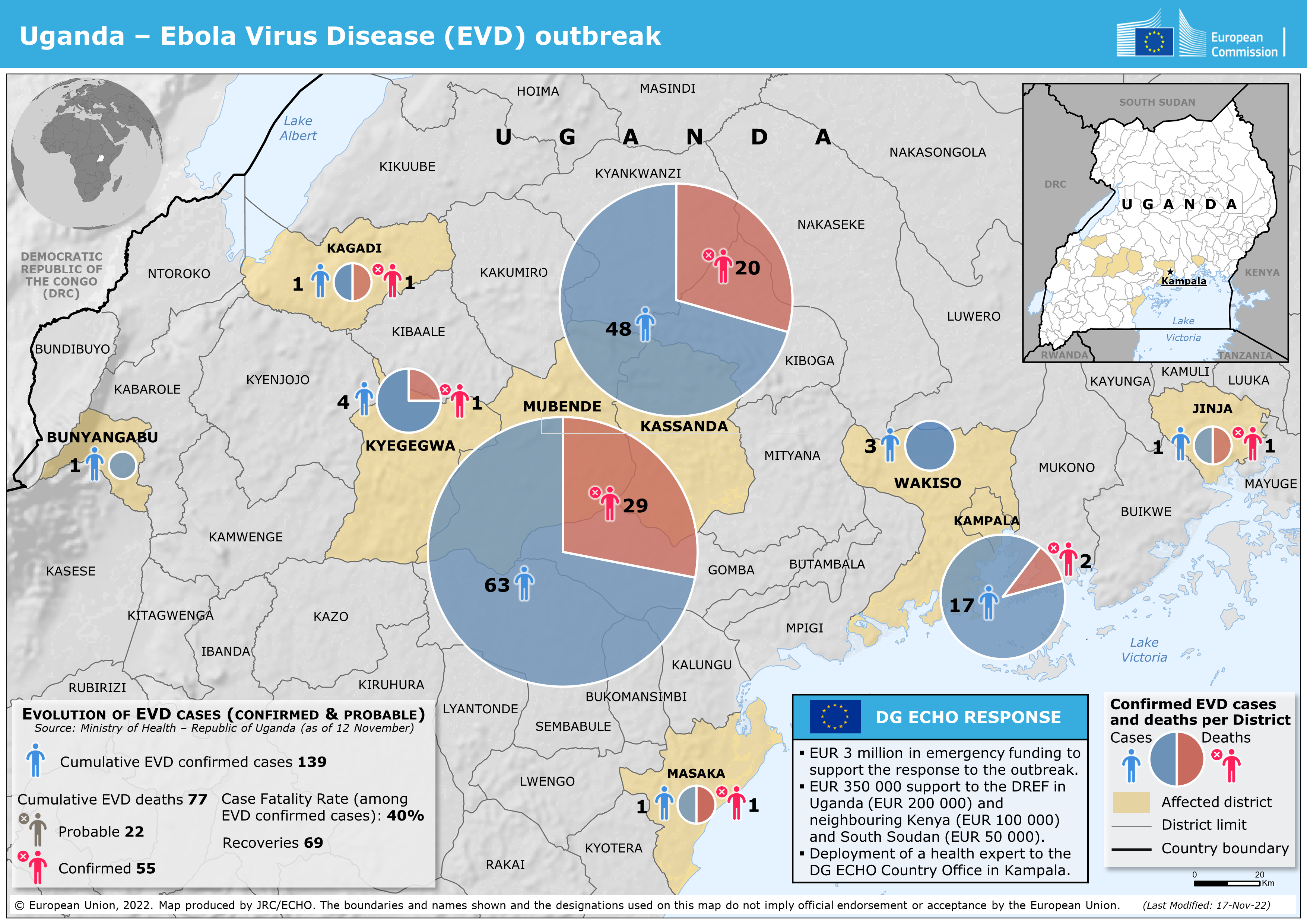
Uganda has suspended the weekly cross-border market at Mpondwe and tightened controls at the border with the Democratic Republic of Congo [1, 2].
These measures represent a critical effort to stop the transmission of the Ebola virus between the two nations. However, the shutdown of this commercial hub threatens the primary source of income for thousands of vendors and traders who rely on the weekly exchange of goods [2, 3].
The restrictions were highlighted in reports on May 15, 2026, as part of a broader strategy to isolate affected areas [3]. While some reports indicate that Uganda has sealed the border entirely [2], other accounts describe the measures as a tightening of controls and restrictions on movement rather than a total shutdown of all crossing points [1].
The Mpondwe border crossing serves as a vital artery for trade between the two countries. By halting the weekly market, authorities aim to reduce the dense crowds that facilitate the spread of the virus, a necessary but economically damaging step for the local population [1, 2].
International health organizations are monitoring the situation closely. The U.S. Centers for Disease Control and Prevention is monitoring the outbreak in both the DRC and Uganda and is providing assistance to help contain the virus [1, 3].
Additional containment efforts include the suspension of flights and further curbs to isolate the Ebola-hit region of Bunia [4]. These layers of restriction are intended to create a sanitary cordon, preventing the virus from migrating further into East Africa [4].
Local traders have not yet provided a collective estimate of their financial losses, but the suspension of the market removes the most significant trading event of the week for the region [2].
“Uganda has suspended the weekly cross-border market at Mpondwe”
The tension between public health imperatives and economic survival is acute at the Mpondwe crossing. While the suspension of the market is a standard epidemiological tool to prevent 'superspreader' events in high-density areas, it risks creating an economic vacuum. This may lead to an increase in informal, unregulated border crossings, which could inadvertently undermine the very health screenings the governments are trying to enforce.