Reform UK achieved historic gains in local elections across England, Scotland, and Wales, while the Labour Party suffered significant losses [1].
The results place the political future of Prime Minister Keir Starmer (Labour) in doubt as voters signal dissatisfaction with the national government's performance [1, 3].
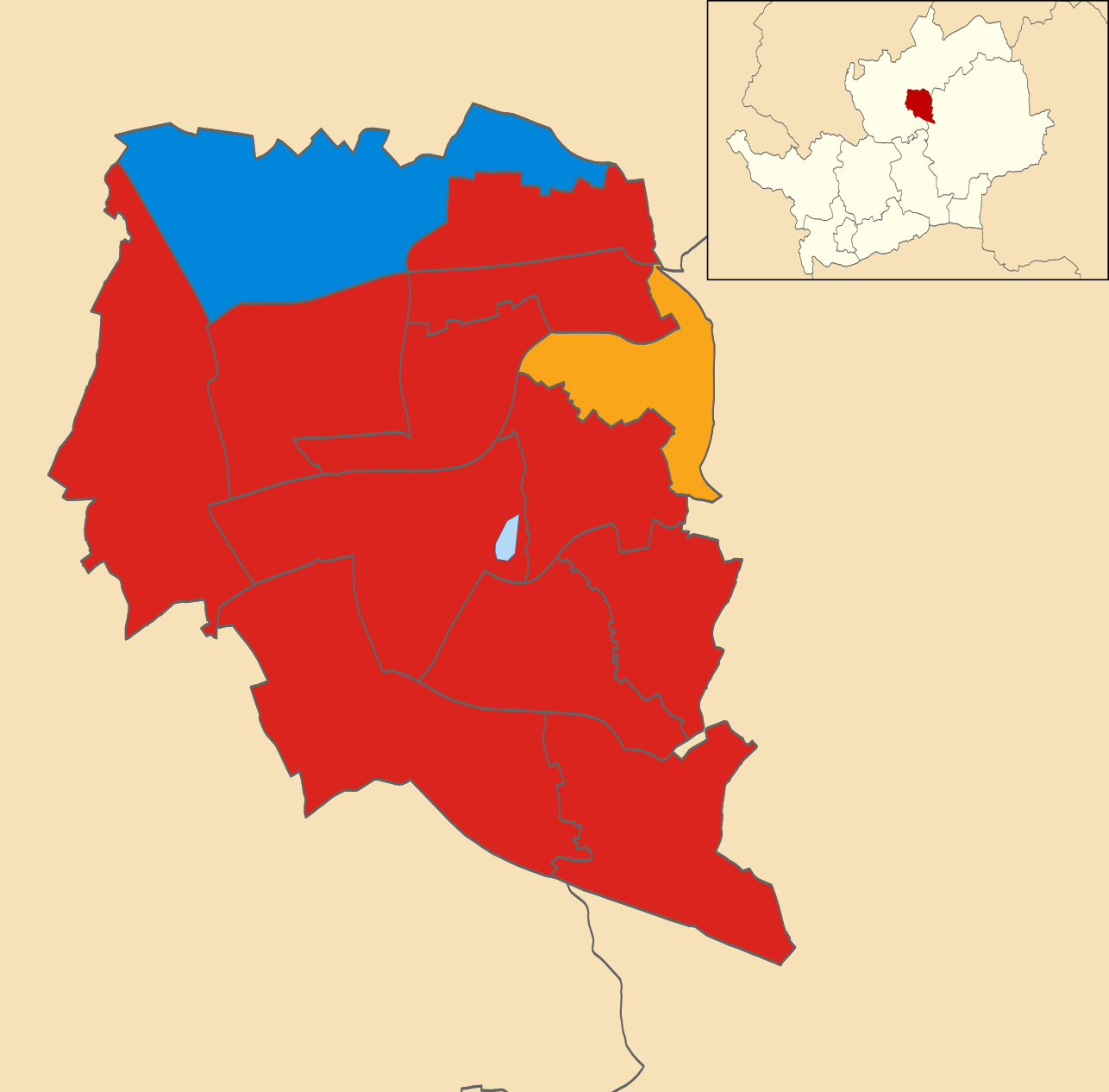
Voting took place on Thursday, May 7, 2026 [4], with key results emerging on Friday, May 8 [5]. The shift in power was evident in several regions, most notably in Barnsley and Stevenage in England [2]. In Barnsley, Reform UK successfully took control of the council [2].
Analysts said that voter frustration was driven by a combination of national performance and specific local grievances [2, 3]. In some areas, disputes over housing development plans played a central role in the outcome. For example, a local plan proposing the construction of 3,500 new homes on green-belt sites contributed to the political volatility [2].
The scale of the losses for the Labour Party has created a precarious environment for the Prime Minister. While the elections were local, the results are being viewed as a referendum on the current administration's direction [1, 3].
Reform UK's surge indicates a growing appetite for their platform, moving the party from the fringes into positions of actual local governance [1, 2]. This shift represents a significant disruption to the traditional political landscape in the United Kingdom.
“Reform UK achieved historic gains in local elections across England, Scotland, and Wales.”
The 2026 local elections signal a volatility in the UK electorate, where specific local issues like green-belt development can amplify national dissatisfaction. By securing council control in areas like Barnsley, Reform UK has transitioned from a protest movement to a governing entity, which may force the Labour government to shift its policy priorities to stem further losses.


