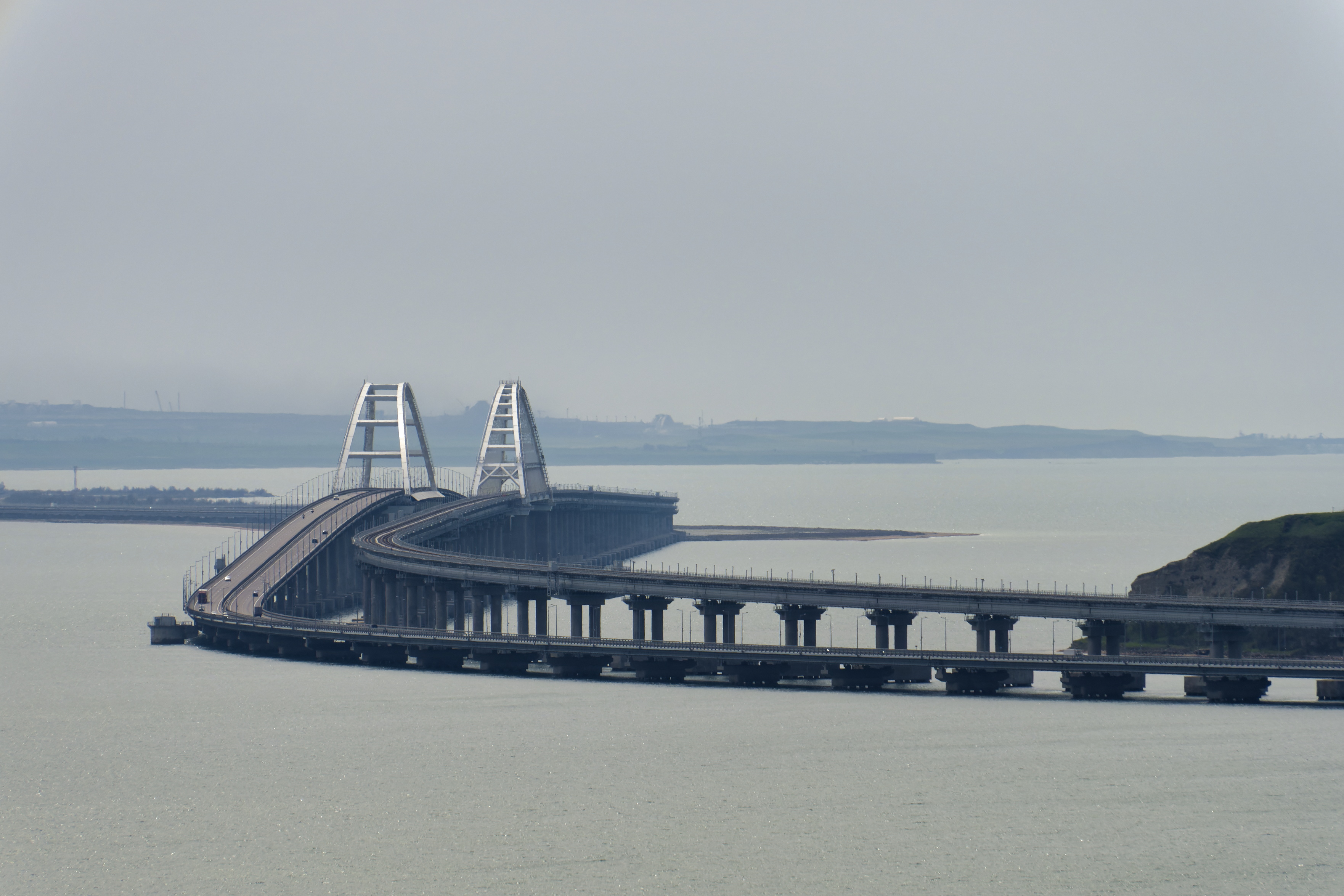
Ukrainian forces targeted Russian military objects in Crimea with a series of drone strikes that caused explosions and fires [1].
These operations aim to degrade Russian military logistics and air-defense assets on the occupied peninsula [1, 2]. By disrupting these systems, Ukraine seeks to limit the ability of Russian forces to operate within the region and protect their infrastructure.
The strikes affected multiple locations across the peninsula [1]. Significant activity was reported in the districts of Sevastopol and the Simferopol area [1]. Additionally, targets were identified near the Guardiyskoye airfield [1].
Reports indicate that the attacks hit critical military infrastructure, including air-defense systems, and fuel depots [1]. The resulting damage led to partial power outages across Crimea [1]. This disruption of the electrical grid highlights the vulnerability of the region's utility networks during military engagements.
The Security Service of Ukraine said the operations were part of a broader effort to strike Russian military objects in the rear [1, 2]. The coordinated nature of the explosions suggests a synchronized effort to overwhelm local defense capabilities.
Russian officials have not provided a comprehensive casualty count or a full list of damaged assets in the immediate aftermath of the strikes [1]. However, the visual evidence of fires and the loss of power indicate a significant impact on the operational capacity of the targeted sites [1].
“Ukrainian forces targeted Russian military objects in Crimea with a series of drone strikes.”
The targeting of air-defense and fuel infrastructure in Crimea serves to weaken the Russian military's logistical backbone in the region. By inducing power outages and damaging airfields, Ukraine creates operational gaps that may facilitate future maneuvers or reduce the effectiveness of Russian strikes on Ukrainian territory.


