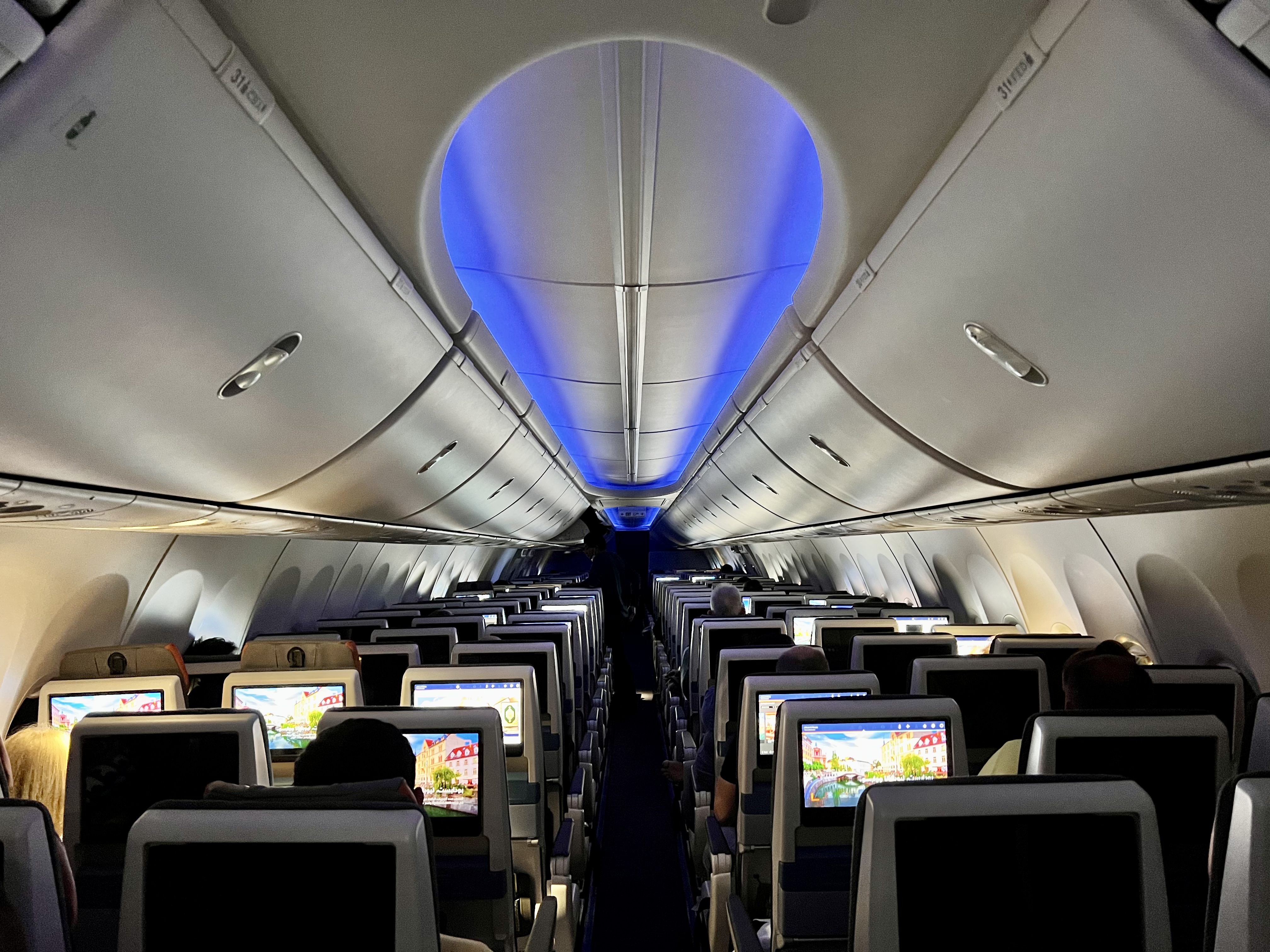
United Airlines has launched a paid Economy Plus seating option that keeps the middle seat empty on its Airbus A321XLR aircraft [1].
The move represents a shift in how airlines monetize cabin space by selling a guarantee of physical distance rather than just a seat assignment. This strategy targets travelers willing to pay a premium for increased privacy and comfort on narrow-body aircraft.
The new configuration replaces the traditional middle seat with an open space [3]. According to some reports, this layout includes a shared table positioned between the window and aisle seats [2]. This design allows the airline to maintain the aircraft's structural layout while changing the commercial availability of the center spot.
United is deploying this option specifically on the Airbus A321XLR, a long-range narrow-body jet. The airline said it is marketing the feature as an upsell to provide passengers with more personal space [1, 3]. By offering this as a paid add-on, the company can generate additional revenue from a segment of the cabin that would otherwise be standard Economy Plus [1].
Details of the rollout were highlighted in reports on July 14 [1], including footage filmed at Denver International Airport [2]. While the aircraft continues to operate with a standard three-seat abreast layout in many sections, this specific Economy Plus modification changes the passenger experience for those who purchase the upgrade [2, 4].
The airline has not specified the exact pricing for the empty-middle-seat option, but it is positioned as a premium tier above standard seating. The implementation of shared tables in these rows aims to maintain utility for passengers, while removing the physical seat that typically occupies the center of the row [2].
“United Airlines has launched a paid Economy Plus seating option that keeps the middle seat empty”
This initiative signals a move toward 'unbundling' the passenger experience further, where basic physical space becomes a luxury commodity. By converting a seat into a paid buffer zone, United is testing the price elasticity of passenger comfort on long-haul narrow-body routes, potentially setting a precedent for other carriers to monetize the absence of passengers.


