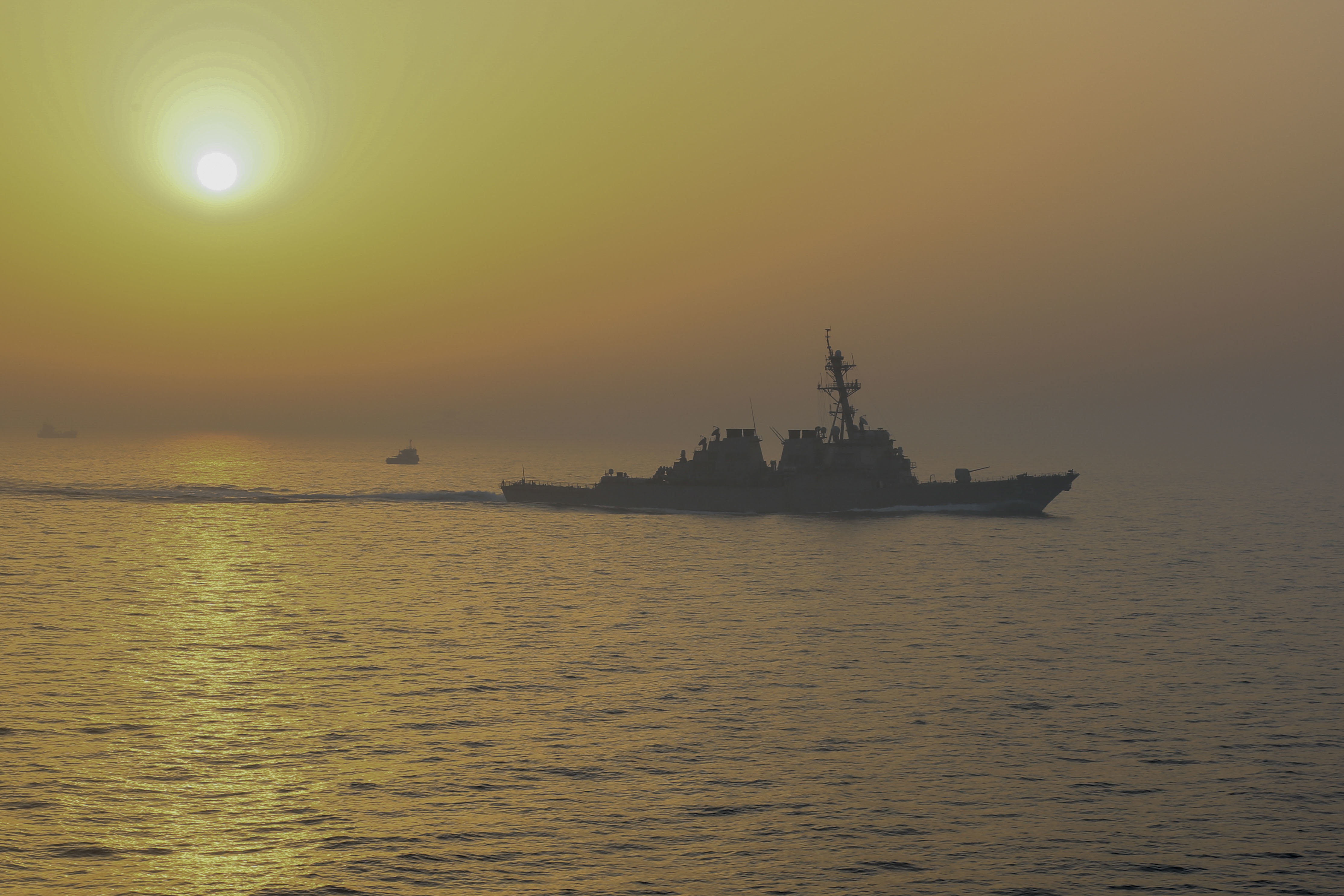
The U.S. military launched a new wave of air strikes against dozens of targets in Iran on Wednesday [1].
These operations mark a significant escalation in regional tensions, as the U.S. seeks to secure critical maritime corridors and deter further aggression against commercial vessels. The move signals a shift toward more aggressive containment strategies in the Persian Gulf.
U.S. Central Command conducted the strikes over a seven-hour period [1]. The operation targeted dozens of locations across Iranian territory [1]. Simultaneously, the U.S. military reimposed a naval blockade of Iranian ports [1], [2].
The military action comes in response to Iranian attacks on commercial shipping in the Strait of Hormuz [1], [2]. U.S. officials said the strikes were intended to pressure Tehran to cease its hostile actions in the region [1], [2].
The blockade specifically targets the Strait of Hormuz region, a vital artery for global energy supplies [1], [3]. By restricting access to Iranian ports, the U.S. aims to limit the operational capacity of Iranian forces to disrupt international trade.
Reports indicate that the Islamic Revolutionary Guard Corps has claimed it carried out its own strikes on U.S. military sites in the Gulf [2]. The U.S. military has not detailed the specific nature of the targets hit during its seven-hour window, though the scope suggests a wide-ranging effort to degrade Iranian capabilities [1].
“The U.S. military launched a new wave of air strikes against dozens of targets in Iran”
The reinstatement of a naval blockade combined with targeted air strikes suggests a strategy of total maritime denial. By controlling the Strait of Hormuz, the U.S. is leveraging Iran's economic dependence on port access to force a cessation of attacks on commercial shipping, raising the risk of a broader conventional conflict in the Gulf.


