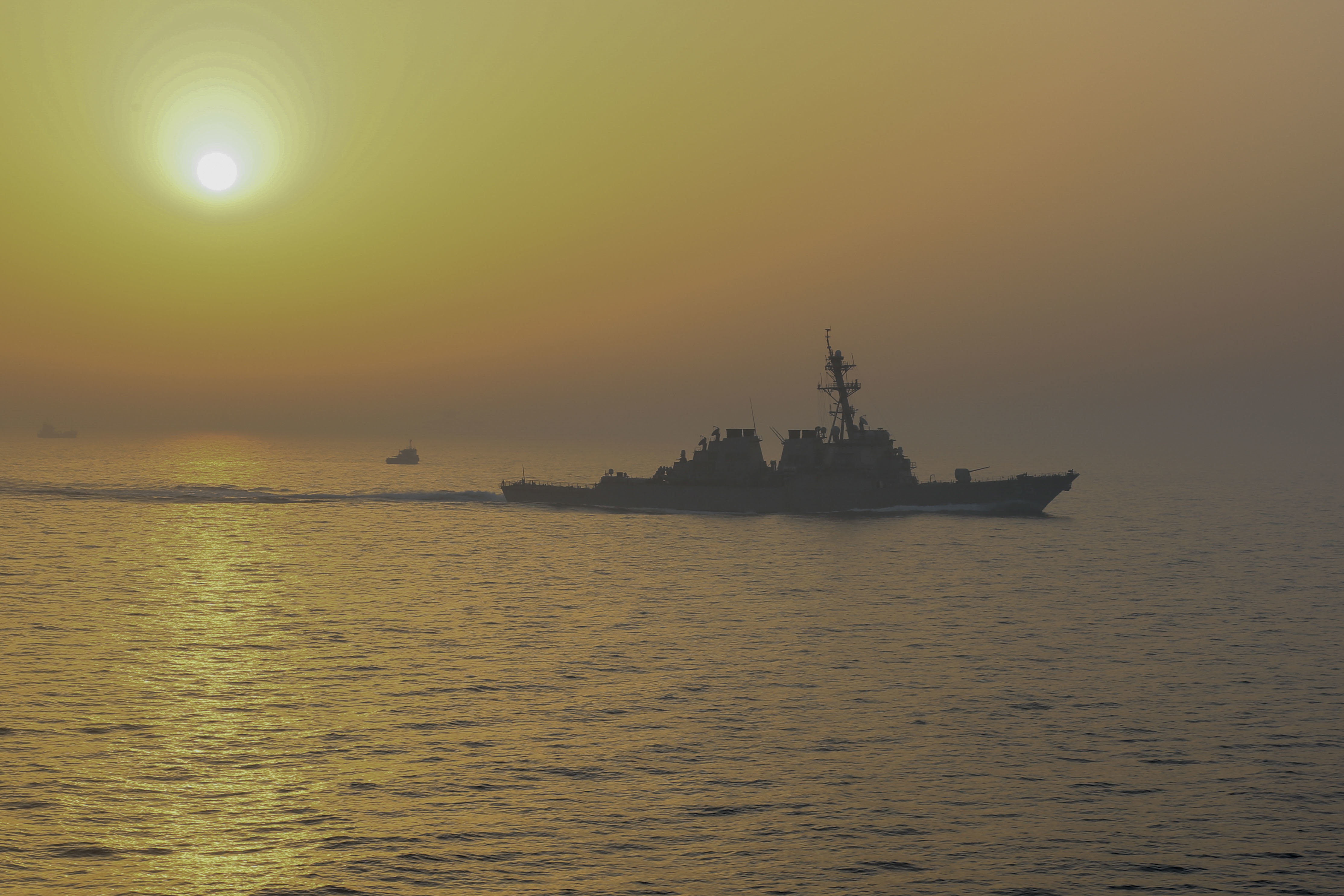
The United States is defending freedom of navigation in the Strait of Hormuz and working to limit Iran's ability to target ships [1].
This effort is critical because the Strait of Hormuz is one of the world's most important oil transit chokepoints. Any disruption to maritime traffic in the region can trigger global energy price volatility and threaten international trade security.
Secretary of State Marco Rubio (R-FL) said the U.S. is taking steps to protect maritime traffic from Iranian threats [1]. The initiative aims to ensure free passage for commercial, and military vessels through the narrow waterway.
The U.S. strategy focuses on curbing the capacity of Iran to execute attacks against ships [1]. By limiting these capabilities, the U.S. intends to maintain stability in a region frequently characterized by naval tensions—a goal that requires constant monitoring of Iranian naval activity.
U.S. officials said that the protection of international shipping lanes is a matter of national and global security [1]. The focus remains on preventing the closure of the strait, which would isolate several Gulf nations from their primary sea routes.
Coordination with international partners is part of the broader effort to deter aggression [1]. The U.S. continues to monitor the region to prevent the escalation of hostilities that could lead to a wider conflict in the Middle East.
“The United States is defending freedom of navigation in the Strait of Hormuz.”
The U.S. focus on the Strait of Hormuz reflects a strategic priority to prevent Iran from leveraging its geography to disrupt global oil markets. By explicitly stating the goal of limiting Iran's targeting capabilities, the U.S. is signaling a policy of active deterrence to maintain the flow of commerce through a high-risk geopolitical corridor.


