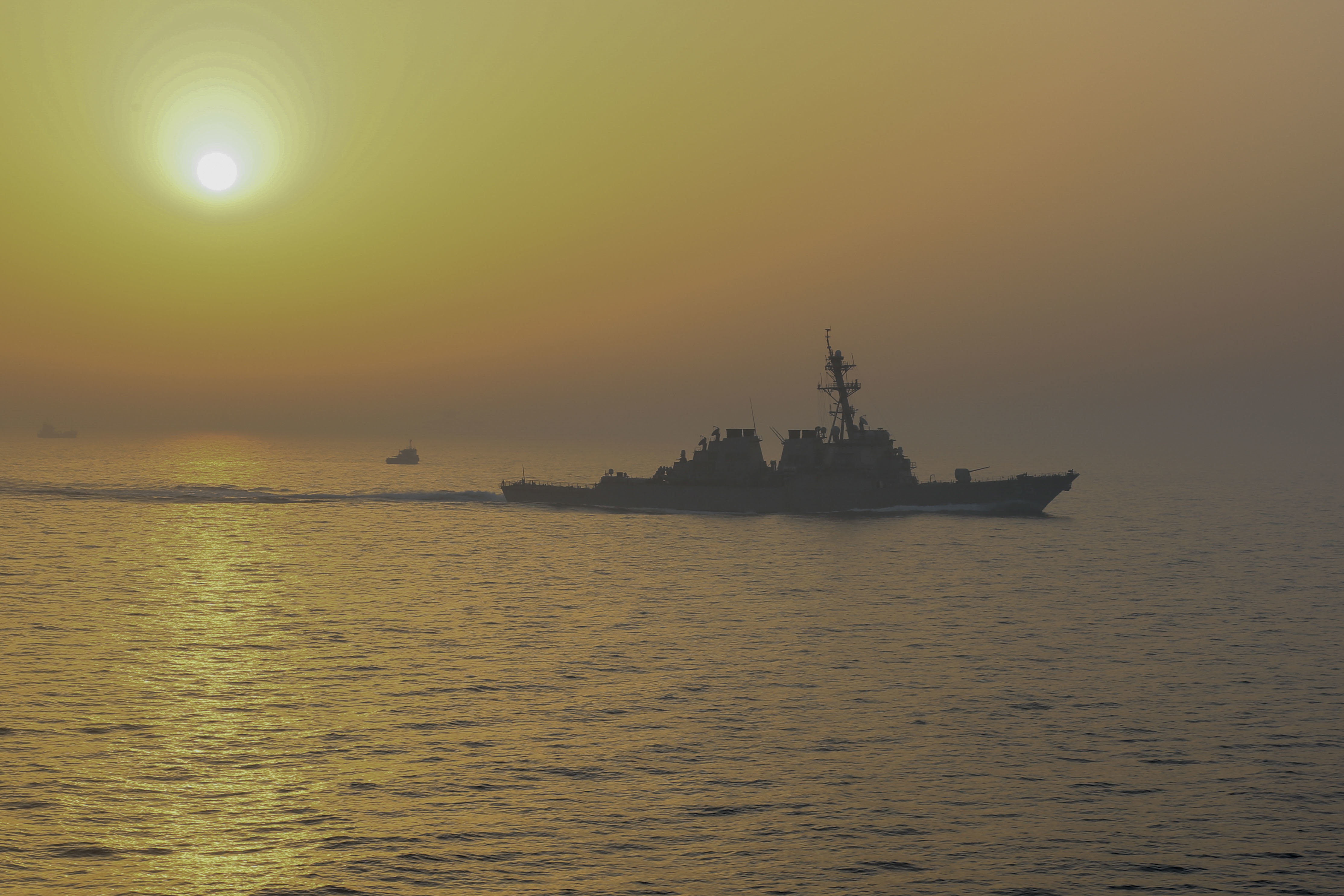
The United States completed a series of consecutive attacks against Iran that lasted for one week [1].
This escalation marks a significant spike in direct military confrontation between the two nations, threatening the stability of global energy corridors and regional security.
Tehran responded to the campaign by striking U.S. military bases located in Kuwait and Bahrain [1]. Iranian officials said the strikes were retaliation for the week of U.S. operations that concluded Saturday, the 18th [1].
While military actions intensified, other reports indicate a parallel movement toward a cessation of violence. The United States and Iran are reportedly foreseeing a suspension of attacks as they negotiate control of the Strait of Hormuz [2]. This strategic waterway is critical for global oil shipments, making its stability a priority for international markets.
Diplomatic efforts continued following the peak of the violence. Representatives from Iran and Oman met Monday, the 29th, to discuss the situation [2]. The involvement of Oman suggests a mediated approach to prevent a full-scale regional war.
The conflict has shifted from targeted strikes to a broader regional engagement involving third-party territories. The U.S. operations spanned seven days [1], creating a volatile environment across the Persian Gulf.
“The United States completed a series of consecutive attacks against Iran that lasted for one week.”
The contradiction between active military strikes and simultaneous diplomatic negotiations suggests a 'dual-track' strategy. Both the U.S. and Iran appear to be utilizing military pressure to strengthen their respective bargaining positions before finalizing an agreement on the Strait of Hormuz, a geopolitical chokepoint where control dictates global energy leverage.


