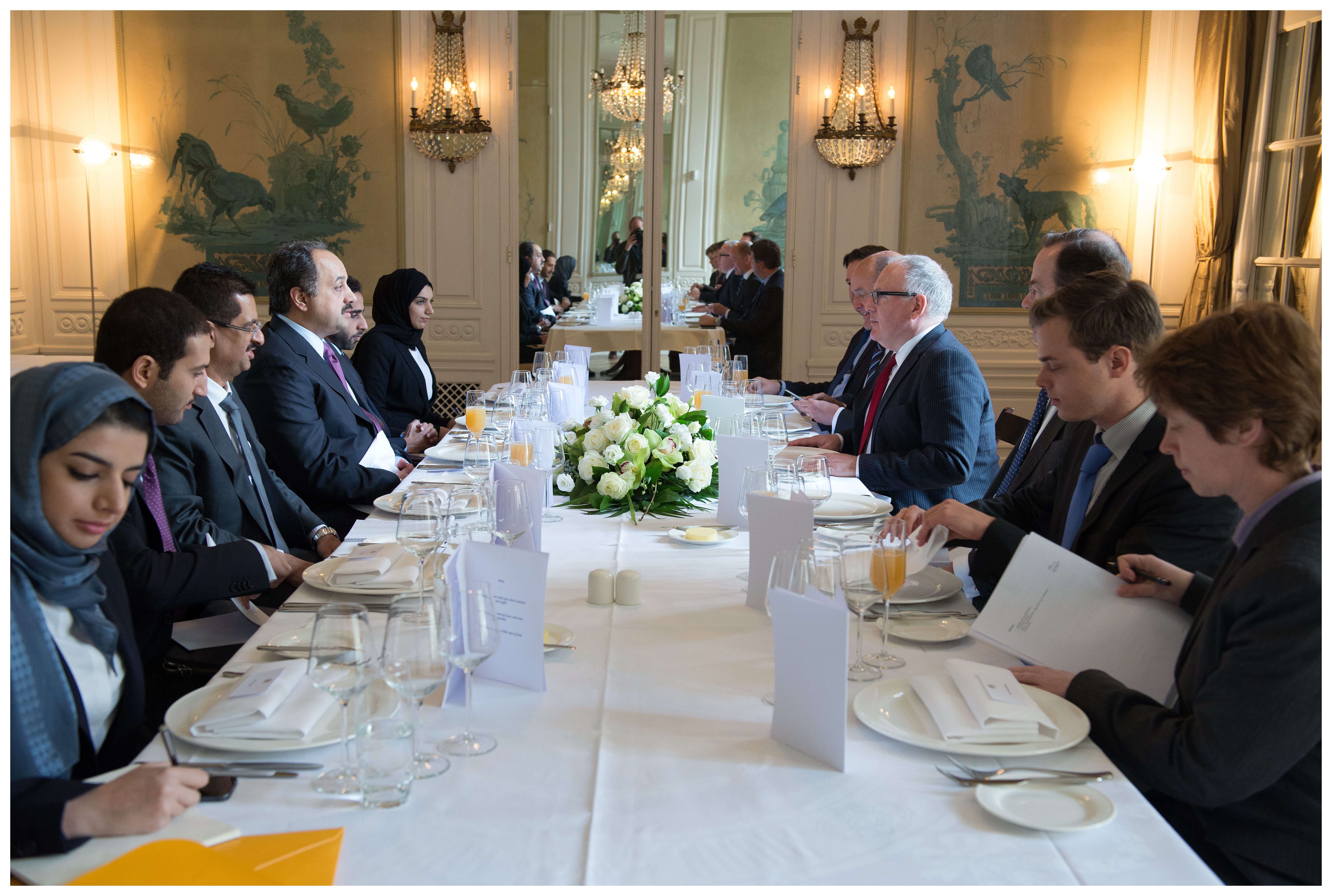
The United States and Iran held cease-fire negotiations in Pakistan during April 2026 to address the spiraling conflict in the Middle East.
These talks represent a critical attempt to establish a framework for lasting peace and resolve disputes regarding the Strait of Hormuz and Iran's nuclear program. The outcome of these discussions determines whether the region moves toward stabilization or further escalation.
Reports on the results of the mid-April meetings are contradictory. CNN reported that the United States and Iran agreed to a two-week cease-fire [1] that was reached less than two hours before a deadline set by President Donald Trump (R-TX). However, the Associated Press reported that Vice President J.D. Vance (R-OH) said negotiations ended without reaching an agreement [3].
The final round of talks in Pakistan lasted 21 hours [3]. Despite the conflicting reports on a formal deal, President Trump said the U.S. would extend the cease-fire with Iran at the request of Pakistan [4]. This diplomatic effort coincided with a separate three-week extension granted to the Lebanese truce [5].
Iranian parliamentary speaker Mohammad Bagher Ghalibaf acknowledged some movement toward a resolution but noted the gap between the two nations. "Progress has been made, but we are still far from agreeing on a peace deal," Ghalibaf said [6].
Following the Pakistani summit, Iran submitted a formal peace offer to the U.S. administration on April 28 [7]. Tehran is currently weighing the U.S. response to that proposal as both nations navigate the fragile security environment in the region.
“"Progress has been made, but we are still far from agreeing on a peace deal."”
The discrepancy between reports of a two-week cease-fire and the statement that no agreement was reached suggests a high level of volatility in the diplomatic process. While the extension of truces and the submission of a peace proposal indicate a mutual desire to avoid total war, the lack of a verified, comprehensive deal shows that core issues—specifically nuclear capabilities and maritime security—remain unresolved.