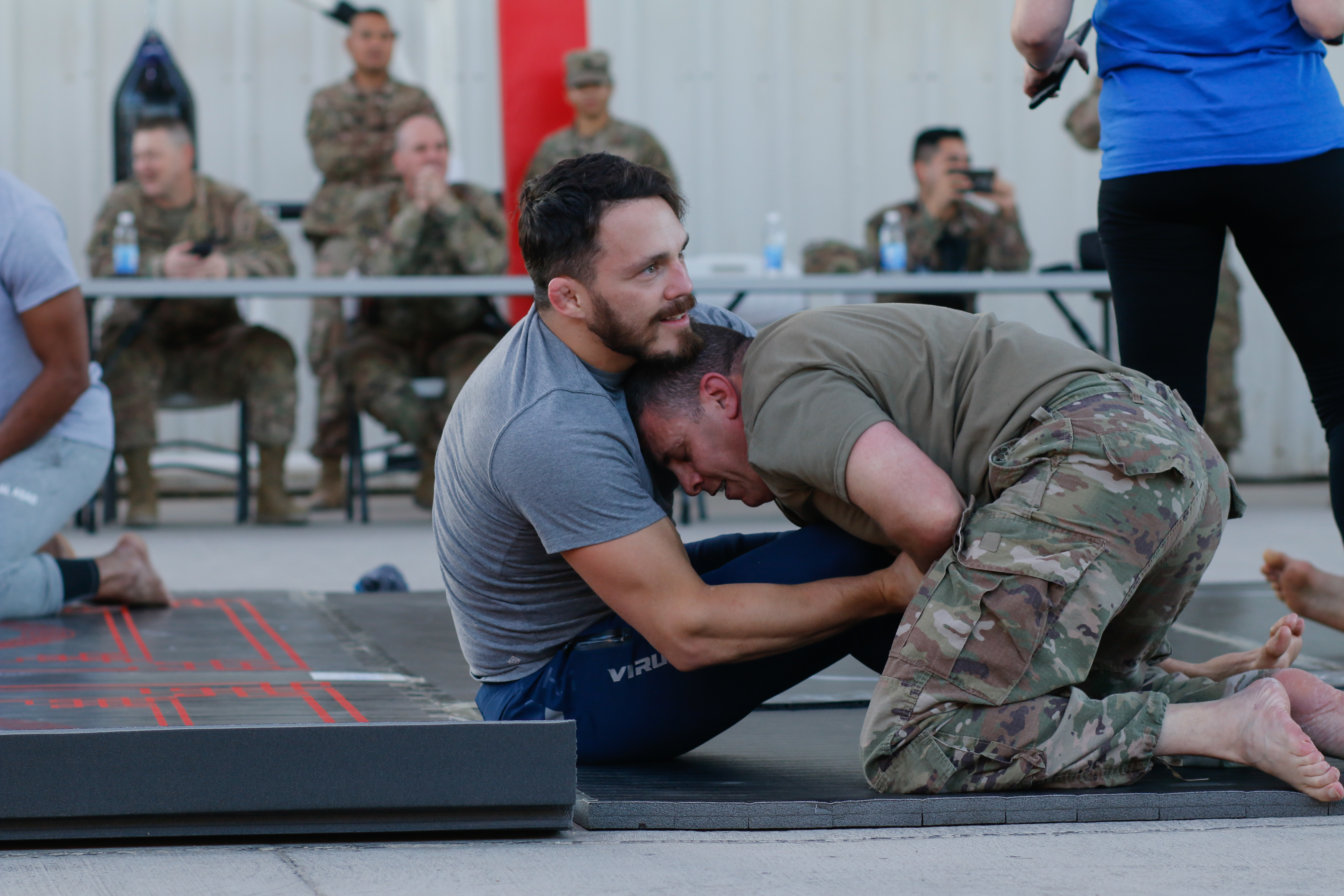
The U.S. military launched a series of airstrikes against Iranian targets in the Strait of Hormuz and port cities this week [1, 3].
The escalation threatens to destabilize the Middle East as regional powers and mediators from Bahrain, Kuwait, and Pakistan attempt to manage the conflict [1, 2].
Reports indicate the U.S. has carried out strikes for nine consecutive nights [3]. These operations follow the killing of at least three American soldiers [1]. President Donald Trump said Iran will "pay" for the deaths of those service members [1].
Recent military activity has centered on the port cities of Bandar Abbas and Sirik in Iran, where explosions were reported [1]. Other reports indicate that attacks have also hit infrastructure and ports in Bahrain, and Kuwait [2]. In the Strait of Hormuz, one tanker vessel was forced to abandon its crew following an attack [4].
U.S. officials have linked the instability to Houthi-led threats. Former CIA Director John Brennan said the U.S. has "good intel" and will "take actions to mitigate" the danger posed by the Houthis [2].
President Trump said on Tuesday that Iran's nuclear site will be hit "very heavily" soon and that it is "not a thing they can do" to prevent it [3].
Regional mediators continue to engage with officials from Pakistan, Kuwait, and Bahrain to prevent a wider war as tensions peak in the Gulf [1, 2].
“Iran will "pay" for the killing of at least three American soldiers.”
The shift from targeted retaliatory strikes to threats against nuclear infrastructure indicates a significant escalation in the U.S.-Iran rivalry. By expanding the theater of conflict to include infrastructure in Bahrain and Kuwait, the hostilities now risk drawing in multiple Gulf states, potentially disrupting global oil shipments through the Strait of Hormuz.
'%2F%3E%0A%20%20%20%20%3Crect%20width%3D'1600'%20height%3D'900'%20fill%3D'url(%23v)'%2F%3E%0A%20%20%20%20%3Cg%20opacity%3D'0.08'%20fill%3D'%23ffffff'%3E%0A%20%20%20%20%20%20%3Ccircle%20cx%3D'1420'%20cy%3D'180'%20r%3D'220'%2F%3E%0A%20%20%20%20%20%20%3Ccircle%20cx%3D'1500'%20cy%3D'760'%20r%3D'120'%2F%3E%0A%20%20%20%20%3C%2Fg%3E%0A%20%20%20%20%3Cline%20x1%3D'80'%20y1%3D'172'%20x2%3D'220'%20y2%3D'172'%20stroke%3D'%23ffffff'%20stroke-width%3D'3'%20stroke-opacity%3D'0.6'%2F%3E%0A%20%20%20%20%3Ctext%20x%3D'80'%20y%3D'140'%20font-family%3D'Inter%2C%20-apple-system%2C%20Helvetica%2C%20sans-serif'%20font-weight%3D'700'%20font-size%3D'28'%20fill%3D'%23ffffff'%20letter-spacing%3D'6'%3EHANNA%20%C2%B7%20NEWS%3C%2Ftext%3E%0A%20%20%20%20%3Ctext%20x%3D'80'%20y%3D'230'%20font-family%3D'Inter%2C%20-apple-system%2C%20Helvetica%2C%20sans-serif'%20font-weight%3D'600'%20font-size%3D'40'%20fill%3D'%23ffffffb3'%20letter-spacing%3D'4'%3EWORLD%3C%2Ftext%3E%0A%20%20%20%20%3Ctext%20x%3D'80'%20y%3D'694'%20font-family%3D'Playfair%20Display%2C%20Georgia%2C%20serif'%20font-weight%3D'800'%20font-size%3D'110'%20fill%3D'%23ffffff'%20letter-spacing%3D'-1'%3ETimes%20Now%20Reporter%20Attacked%3C%2Ftext%3E%3Ctext%20x%3D'80'%20y%3D'820'%20font-family%3D'Playfair%20Display%2C%20Georgia%2C%20serif'%20font-weight%3D'800'%20font-size%3D'110'%20fill%3D'%23ffffff'%20letter-spacing%3D'-1'%3Eby%20Mob%20at%20New%20Delhi%20Protest%3C%2Ftext%3E%0A%20%20%20%20%3Ctext%20x%3D'80'%20y%3D'870'%20font-family%3D'Inter%2C%20-apple-system%2C%20Helvetica%2C%20sans-serif'%20font-weight%3D'500'%20font-size%3D'22'%20fill%3D'%23ffffff66'%20letter-spacing%3D'2'%3Enews.hanna-ai.com%3C%2Ftext%3E%0A%20%20%3C%2Fsvg%3E)
