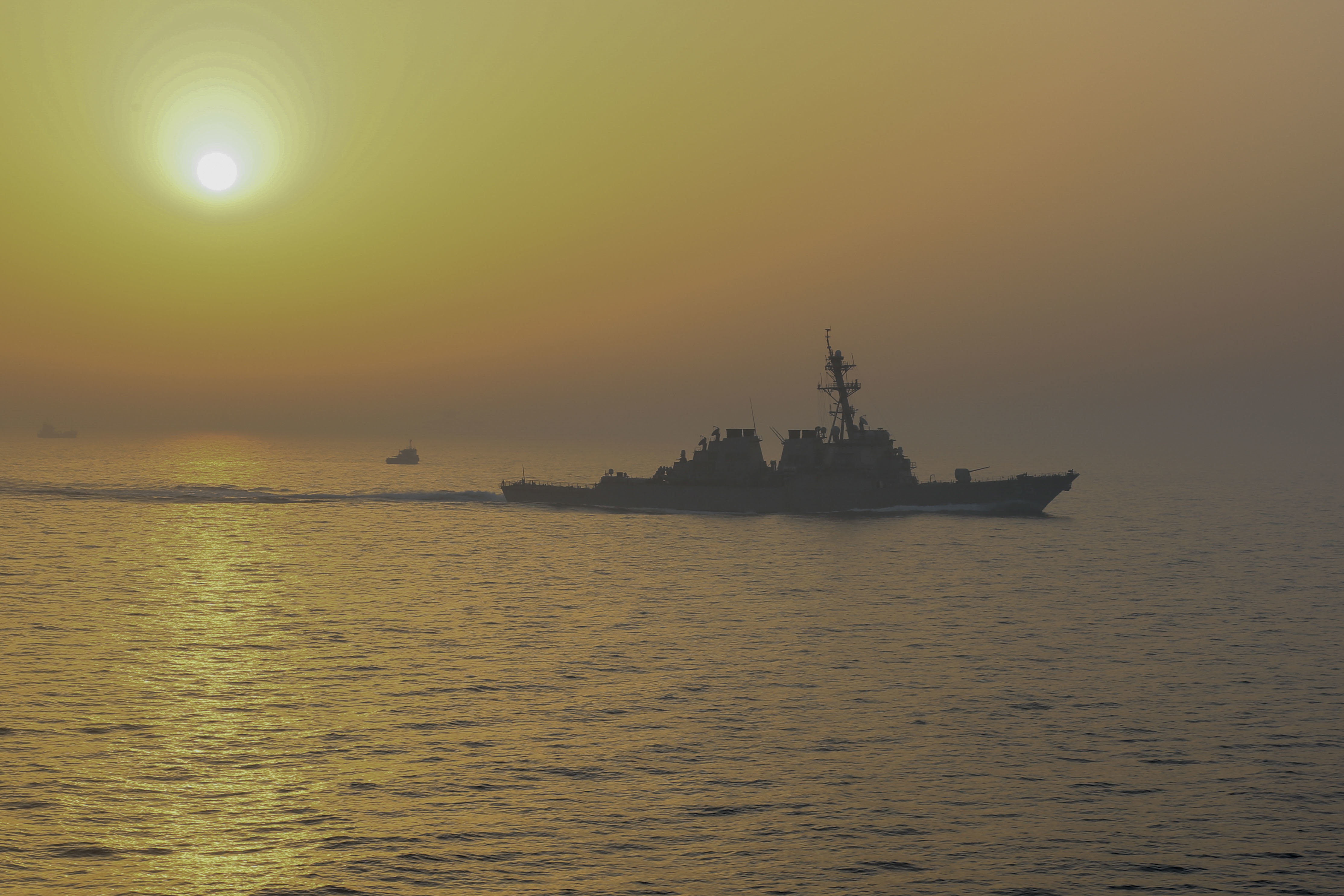
The United States launched missile strikes against Iran on Sunday, July 12, following a series of attacks in the Strait of Hormuz [1].
The escalation threatens one of the world's most vital oil transit chokepoints, risking global energy stability and increasing the likelihood of a broader regional conflict.
The U.S. military action followed reports that three ships were hit in the narrow waterway between Oman and Iran [3]. These strikes mark a renewed wave of tit-for-tat hostilities between the two nations as they contest the operational status of the strait [1].
Tehran said that the Strait of Hormuz is now closed to shipping [1]. However, U.S. officials said the waterway remains open [2]. This contradiction creates significant uncertainty for commercial maritime traffic, and international shipping companies navigating the region.
Global markets reacted quickly to the military escalation. Oil prices jumped four percent [4] as traders braced for potential disruptions to the flow of crude oil through the strait. The waterway is essential for the transport of energy resources from the Persian Gulf to the rest of the world.
Both governments continue to trade accusations regarding the security of the passage. While the U.S. maintains that the route is navigable, the Iranian government said the strait is closed [1], [2].
“The United States launched missile strikes against Iran on Sunday, July 12”
The conflicting reports on the status of the Strait of Hormuz suggest a strategic information war intended to pressure global markets and diplomatic allies. Because the strait is a critical artery for global oil supplies, any prolonged closure or perceived instability directly impacts energy pricing and inflation worldwide, regardless of whether the waterway is physically obstructed.