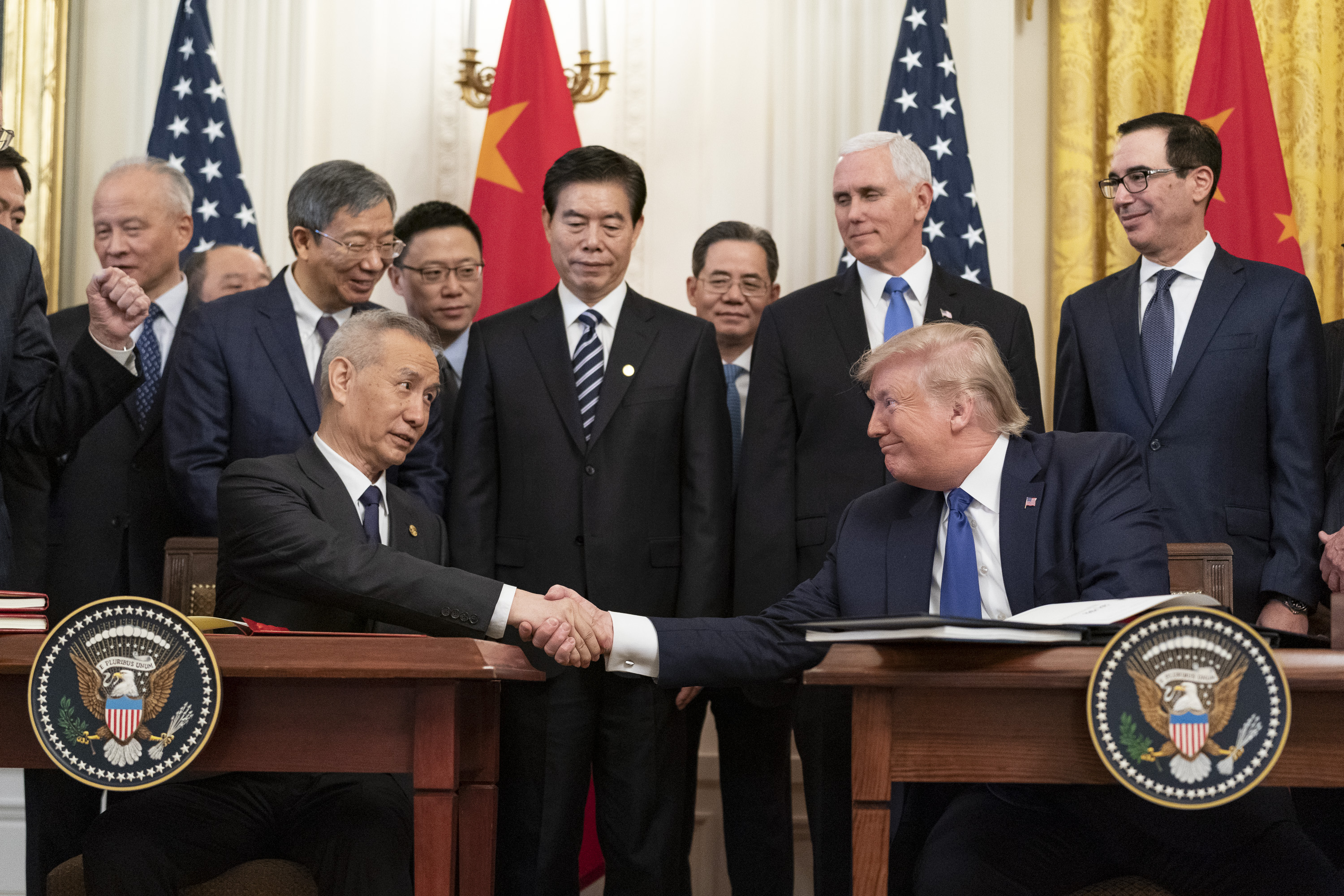
U.S. President Donald Trump and Iranian President Masoud Pezeshkian signed a memorandum of understanding on Wednesday to end hostilities and reopen the Strait of Hormuz [1, 2, 3].
The agreement represents a significant attempt to stabilize regional security and restore global shipping lanes. By extending the current cease-fire and initiating long-term peace talks, the two nations aim to prevent further escalation in a volatile region [2, 4].
The document was signed digitally in Islamabad, Pakistan [1]. The memorandum consists of 14 points designed to address the root causes of the conflict [5]. Among the primary objectives is a goal to end the war within 60 days [4].
Economic recovery is a central pillar of the agreement. The deal includes a reconstruction plan valued at $300 billion [5]. This financial commitment is intended to facilitate the rebuilding of infrastructure damaged during the hostilities.
Beyond the immediate cease-fire, the agreement focuses on the restoration of maritime trade. The reopening of the Strait of Hormuz is critical for the flow of oil, and commercial goods across the globe [2, 3, 4].
The deal also opens the door for international oversight of Iran's nuclear capabilities. The IAEA chief said, "Now the technical work starts on Iran's nuclear programme" [2].
Reporting from ABC News said that the U.S. and Iran have signed a memorandum of understanding to end the war and reopen the Strait of Hormuz [4].
“The US and Iran have signed a memorandum of understanding to end the war and reopen the Strait of Hormuz.”
The digital signing of this MoU in Islamabad signals a shift toward diplomatic resolution over military confrontation. By tying a massive $300 billion reconstruction fund to the cessation of hostilities and the reopening of the Strait of Hormuz, the agreement attempts to use economic incentives to ensure regional stability. However, the success of the deal depends on the 'technical work' regarding Iran's nuclear program, which remains a primary point of contention for international regulators.


