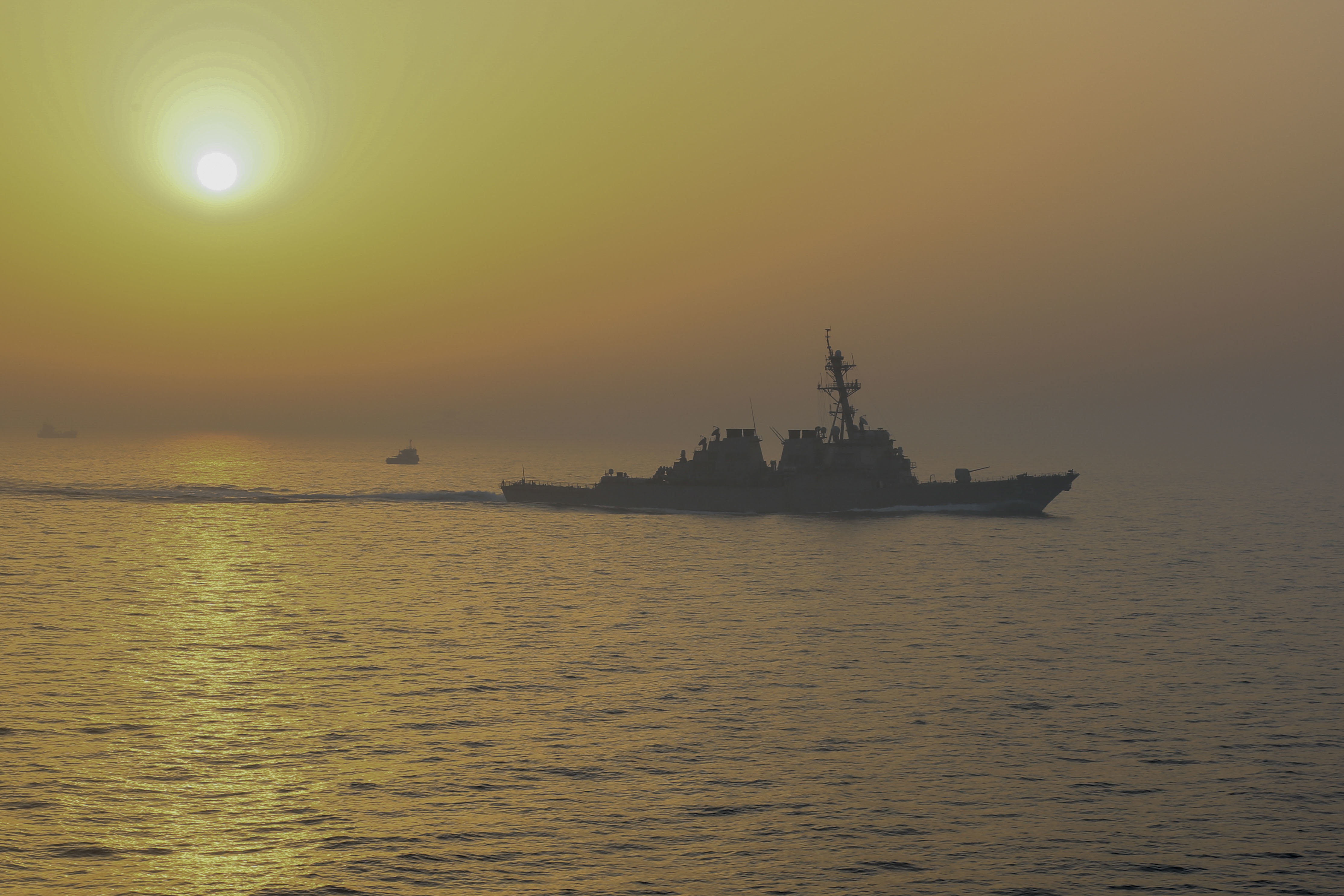
U.S. Central Command said Saturday that military forces have redirected more than 100 commercial vessels as part of a naval blockade of Iranian ports [1].
The operation marks a significant escalation in maritime restrictions within the Strait of Hormuz. Because this waterway is a critical chokepoint for global energy supplies, the blockade threatens to disrupt international shipping lanes and alter global trade patterns.
The blockade was ordered by President Trump in April 2026 [1]. This military action comes amid ongoing tensions and concurrent peace talks between the U.S. and Iran [5]. The redirection of vessels is intended to enforce the blockade and prevent commercial traffic from accessing specific Iranian ports.
To maintain the operation, the U.S. has deployed more than 15,000 troops [1]. These forces are tasked with monitoring the Strait and ensuring that commercial ships adhere to the redirection orders. While some reports state exactly 100 vessels were redirected [2], other military data indicates the number has surpassed that mark [1].
The presence of such a large military contingent in the region increases the risk of accidental kinetic engagement. The redirection of commercial traffic requires precise coordination to avoid collisions, or maritime accidents, in one of the world's most congested shipping lanes.
U.S. Central Command said it continues to manage the flow of traffic to ensure that only authorized vessels proceed. The operation remains active as the U.S. government balances military pressure with the diplomatic efforts currently underway.
“U.S. Central Command announced Saturday that military forces have redirected more than 100 commercial vessels”
The redirection of over 100 ships signals that the U.S. is utilizing a 'maximum pressure' maritime strategy to gain leverage during peace talks. By physically restricting access to Iranian ports, the U.S. is demonstrating its ability to isolate Iran economically, though this strategy risks triggering a broader regional conflict or causing a spike in global oil prices due to the volatility of the Strait of Hormuz.


