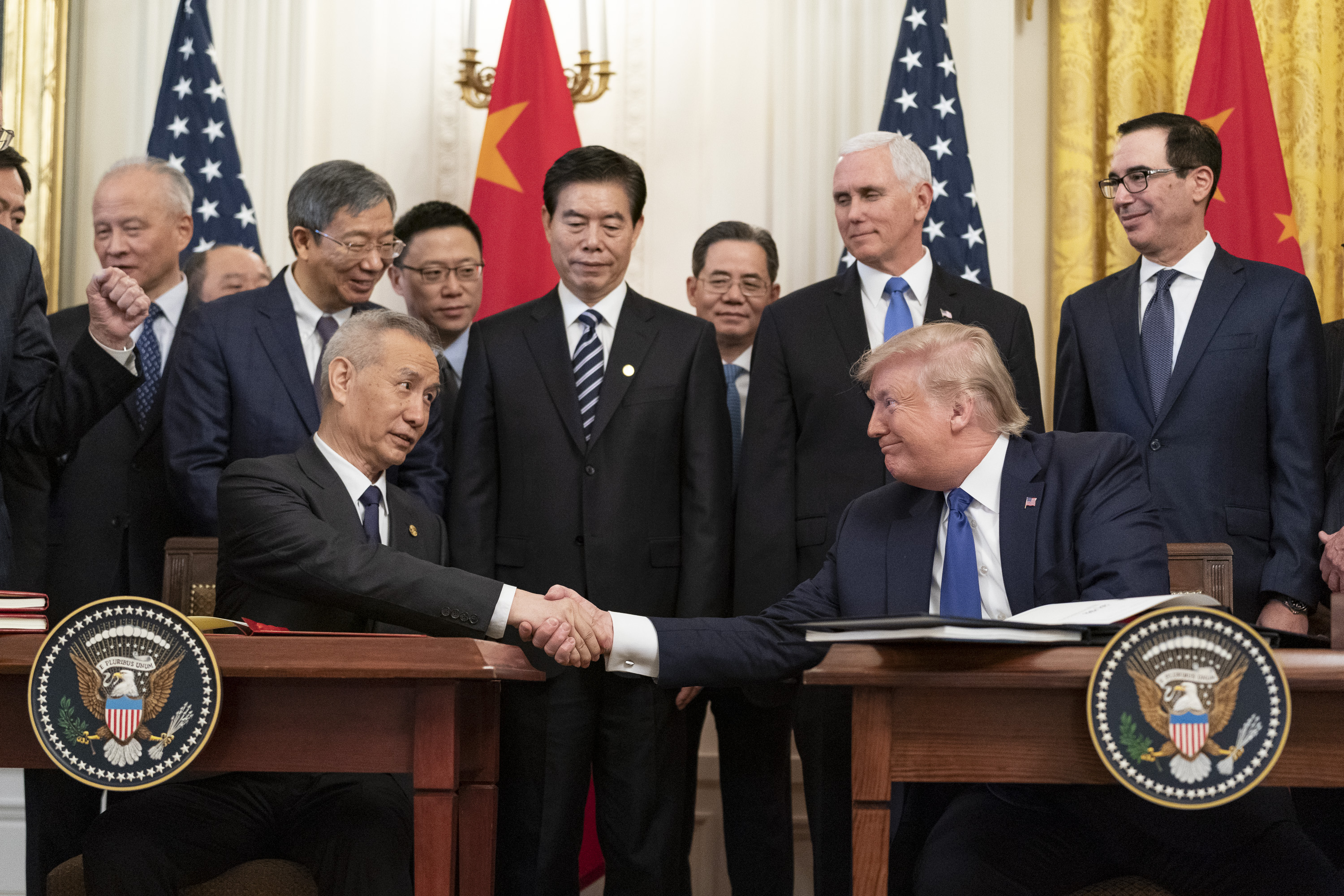
President Donald Trump and the government of Iran remotely signed a 14-point agreement on June 17, 2026, to end their ongoing conflict [1].
The deal is critical because it aims to reopen the Strait of Hormuz, a strategically vital shipping lane that has been disrupted by the war [1, 2].
The agreement was finalized via video conference. This remote signing follows weeks of diplomatic tension and previous reports from May 23, 2026, indicating that the two nations were still negotiating the terms of the peace deal [2].
President Trump said, "This was not easy," after the signing ceremony [1]. The 14-point framework [1] seeks to establish a cessation of hostilities between the U.S. and Iranian governments to stabilize the region.
Earlier this year, the administration signaled its intent to resolve the crisis. On May 23, Trump said, "We have largely negotiated an agreement that will end the war and reopen the Strait of Hormuz" [2].
While the remote signing was reported on June 17, some reports indicated earlier in the process that the deal had not yet been formally signed [2]. The current agreement marks a shift toward the restoration of global shipping routes through the Strait of Hormuz [1, 2].
“"This was not easy,"”
The reopening of the Strait of Hormuz is the primary economic driver of this agreement, as the waterway is a global chokepoint for oil and commercial shipping. While the signing suggests a diplomatic breakthrough, the transition from a remote agreement to a stable ceasefire depends on the verifiable implementation of the 14 points by both the U.S. and Iranian governments.


