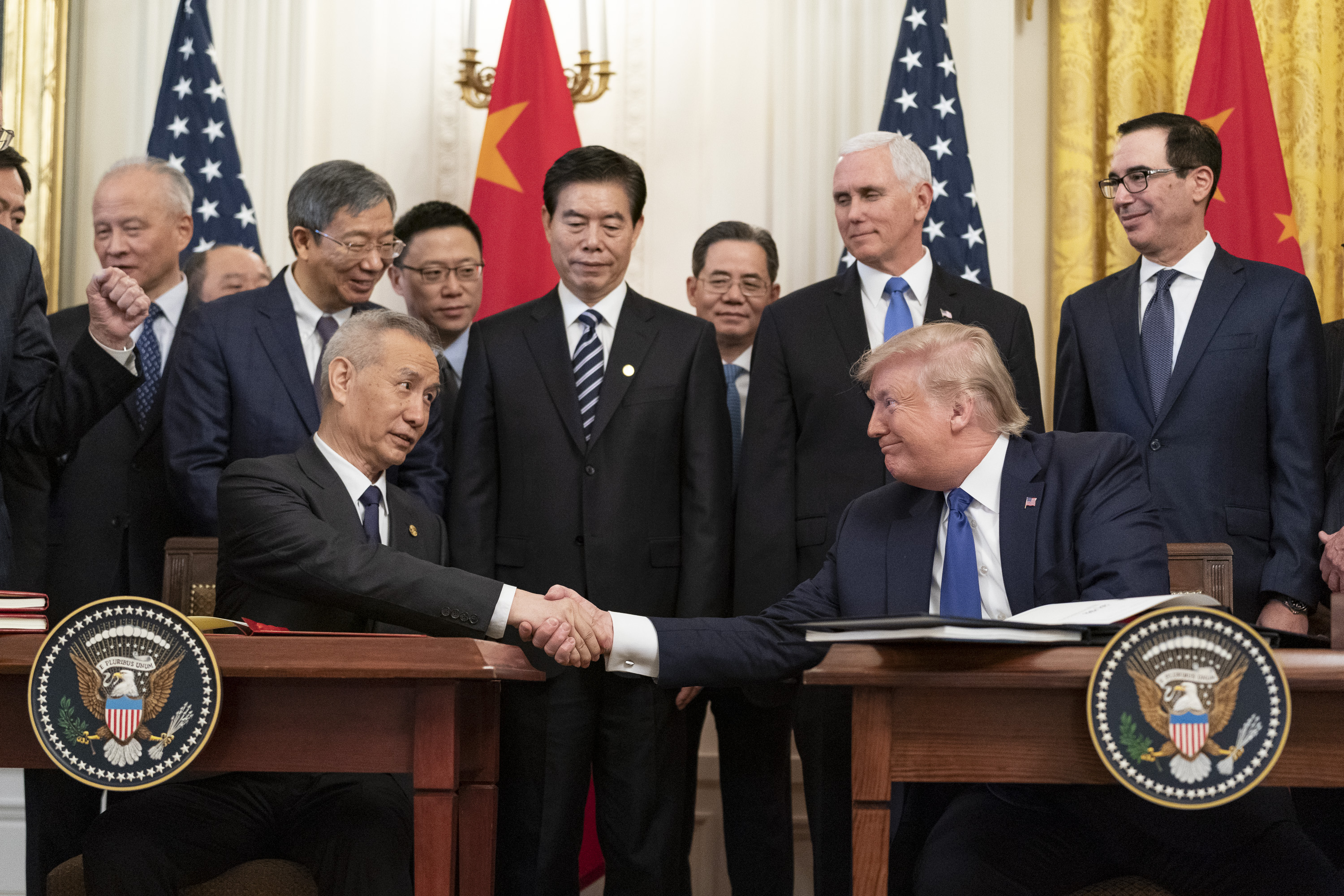
The United States and Iran signed a peace agreement on June 18, 2026 [1], to end their war and reopen the Strait of Hormuz.
The agreement is critical because the Strait of Hormuz is a strategic waterway between the Persian Gulf and the Gulf of Oman. Restoring safe commercial navigation through this corridor is essential for global trade and energy security.
President Donald Trump and President Masoud Pezeshkian reached the deal to terminate hostilities between the two nations [1], [2]. The primary objective of the pact is to ensure that shipping lanes remain open and secure for international vessels.
Reports on the finality of the deal vary across news organizations. Some sources said that the two countries signed an initial agreement [2], while others report that the U.S. and Iran have reached a comprehensive deal to end the war [1].
However, conflicting reports have emerged regarding the status of the negotiations. Some outlets said that President Trump left a meeting with Iranian officials without a final determination [3]. Other reports suggested that negotiations were delayed due to a ceasefire in Lebanon [4].
Despite these contradictions, the stated goal of the agreement remains the restoration of stability in the region. The deal focuses on the immediate cessation of conflict, and the removal of barriers to maritime traffic in the Strait of Hormuz [1], [2].
Official representatives have not provided a detailed timeline for the full implementation of the security measures outlined in the agreement. The transition toward normalized navigation will likely depend on the verification of terms by both the U.S. and Iranian governments.
“The United States and Iran signed a peace agreement on June 18, 2026.”
The potential reopening of the Strait of Hormuz would alleviate significant pressure on global oil prices and shipping insurance rates. While the conflicting reports regarding the deal's finality suggest diplomatic volatility, any formal agreement between the U.S. and Iran marks a significant shift in Middle Eastern geopolitics and a move toward de-escalation in a high-tension maritime chokepoint.


