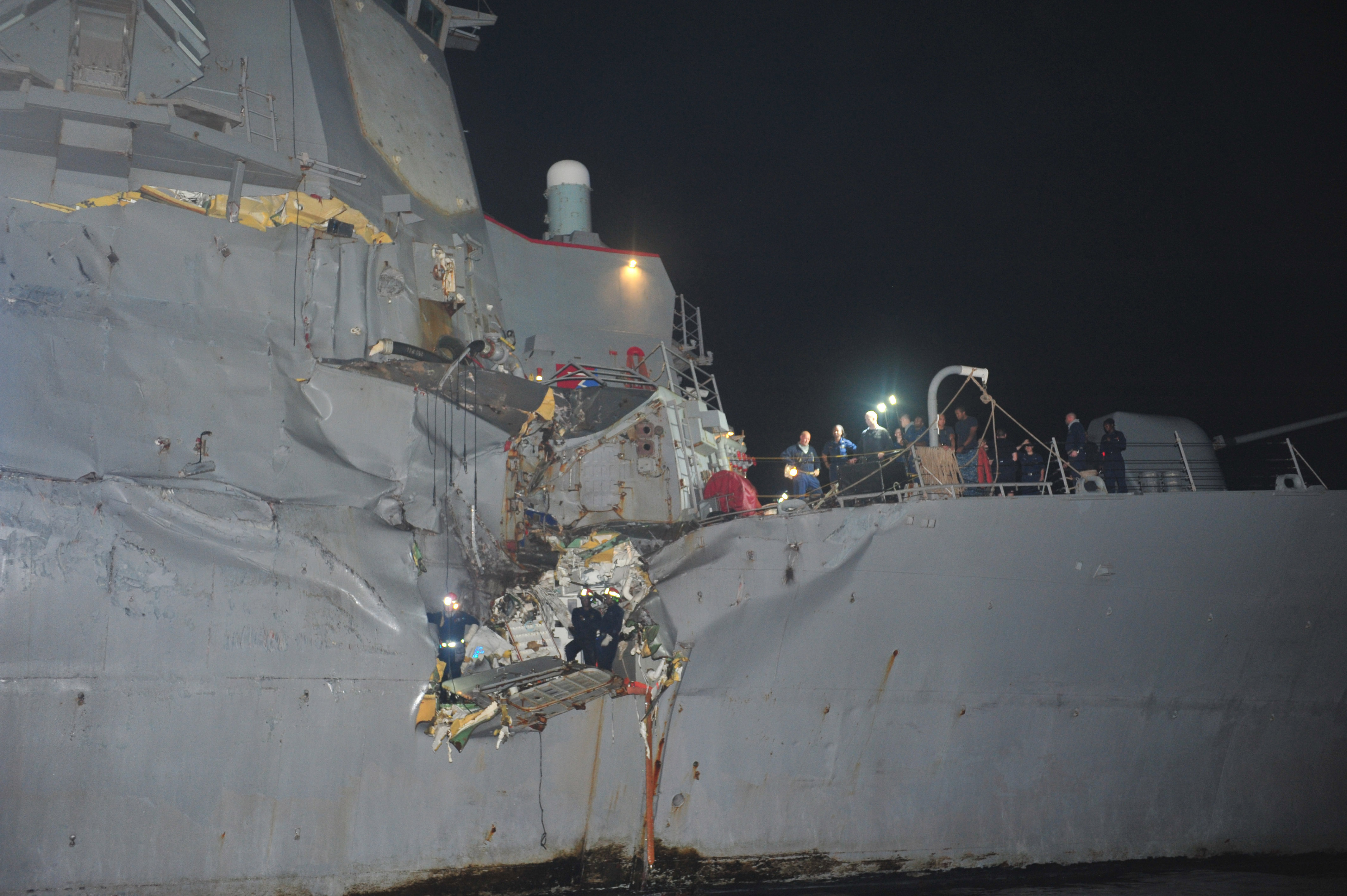
The United States launched air strikes against Iranian targets after Iran fired cruise missiles at two tankers in the Strait of Hormuz [1].
This escalation threatens one of the world's most vital shipping lanes, where any prolonged disruption could destabilize global oil markets and trigger a broader regional conflict.
President Donald Trump (R-FL) announced a temporary cease-fire lasting two weeks [2]. This agreement is subject to Iran guaranteeing the complete, immediate, and safe opening of the waterway [2]. The Strait of Hormuz, located between Iran's coast and Oman’s Musandam Peninsula, serves as a primary artery for global energy shipments [3].
Despite the offer of a truce, the U.S. administration has considered more aggressive naval measures. Trump said, "We're sweeping the strait" [4]. Some reports indicate the administration has discussed reinstating a blockade of the waterway to pressure Tehran [5].
U.S. officials have warned that any vessel attempting to transit the Strait without authorization may face consequences. A U.S. official said, "If any vessel attempts to transit in the Strait ... we will take appropriate action" [6].
These events follow a pattern of Iranian efforts to leverage the narrow waterway to pressure the U.S. and its Gulf allies [7]. In response, the U.S. is attempting to prevent the disruption of oil shipments while seeking diplomatic concessions [7].
Additional discussions regarding the management of the waterway have included a proposed transit fee for ships in the Strait of Hormuz totaling 20 percent [8]. This proposal reflects the high economic stakes involved in controlling the passage.
These military and diplomatic moves took place in April 2026, marking a significant intensification of hostilities between the two nations [1, 5].
“"We're sweeping the strait."”
The U.S. strategy in the Strait of Hormuz balances immediate military retaliation with economic leverage. By alternating between the threat of a blockade and the offer of a short-term cease-fire, the U.S. aims to force Iran into a position where it must guarantee maritime security to avoid total economic isolation. The mention of transit fees further suggests a move toward treating the waterway as a regulated zone rather than an open international passage.


![Deputy Secretary of State Antony "Tony" Blinken addresses students at Seoul National University in Seoul, South Korea, on October 28, 2016. [State Department photo/ Public Domain]](https://upload.wikimedia.org/wikipedia/commons/d/d8/Deputy_Secretary_Blinken_Addresses_Students_at_Seoul_National_University_-_Flickr_-_U.S._Department_of_State.jpg)