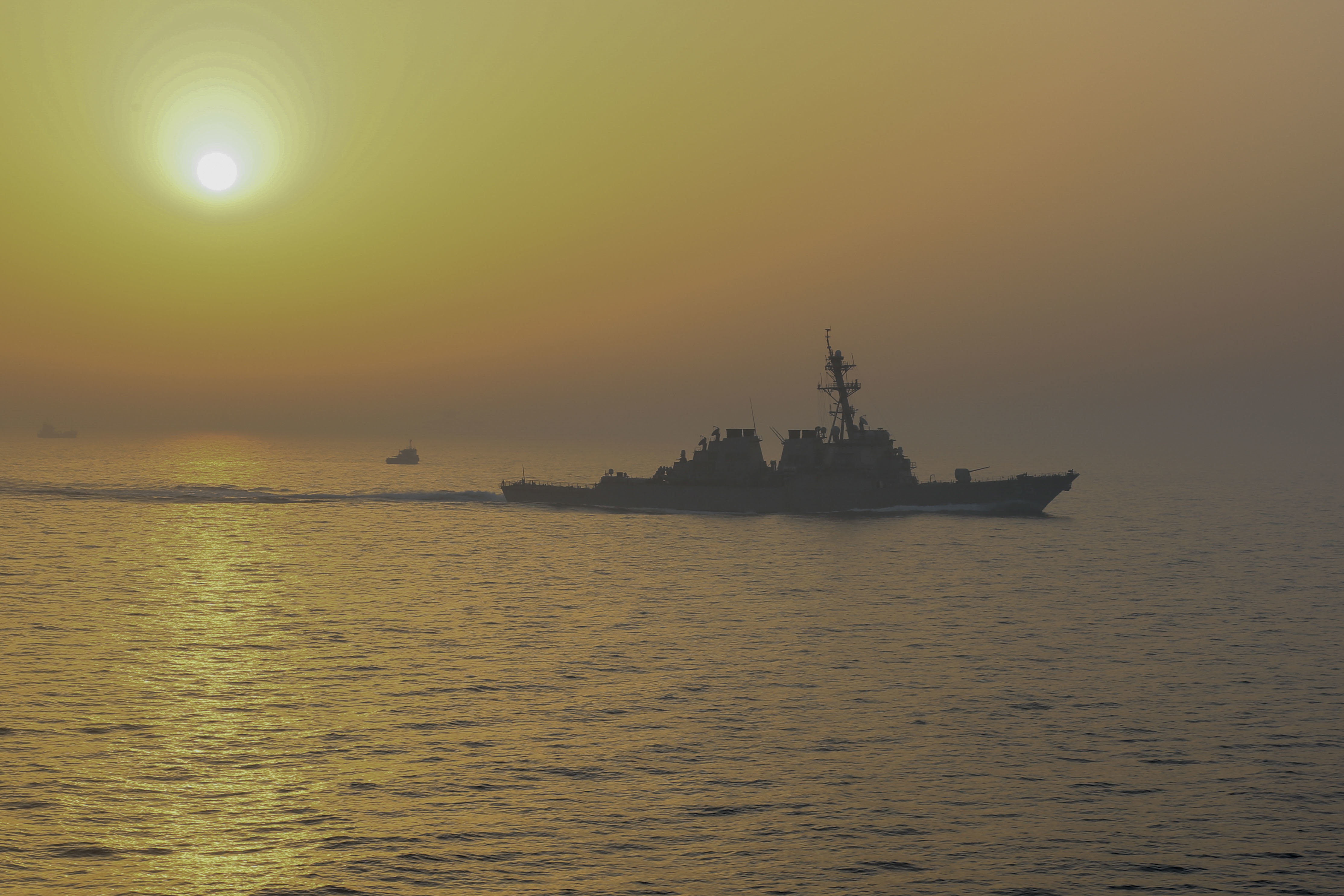
The United States launched a new wave of air and naval strikes against Iranian targets on Wednesday, July 12, 2024 [1].
These operations represent a significant escalation in regional tensions, as the U.S. seeks to secure one of the world's most critical maritime chokepoints. Any prolonged disruption to the Strait of Hormuz threatens global energy markets, and the stability of international trade.
This latest action marks the fifth [2] consecutive day of attacks between the two nations. U.S. Central Command said the strikes target Iranian military sites to degrade the ability of Tehran to attack commercial vessels transiting the Strait of Hormuz, following Iranian attacks on American military sites [1].
Maj. Gen. Michael Kurilla, commander of U.S. Central Command, said, "These strikes are designed to degrade Iran’s ability to threaten commercial shipping in the Strait of Hormuz" [1].
President Donald Trump said, "We will continue to protect the free flow of commerce through the Strait of Hormuz" [2].
Reports on the nature of the operation vary. Some sources describe the action as a new wave of strikes following the re-imposition of a naval blockade of Iranian vessels [1]. Other reports indicate the U.S. has restarted its Iran blockade and may implement a 20% fee on Iranian oil [2].
While the official focus remains on degrading military capabilities, some reports indicate a more aggressive stance. President Trump said he would intensify strikes and could target civilian sites if Tehran does not enter negotiations [2].
“These strikes are designed to degrade Iran’s ability to threaten commercial shipping in the Strait of Hormuz.”
The shift toward a naval blockade and the potential for civilian targets suggests a transition from targeted deterrence to a broader economic and military squeeze. By focusing on the Strait of Hormuz, the U.S. is leveraging Iran's primary economic artery to force diplomatic concessions, though this strategy risks a wider regional conflict and immediate spikes in global oil prices.
'%2F%3E%0A%20%20%20%20%3Crect%20width%3D'1600'%20height%3D'900'%20fill%3D'url(%23v)'%2F%3E%0A%20%20%20%20%3Cg%20opacity%3D'0.08'%20fill%3D'%23ffffff'%3E%0A%20%20%20%20%20%20%3Ccircle%20cx%3D'1420'%20cy%3D'180'%20r%3D'220'%2F%3E%0A%20%20%20%20%20%20%3Ccircle%20cx%3D'1500'%20cy%3D'760'%20r%3D'120'%2F%3E%0A%20%20%20%20%3C%2Fg%3E%0A%20%20%20%20%3Cline%20x1%3D'80'%20y1%3D'172'%20x2%3D'220'%20y2%3D'172'%20stroke%3D'%23ffffff'%20stroke-width%3D'3'%20stroke-opacity%3D'0.6'%2F%3E%0A%20%20%20%20%3Ctext%20x%3D'80'%20y%3D'140'%20font-family%3D'Inter%2C%20-apple-system%2C%20Helvetica%2C%20sans-serif'%20font-weight%3D'700'%20font-size%3D'28'%20fill%3D'%23ffffff'%20letter-spacing%3D'6'%3EHANNA%20%C2%B7%20NEWS%3C%2Ftext%3E%0A%20%20%20%20%3Ctext%20x%3D'80'%20y%3D'230'%20font-family%3D'Inter%2C%20-apple-system%2C%20Helvetica%2C%20sans-serif'%20font-weight%3D'600'%20font-size%3D'40'%20fill%3D'%23ffffffb3'%20letter-spacing%3D'4'%3EWORLD%3C%2Ftext%3E%0A%20%20%20%20%3Ctext%20x%3D'80'%20y%3D'622'%20font-family%3D'Playfair%20Display%2C%20Georgia%2C%20serif'%20font-weight%3D'800'%20font-size%3D'86'%20fill%3D'%23ffffff'%20letter-spacing%3D'-1'%3ETelstra%20Mobile%20Network%3C%2Ftext%3E%3Ctext%20x%3D'80'%20y%3D'721'%20font-family%3D'Playfair%20Display%2C%20Georgia%2C%20serif'%20font-weight%3D'800'%20font-size%3D'86'%20fill%3D'%23ffffff'%20letter-spacing%3D'-1'%3EOutage%20Disrupts%20Thousands%3C%2Ftext%3E%3Ctext%20x%3D'80'%20y%3D'820'%20font-family%3D'Playfair%20Display%2C%20Georgia%2C%20serif'%20font-weight%3D'800'%20font-size%3D'86'%20fill%3D'%23ffffff'%20letter-spacing%3D'-1'%3EAcross%20Australia%3C%2Ftext%3E%0A%20%20%20%20%3Ctext%20x%3D'80'%20y%3D'870'%20font-family%3D'Inter%2C%20-apple-system%2C%20Helvetica%2C%20sans-serif'%20font-weight%3D'500'%20font-size%3D'22'%20fill%3D'%23ffffff66'%20letter-spacing%3D'2'%3Enews.hanna-ai.com%3C%2Ftext%3E%0A%20%20%3C%2Fsvg%3E)

