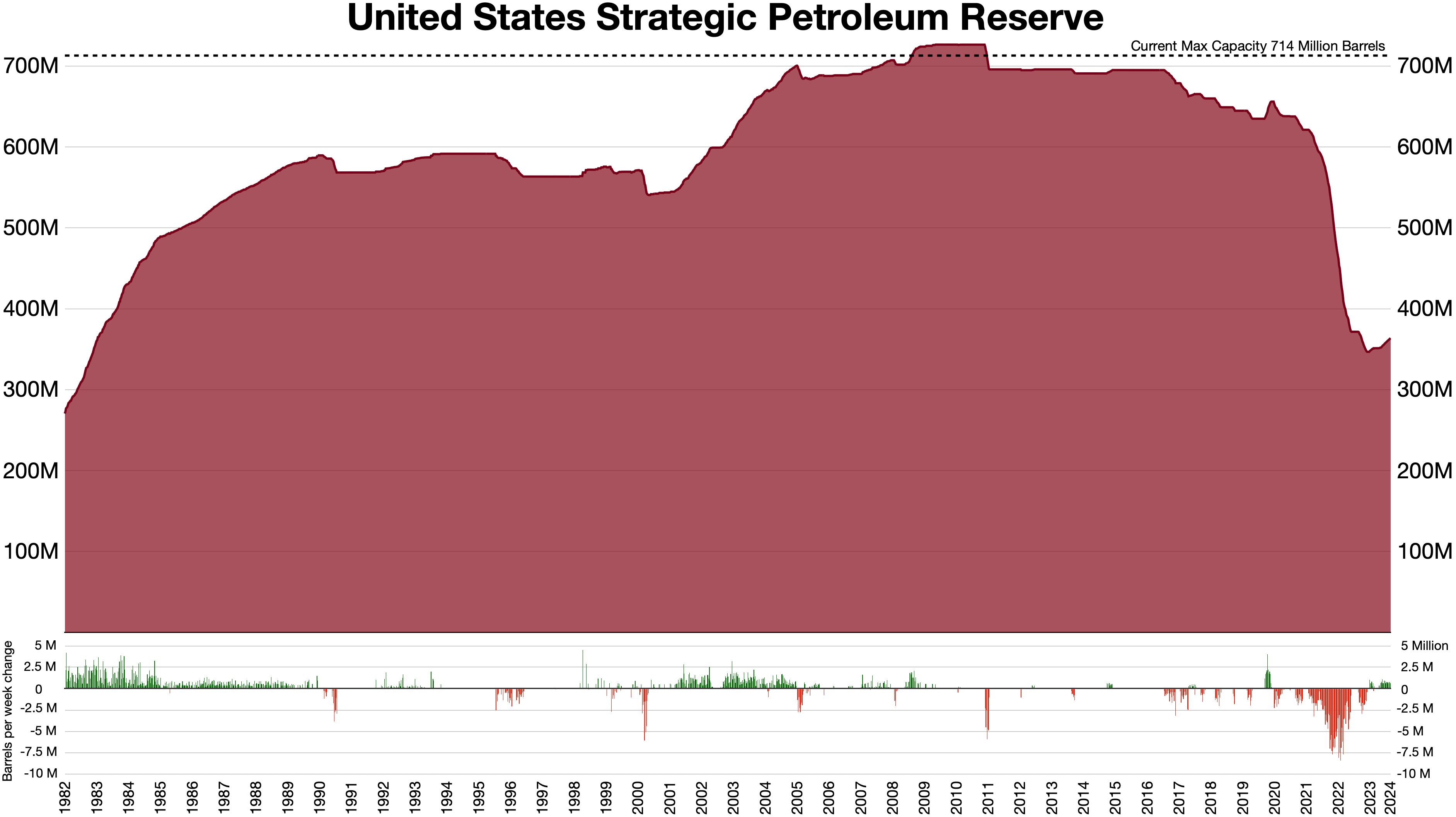
The U.S. Strategic Petroleum Reserve has fallen to its lowest inventory level in 43 years as of June 2026.
This depletion limits the federal government's ability to stabilize domestic energy prices or respond to sudden global supply shocks. Because the reserve serves as a critical buffer against geopolitical instability, these low levels increase the risk of price volatility at the pump.
Data from the U.S. Department of Energy indicates that the reserve holds between 311.4 million [2] and 316.5 million [1] barrels. This represents a 49 percent decline [1] over the last five years. The current levels are the lowest recorded since 1983.
The decline is driven by ongoing emergency releases intended to mitigate the impact of the escalating war with Iran [4]. To date, the government has released 172 million barrels [2] to maintain market stability as conflict in the region threatens oil transit. These releases were designed to offset supply disruptions, but they have left the national stockpile significantly diminished.
In response to the dwindling supply, the U.S. is currently seeking to acquire six million barrels [5] of oil to replenish the SPR. This effort to refill the reserve comes as the U.S. continues to navigate the volatile energy landscape created by the collapse of ceasefires in the Strait of Hormuz [4].
The Strategic Petroleum Reserve is managed by the U.S. Department of Energy across several national facilities. While the reserve is intended for extreme emergencies, the prolonged nature of the current geopolitical crisis has forced a more aggressive drawdown than typically planned for in energy security strategies.
“The U.S. Strategic Petroleum Reserve has fallen to its lowest inventory level in 43 years.”
The depletion of the SPR to levels not seen since the early 1980s signals a narrowing margin of error for U.S. energy security. By utilizing nearly half of the reserve in five years to counter the effects of the Iran conflict, the U.S. has traded long-term stability for short-term price control. Future supply disruptions will now have a more immediate and profound impact on domestic fuel costs because the government has fewer barrels available to flood the market.


