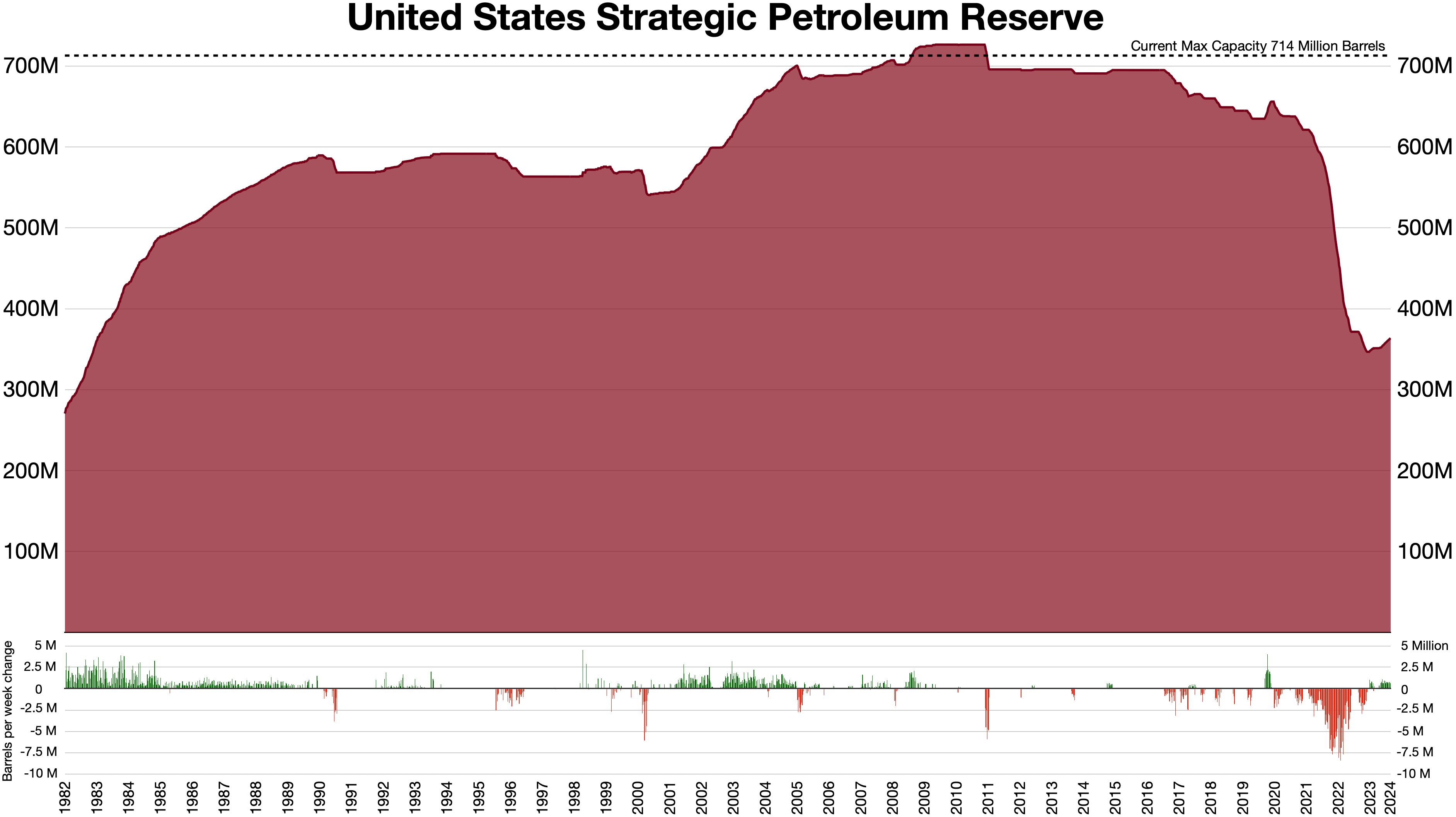
The Trump administration announced the release of 172 million barrels of oil from the U.S. Strategic Petroleum Reserve on March 19, 2026 [1].
This move aims to stabilize global energy markets as geopolitical tensions drive up demand and create price instability. By increasing the immediate supply of crude, the administration seeks to mitigate the economic impact of volatility on consumers and industries.
The oil will be drawn from various Strategic Petroleum Reserve facilities located along the Gulf Coast [1]. This includes two specific sites in Texas, a state that holds half of the nation's total oil reserve [2].
Officials said the release is a response to the current global climate. The decision comes as the administration manages the balance between maintaining a national security buffer of fuel and addressing the immediate needs of the energy market [1].
Strategic releases of this scale are typically used to offset sudden supply disruptions or to lower domestic pump prices during periods of high inflation. The scale of this release — totaling 172 million barrels [1] — reflects the administration's priority to ensure energy availability amid ongoing international friction.
Logistics for the release involve the complex infrastructure of the Gulf Coast network. Because Texas houses such a significant portion of the reserve, the state's facilities remain central to the execution of the federal energy strategy [2].
“The Trump administration announced the release of 172 million barrels of oil”
The decision to release a substantial volume of oil from the Strategic Petroleum Reserve indicates that the U.S. government views current geopolitical instability as a significant threat to energy price stability. While the move can lower short-term costs, it reduces the long-term emergency buffer available for future crises, shifting the national security posture toward immediate economic relief.


