
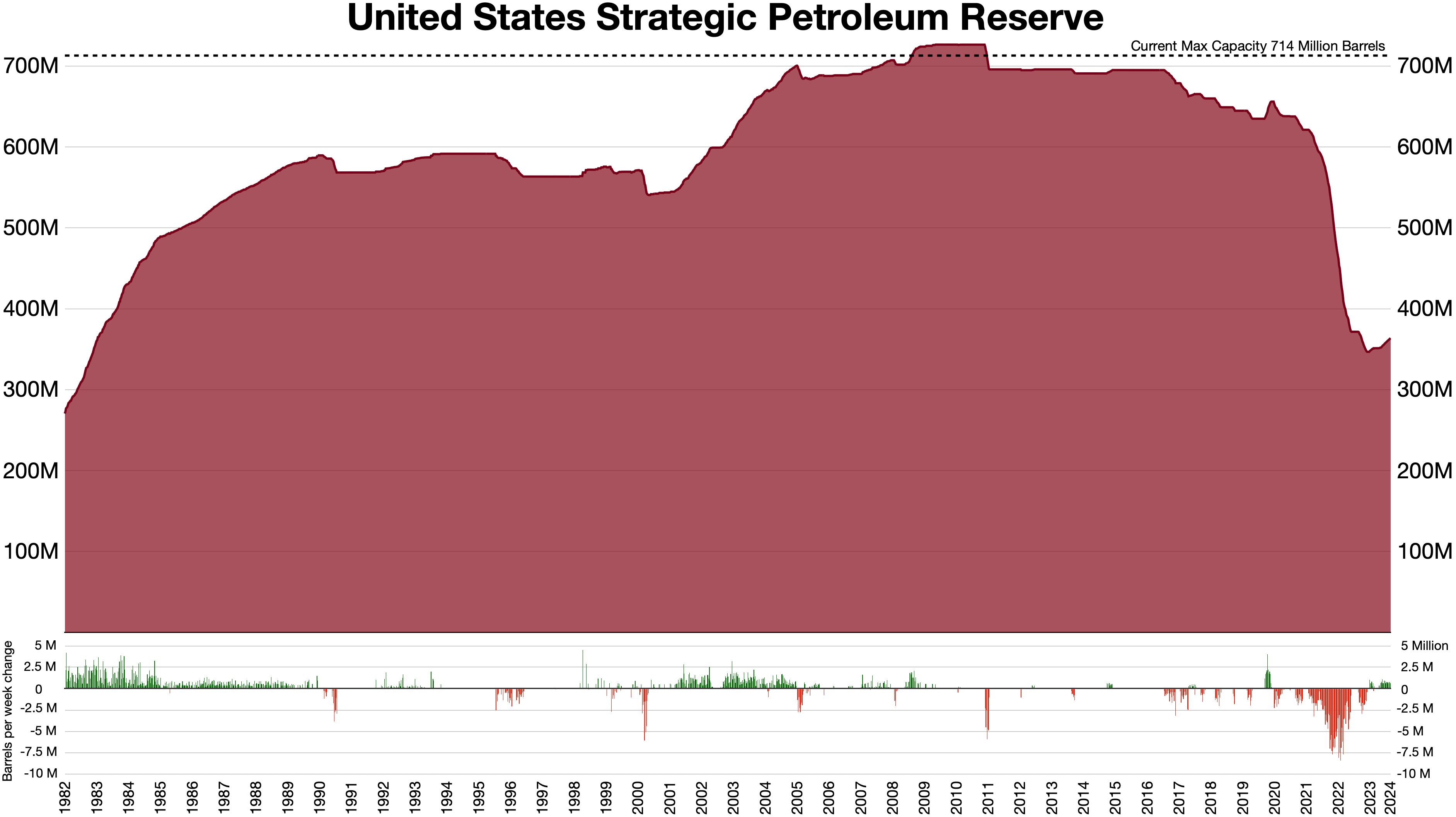
The United States Strategic Petroleum Reserve has fallen to its lowest level in approximately two years [1].
This depletion reduces the capacity of the U.S. government to stabilize domestic fuel prices or respond to sudden global supply disruptions. The reserve serves as a critical insurance policy against geopolitical shocks, and natural disasters that could otherwise trigger price spikes at the pump.
The decline is the result of aggressive releases of oil from the emergency stockpile [2]. Reports indicate these releases were intended to influence political dynamics leading up to the 2022 midterm elections [2]. This strategy aimed to lower energy costs for consumers during a period of high volatility.
While the SPR is designed for emergency use, the scale of the recent withdrawals has left the stockpile significantly diminished. The trend of shrinking reserves has been noted since late 2022 [2]. Current levels reflect the cumulative impact of these releases and the challenges of replenishing the stores during periods of market instability.
Government officials have managed the reserve through various phases of the current energy crisis. However, the current two-year low [1] leaves the U.S. with less flexibility to intervene in the global oil market if further crises emerge. The rapid pace of the shrinkage underscores the tension between using the reserve for short-term economic relief and maintaining long-term national security buffers.
“The United States Strategic Petroleum Reserve has fallen to its lowest level in approximately two years.”
The depletion of the SPR represents a trade-off between immediate political-economic stability and long-term energy security. By utilizing the reserve to dampen price volatility ahead of elections, the U.S. has limited its future ability to counter supply shocks. This leaves the domestic economy more vulnerable to external oil price spikes, as the primary tool for government intervention is now significantly constrained.


