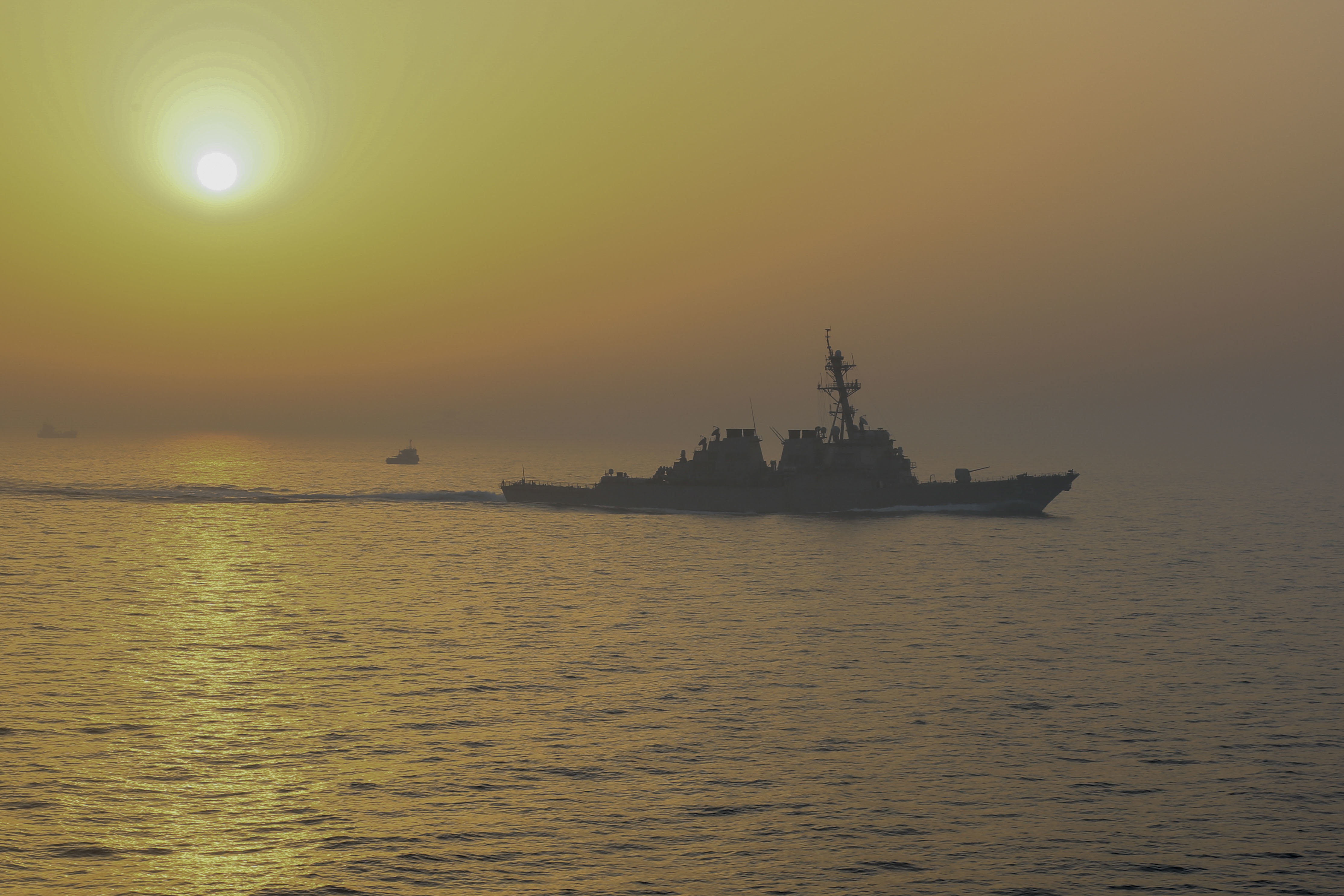
The United States conducted air and naval strikes against 10 [1] Iranian military targets on June 27-28, 2026 [2].
These operations signal a significant escalation in tensions between Washington and Tehran. The strikes target the military infrastructure used to disrupt global trade routes and challenge maritime security in one of the world's most critical chokepoints.
U.S. Central Command coordinated the mission using aircraft carriers stationed in the Persian Gulf and operating over the Strait of Hormuz [3]. The military operation took place overnight, with reports of the strikes emerging on Sunday, June 28 [2].
U.S. officials said the strikes were a response to Iranian aggression against commercial vessels [4]. Specifically, the military said a drone attack on a Panama-flagged ship in the Strait of Hormuz was a primary catalyst for the retaliation [2].
While some reports describe the operation as a broad response to multiple attacks on commercial shipping [4], others focus on the specific drone strike against the Panama-flagged vessel [2]. The U.S. military utilized a combination of air and naval assets to hit the 10 [1] targets located within Iran [1, 3].
The U.S. Navy maintained a presence in the region throughout the operation to ensure the security of the Strait of Hormuz [3]. This waterway is essential for the transport of oil and goods, and any instability there typically results in immediate global economic ripples.
No immediate casualties were confirmed in the initial reports, though the U.S. said the strikes were a necessary measure to deter further interference with international shipping [4].
“The United States conducted air and naval strikes against 10 Iranian military targets”
The U.S. decision to strike targets inside Iranian territory represents a shift from defensive posture to active deterrence. By linking these strikes directly to the safety of commercial shipping and the Panama-flagged vessel, the U.S. is asserting that it will use kinetic force to maintain the freedom of navigation in the Strait of Hormuz, potentially risking a wider regional conflict to protect global energy supply chains.
'%2F%3E%0A%20%20%20%20%3Crect%20width%3D'1600'%20height%3D'900'%20fill%3D'url(%23v)'%2F%3E%0A%20%20%20%20%3Cg%20opacity%3D'0.08'%20fill%3D'%23ffffff'%3E%0A%20%20%20%20%20%20%3Ccircle%20cx%3D'1420'%20cy%3D'180'%20r%3D'220'%2F%3E%0A%20%20%20%20%20%20%3Ccircle%20cx%3D'1500'%20cy%3D'760'%20r%3D'120'%2F%3E%0A%20%20%20%20%3C%2Fg%3E%0A%20%20%20%20%3Cline%20x1%3D'80'%20y1%3D'172'%20x2%3D'220'%20y2%3D'172'%20stroke%3D'%23ffffff'%20stroke-width%3D'3'%20stroke-opacity%3D'0.6'%2F%3E%0A%20%20%20%20%3Ctext%20x%3D'80'%20y%3D'140'%20font-family%3D'Inter%2C%20-apple-system%2C%20Helvetica%2C%20sans-serif'%20font-weight%3D'700'%20font-size%3D'28'%20fill%3D'%23ffffff'%20letter-spacing%3D'6'%3EHANNA%20%C2%B7%20NEWS%3C%2Ftext%3E%0A%20%20%20%20%3Ctext%20x%3D'80'%20y%3D'230'%20font-family%3D'Inter%2C%20-apple-system%2C%20Helvetica%2C%20sans-serif'%20font-weight%3D'600'%20font-size%3D'40'%20fill%3D'%23ffffffb3'%20letter-spacing%3D'4'%3EPOLITICS%3C%2Ftext%3E%0A%20%20%20%20%3Ctext%20x%3D'80'%20y%3D'622'%20font-family%3D'Playfair%20Display%2C%20Georgia%2C%20serif'%20font-weight%3D'800'%20font-size%3D'86'%20fill%3D'%23ffffff'%20letter-spacing%3D'-1'%3EPM%20Modi%20to%20Launch%3C%2Ftext%3E%3Ctext%20x%3D'80'%20y%3D'721'%20font-family%3D'Playfair%20Display%2C%20Georgia%2C%20serif'%20font-weight%3D'800'%20font-size%3D'86'%20fill%3D'%23ffffff'%20letter-spacing%3D'-1'%3EIndia%26apos%3Bs%20First%3C%2Ftext%3E%3Ctext%20x%3D'80'%20y%3D'820'%20font-family%3D'Playfair%20Display%2C%20Georgia%2C%20serif'%20font-weight%3D'800'%20font-size%3D'86'%20fill%3D'%23ffffff'%20letter-spacing%3D'-1'%3EIndigenous%20Hydrogen%20Train%3C%2Ftext%3E%0A%20%20%20%20%3Ctext%20x%3D'80'%20y%3D'870'%20font-family%3D'Inter%2C%20-apple-system%2C%20Helvetica%2C%20sans-serif'%20font-weight%3D'500'%20font-size%3D'22'%20fill%3D'%23ffffff66'%20letter-spacing%3D'2'%3Enews.hanna-ai.com%3C%2Ftext%3E%0A%20%20%3C%2Fsvg%3E)

