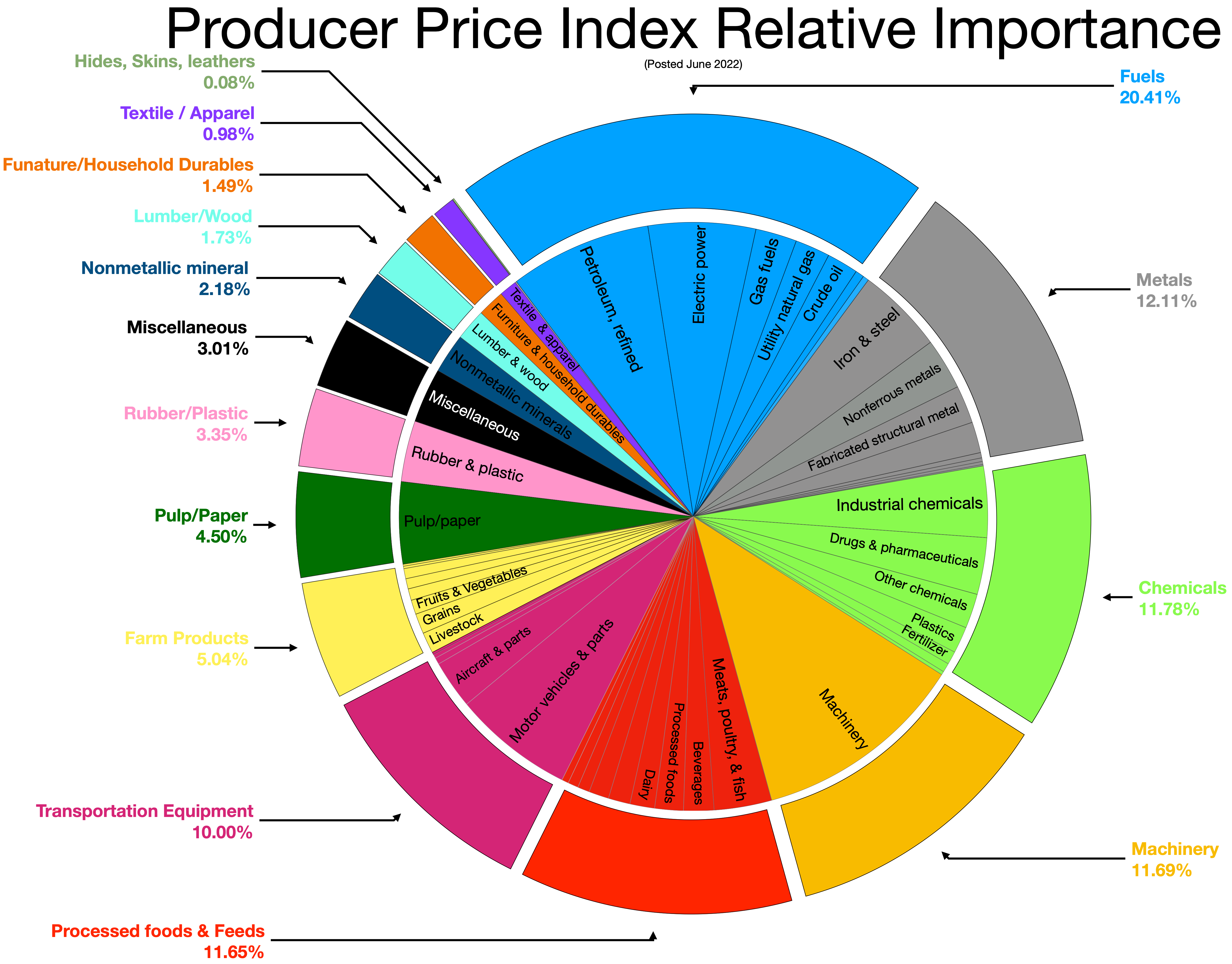
U.S. wholesale prices fell 0.3% in June, according to data released Wednesday [1].
This decline is significant because producer prices often serve as a leading indicator for consumer inflation. When the costs businesses pay for raw materials and energy drop, those savings may eventually reach the general public at the retail level.
The U.S. Bureau of Labor Statistics said the monthly dip was the largest of its kind in 14 months [1]. The primary catalyst for the decrease was a sharp contraction in energy costs, specifically gasoline prices, which fell about 12% during the month [3].
While the monthly figure showed a decline, the broader trend remains elevated. The annual producer price index growth rate for June stood at 5.5% [2]. This indicates that while prices are easing on a month-to-month basis, the overall cost of production is still higher than it was a year ago.
Economists monitor these shifts to determine if inflationary pressures are cooling across the supply chain. The unexpected nature of the June decline suggests that energy volatility continues to play a dominant role in shaping the national economic outlook, a factor that can mask stability or instability in other sectors of the economy.
The report highlights a divergence between current monthly trends and yearly averages. The 0.3% drop [1] represents a sudden shift in momentum, even as the 5.5% annual rate [2] keeps the long-term inflationary picture in focus.
“U.S. wholesale prices fell 0.3% in June”
The unexpected drop in the producer price index suggests that energy price volatility is currently the primary driver of wholesale inflation. While a 0.3% monthly decline is a positive signal for those hoping for lower consumer prices, the 5.5% annual growth rate shows that systemic inflation has not yet fully retreated. This data indicates that the U.S. economy is experiencing a reprieve in energy costs rather than a comprehensive cooling of all production expenses.


