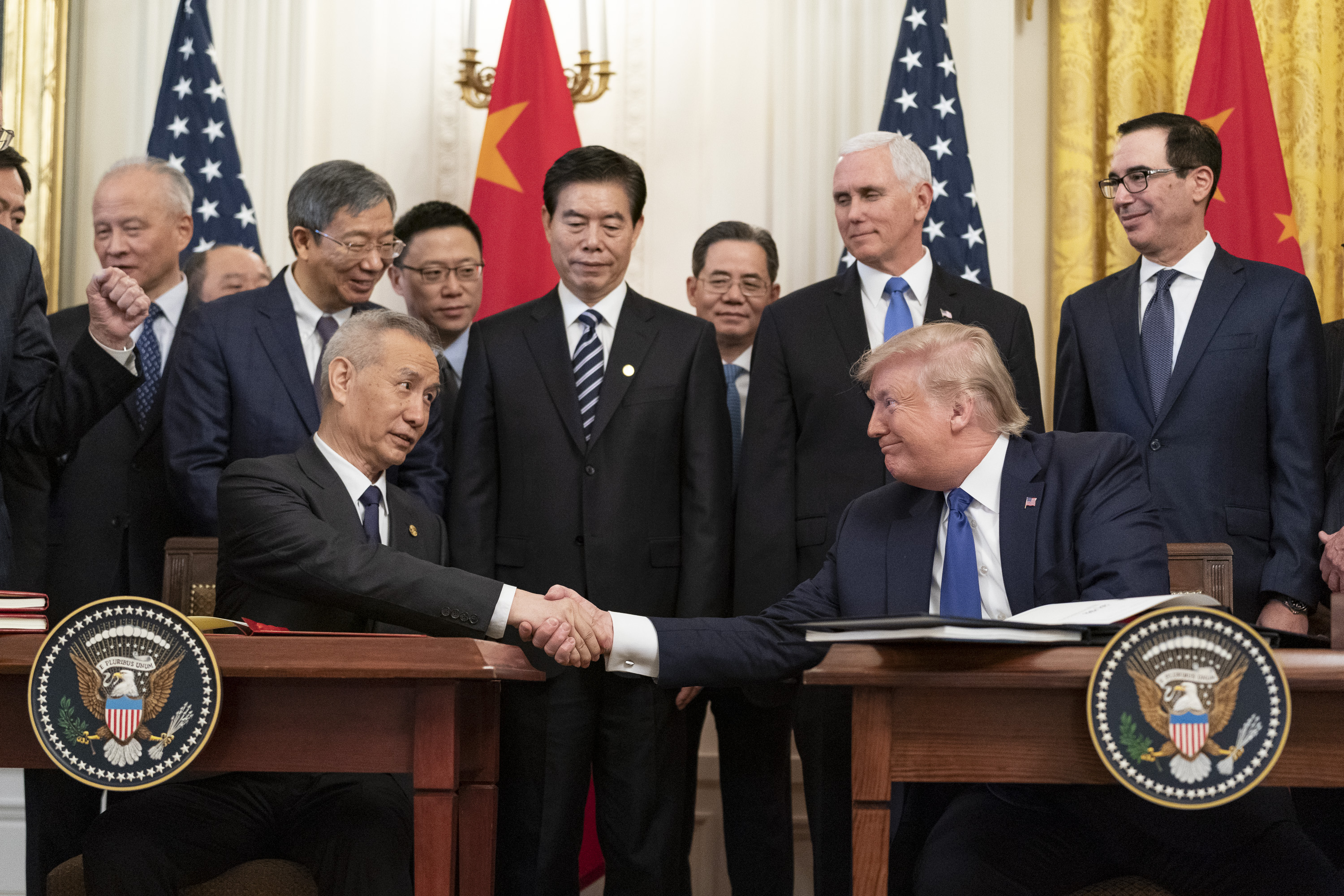
Vice President JD Vance (R-OH) spoke at the White House after President Donald Trump signed a preliminary framework to end the war with Iran [1].
The announcement marks a significant attempt by the administration to resolve a long-standing conflict. However, the deal's effectiveness remains a point of contention among political analysts and critics.
Vance said the agreement is a step toward stability. The White House administration has framed the move as a diplomatic breakthrough aimed at ending hostilities [1].
Jonathan Capehart, a political commentator, challenged the administration's narrative. Capehart said the administration is "trying hard to spin this as a win" [1]. He said the framework is being presented as a political victory rather than a substantive peace agreement [1].
The friction between the administration's presentation and the critics' interpretation highlights the volatile nature of U.S. relations with Iran. While the White House emphasizes the potential for peace, skeptics suggest the framework lacks the depth required for a permanent resolution [1].
Vance's remarks follow a series of diplomatic efforts intended to stabilize regional tensions. The administration continues to maintain that the preliminary framework provides a viable path forward to conclude the war [1].
“"trying hard to spin this as a win"”
The tension between the White House's announcement and the criticism from analysts suggests a gap between the diplomatic reality of the framework and its political presentation. If the deal is perceived as a strategic 'spin' rather than a durable peace, the administration may face challenges in securing long-term congressional or international support for the agreement.


