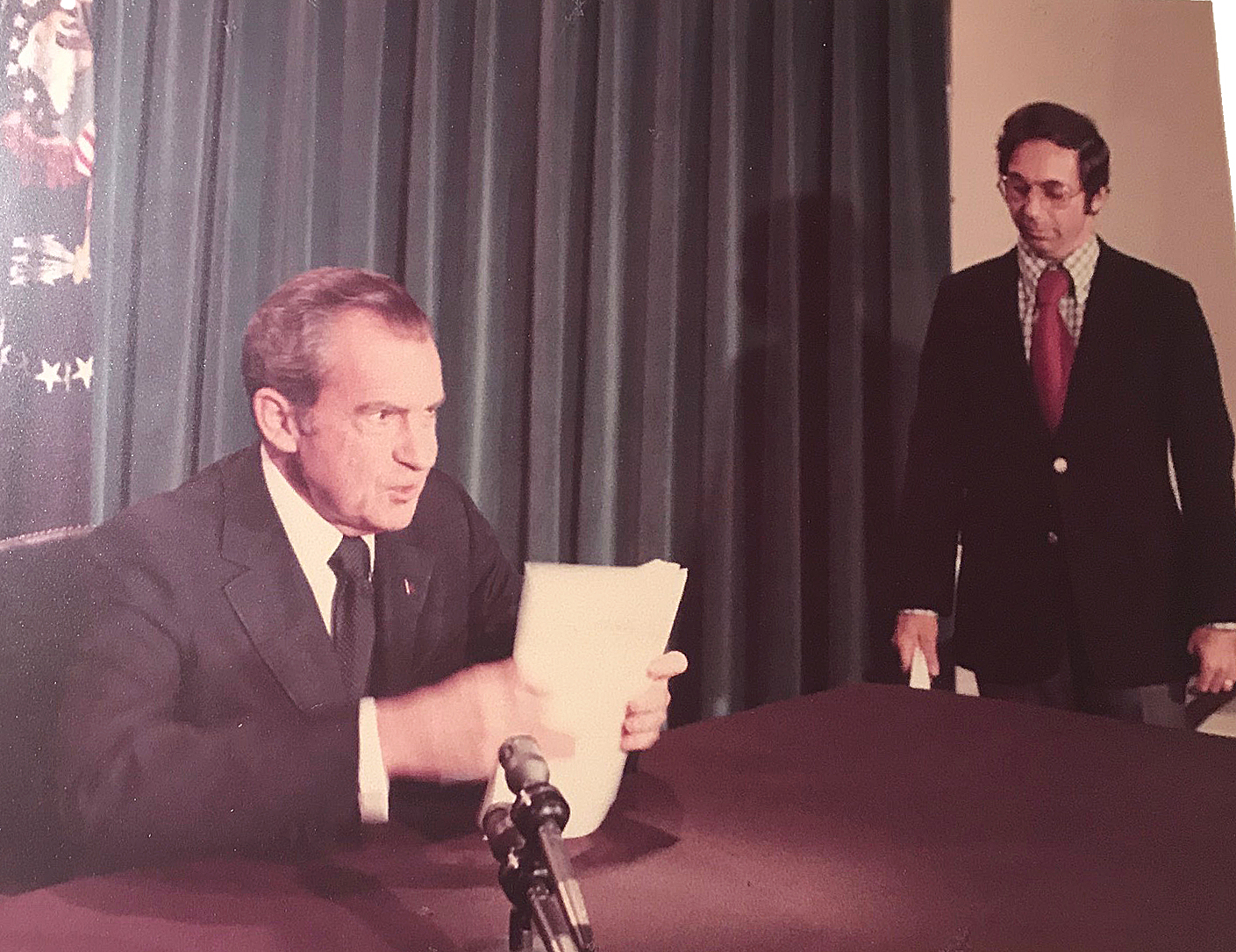
Vice President JD Vance said that the Watergate scandal would only be a 12-hour news story if it occurred today [1].
The comments suggest a shift in how the current administration views historical political scandals and the influence of the modern media cycle on presidential accountability.
Speaking Thursday during a C-SPAN Book TV interview titled "Communion: Finding My Way Back to Faith," Vance drew a comparison between Richard Nixon and Donald Trump [1, 2]. He said that the idea that Watergate would have taken down a presidency is "crazy" [1].
"If Watergate happened tomorrow, it would be a 12-hour news story," Vance said [1]. He said that he believes the historical legacy of Richard Nixon is experiencing a deserved renaissance [3].
Vance said that the speed of current news consumption would diminish the impact of such an event. He said that the scandal, which led to Nixon's resignation in 1974 [1], would not hold the same weight in the present environment.
"I joked…if Watergate happened tomorrow, it would be like a 12-hour news story," Vance said [3].
The Vice President's remarks align with a broader narrative regarding the "deep state" and the perceived weaponization of government institutions against political leaders [1]. By framing the Watergate era as an anomaly, Vance positioned the downfall of the 37th president as a result of specific historical pressures rather than a standard for political conduct.
“"If Watergate happened tomorrow, it would be a 12-hour news story."”
Vance's assertion reflects a belief that the fragmented nature of modern digital media prevents the kind of sustained, singular national focus that defined the Watergate investigation. By characterizing the resignation of a president as 'crazy' by today's standards, he is arguing that the political and media landscape has fundamentally changed, potentially lowering the threshold for what constitutes a presidency-ending scandal.
'%2F%3E%0A%20%20%20%20%3Crect%20width%3D'1600'%20height%3D'900'%20fill%3D'url(%23v)'%2F%3E%0A%20%20%20%20%3Cg%20opacity%3D'0.08'%20fill%3D'%23ffffff'%3E%0A%20%20%20%20%20%20%3Ccircle%20cx%3D'1420'%20cy%3D'180'%20r%3D'220'%2F%3E%0A%20%20%20%20%20%20%3Ccircle%20cx%3D'1500'%20cy%3D'760'%20r%3D'120'%2F%3E%0A%20%20%20%20%3C%2Fg%3E%0A%20%20%20%20%3Cline%20x1%3D'80'%20y1%3D'172'%20x2%3D'220'%20y2%3D'172'%20stroke%3D'%23ffffff'%20stroke-width%3D'3'%20stroke-opacity%3D'0.6'%2F%3E%0A%20%20%20%20%3Ctext%20x%3D'80'%20y%3D'140'%20font-family%3D'Inter%2C%20-apple-system%2C%20Helvetica%2C%20sans-serif'%20font-weight%3D'700'%20font-size%3D'28'%20fill%3D'%23ffffff'%20letter-spacing%3D'6'%3EHANNA%20%C2%B7%20NEWS%3C%2Ftext%3E%0A%20%20%20%20%3Ctext%20x%3D'80'%20y%3D'230'%20font-family%3D'Inter%2C%20-apple-system%2C%20Helvetica%2C%20sans-serif'%20font-weight%3D'600'%20font-size%3D'40'%20fill%3D'%23ffffffb3'%20letter-spacing%3D'4'%3EPOLITICS%3C%2Ftext%3E%0A%20%20%20%20%3Ctext%20x%3D'80'%20y%3D'694'%20font-family%3D'Playfair%20Display%2C%20Georgia%2C%20serif'%20font-weight%3D'800'%20font-size%3D'110'%20fill%3D'%23ffffff'%20letter-spacing%3D'-1'%3EProtester%20Struck%20by%20Car%3C%2Ftext%3E%3Ctext%20x%3D'80'%20y%3D'820'%20font-family%3D'Playfair%20Display%2C%20Georgia%2C%20serif'%20font-weight%3D'800'%20font-size%3D'110'%20fill%3D'%23ffffff'%20letter-spacing%3D'-1'%3EOutside%20Newark%20ICE%20Facility%3C%2Ftext%3E%0A%20%20%20%20%3Ctext%20x%3D'80'%20y%3D'870'%20font-family%3D'Inter%2C%20-apple-system%2C%20Helvetica%2C%20sans-serif'%20font-weight%3D'500'%20font-size%3D'22'%20fill%3D'%23ffffff66'%20letter-spacing%3D'2'%3Enews.hanna-ai.com%3C%2Ftext%3E%0A%20%20%3C%2Fsvg%3E)

