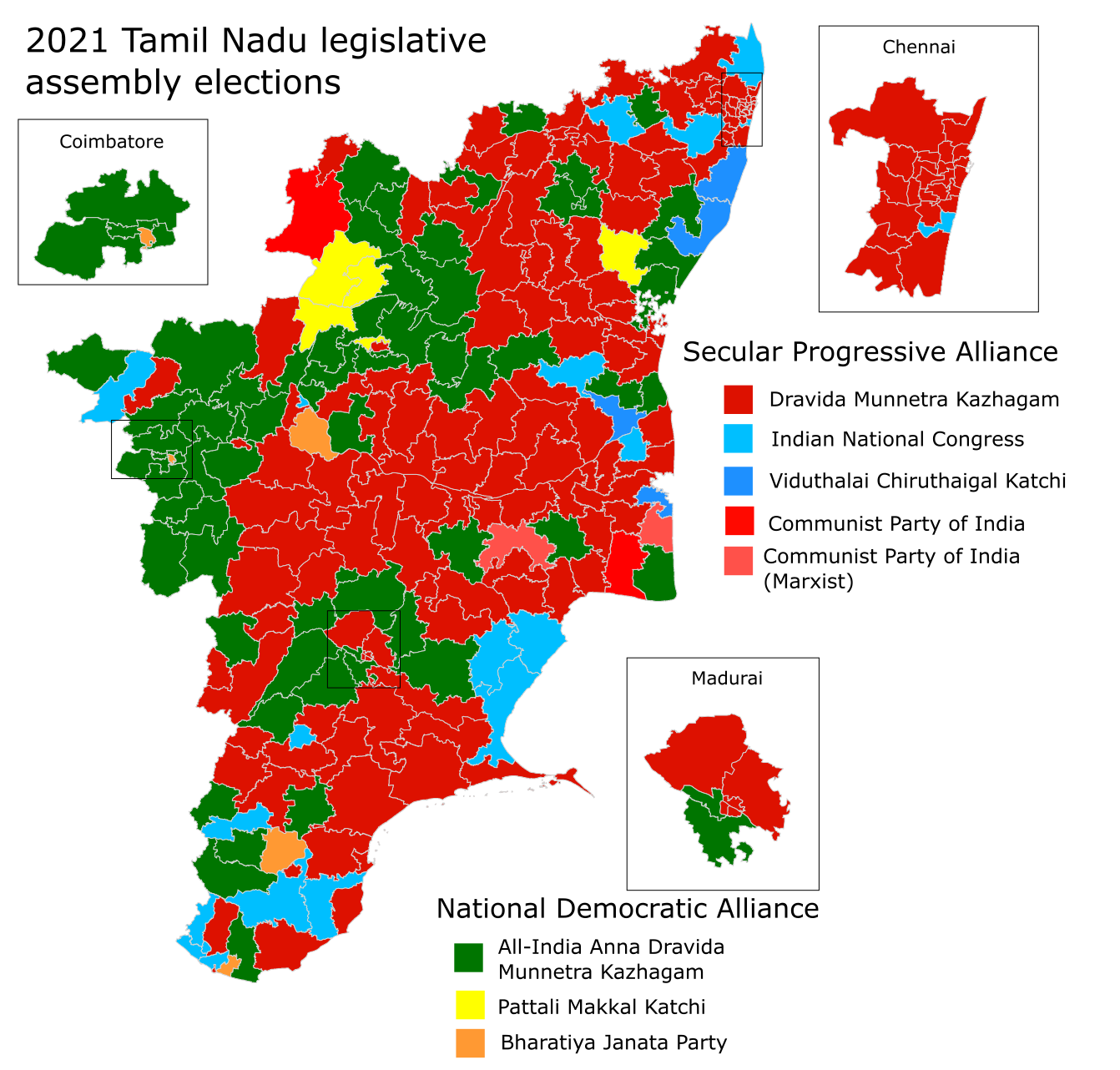
Chief Minister Vijay of the Tamilaga Vettri Kazhagam (TVK) passed a floor test in the Tamil Nadu Legislative Assembly this week [1, 2, 3].
The victory solidifies Vijay's leadership in Chennai and signals a significant shift in the state's political landscape as traditional power blocs fracture.
Vijay's government secured 144 votes during the proceedings [1]. The outcome was facilitated by a walkout from the DMK, which left the assembly in protest [1, 2, 3]. This move reduced the immediate opposition to the floor test and smoothed the path for the TVK government to demonstrate its majority [1, 2, 3].
A split within the AIADMK also played a critical role in the result. A group of rebel MLAs from the AIADMK broke party lines to provide support to Vijay [1, 2, 3]. Reports on the exact number of these rebel supporters vary, with some sources citing around 25 members [1], while others indicate 30 members [2].
Other members of the assembly chose not to participate in the vote. Five MLAs abstained from voting, including four from the PMK and one from the BJP [3].
The floor test was designed to prove that the TVK government holds a legitimate majority following the election [1, 2, 3]. With the DMK's absence and the AIADMK's internal division, the process resulted in an easy win for the chief minister [1, 2, 3].
“Vijay's government secured 144 votes during the proceedings”
The result indicates a volatile period for the AIADMK, where internal dissent is now directly benefiting the TVK government. By securing support from rebel faction members and benefiting from the DMK's strategic walkout, Vijay has established a functional majority, though the reliance on defecting MLAs suggests a complex coalition dynamic moving forward.


