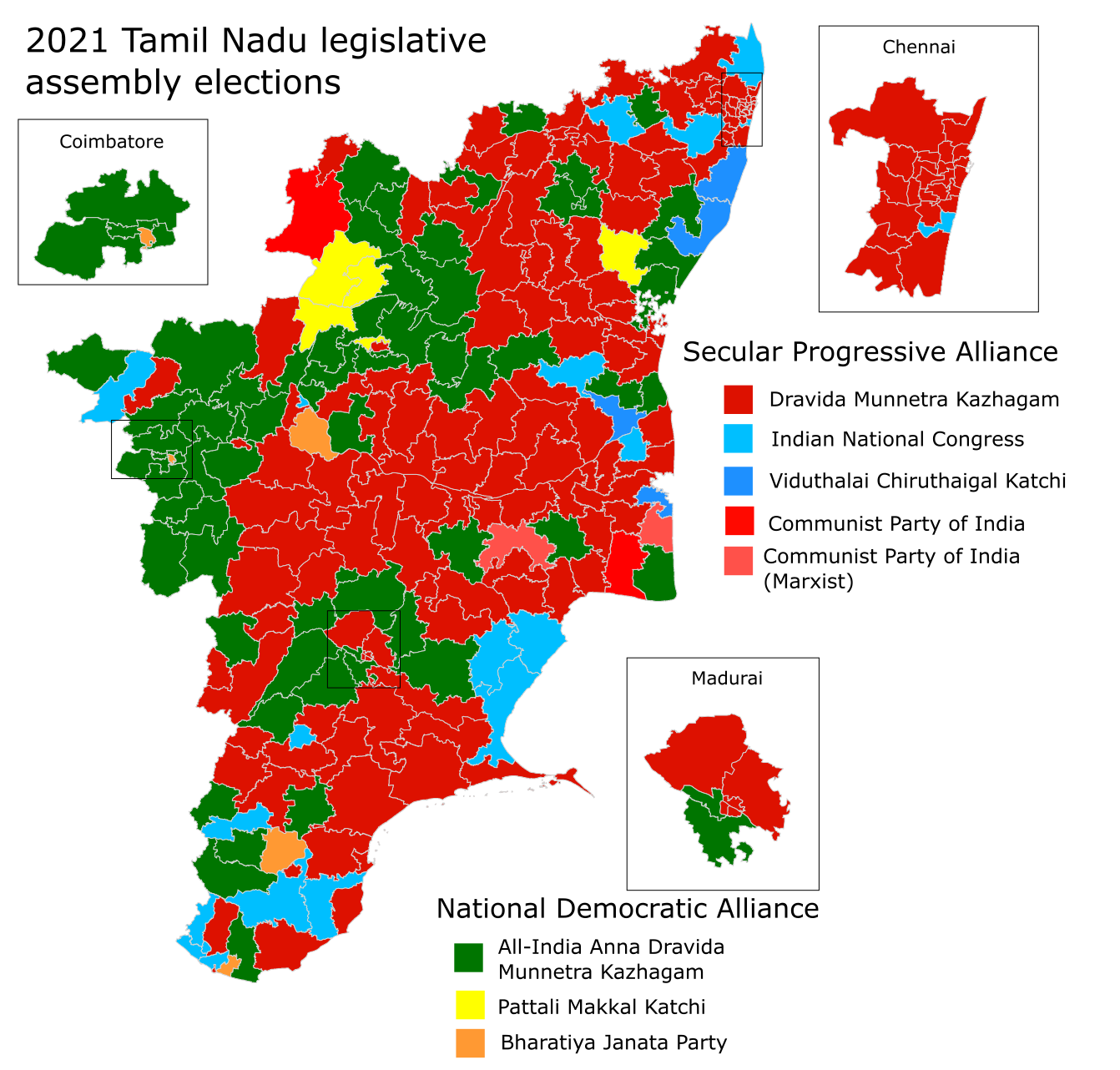
Vijay and his Tamilaga Vettri Kazhagam (TVK) party became the single-largest party in the Tamil Nadu Legislative Assembly election on May 4, 2026 [7].
This result disrupts the long-standing political dominance of established parties in the state. The emergence of TVK as a primary power center reflects a significant shift in voter loyalty and a growing appetite for leadership outside the traditional DMK and AIADMK frameworks.
The TVK secured 31 seats in the assembly [4]. In comparison, the DMK won 14 seats [5], while the AIADMK won eight seats [6].
Vijay personally contested and won two constituencies: Perambur in Chennai and Tiruchirappalli East [1, 2]. In the Tiruchirappalli East seat, he won by a margin of over 20,000 votes [3].
Analysts said the victory is due to a combination of anti-incumbency sentiment against the ruling DMK and strong support from urban voters [8]. The dossier also said that Dalit communities consolidated their support behind the new party, contributing to the TVK's surge [8].
The victory marks a successful transition for Vijay from the film industry into a dominant role in regional governance. The scale of the TVK's win suggests a reconfiguration of the state's political landscape, where a newcomer has successfully captured a broad coalition of urban and marginalized voters.
“TVK won a large share of seats in the 2026 Tamil Nadu Legislative Assembly election, becoming the single‑largest party with 31 seats”
The 2026 election results signal a volatility in Tamil Nadu's political stability. By securing 31 seats, the TVK has not only challenged the DMK's hold on power but has also marginalized the AIADMK. This shift indicates that the electorate is moving toward a third-party alternative, potentially ending the era of bipolar party dominance in the state.


