Superstar Vijay's party, Tamilaga Vettri Kazhagam (TVK), failed to secure the majority needed to form the government in Tamil Nadu following recent elections.
The outcome creates a high-stakes political vacuum in one of India's most influential states. Because the party cannot govern alone, the stability of the regional administration now depends on fragile alliances or potential legal intervention.
TVK secured 107 seats [1], leaving them 11 short of the 118-seat threshold required for a majority [2]. This gap has triggered a period of intense political maneuvering as the party seeks the support of other legislators to bridge the deficit.
The Governor of Tamil Nadu has delayed the swearing-in process. The Governor said that formal proof of legislative support must be provided before Vijay can be sworn in as the head of the government [3].
This demand for documented support has stalled the transition of power and sparked speculation that the crisis may move toward a legal resolution. Political observers said that if negotiations with other parties fail, the dispute could lead to a court challenge [3].
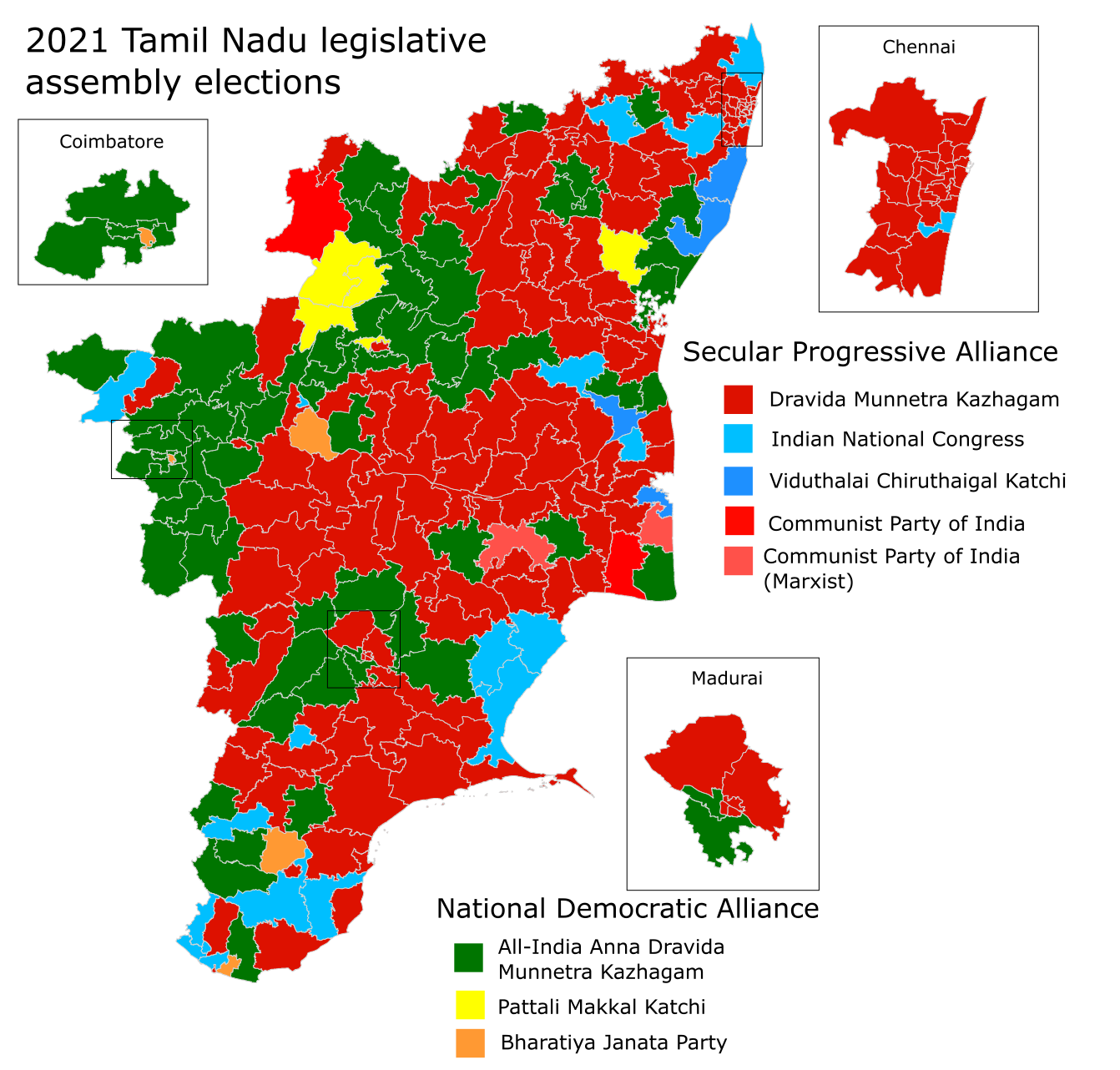
Opposition parties, including the Congress, the Left, VCK, and AIADMK, are now central to the calculations. The ability of TVK to form a coalition depends on whether these groups are willing to partner with the superstar's party to avoid new elections.
Beyond the legislative count, the political landscape is influenced by shifting demographics. The combined share of Christian and Muslim voters in Tamil Nadu is approximately 15% [4], a bloc that remains critical in determining the success of new political entrants in the region.
“TVK secured 107 seats, leaving them 11 short of the 118-seat threshold required for a majority.”
The standoff between TVK and the Governor highlights the tension between electoral performance and the legal requirements of forming a government. By demanding formal proof of support, the Governor is adhering to a strict interpretation of constitutional norms, which prevents a party from claiming power based on projected alliances rather than verified commitments. This delay increases the likelihood of a judicial review to determine the legitimacy of the government-formation process.


