The World Health Organization declared a Public Health Emergency of International Concern on May 17, 2026, due to an Ebola outbreak in Africa [1].
This declaration signals an urgent need for global coordination because the specific strain involved lacks approved medical countermeasures. The rarity of the virus combined with its high lethality poses a significant risk of regional expansion across borders [2].
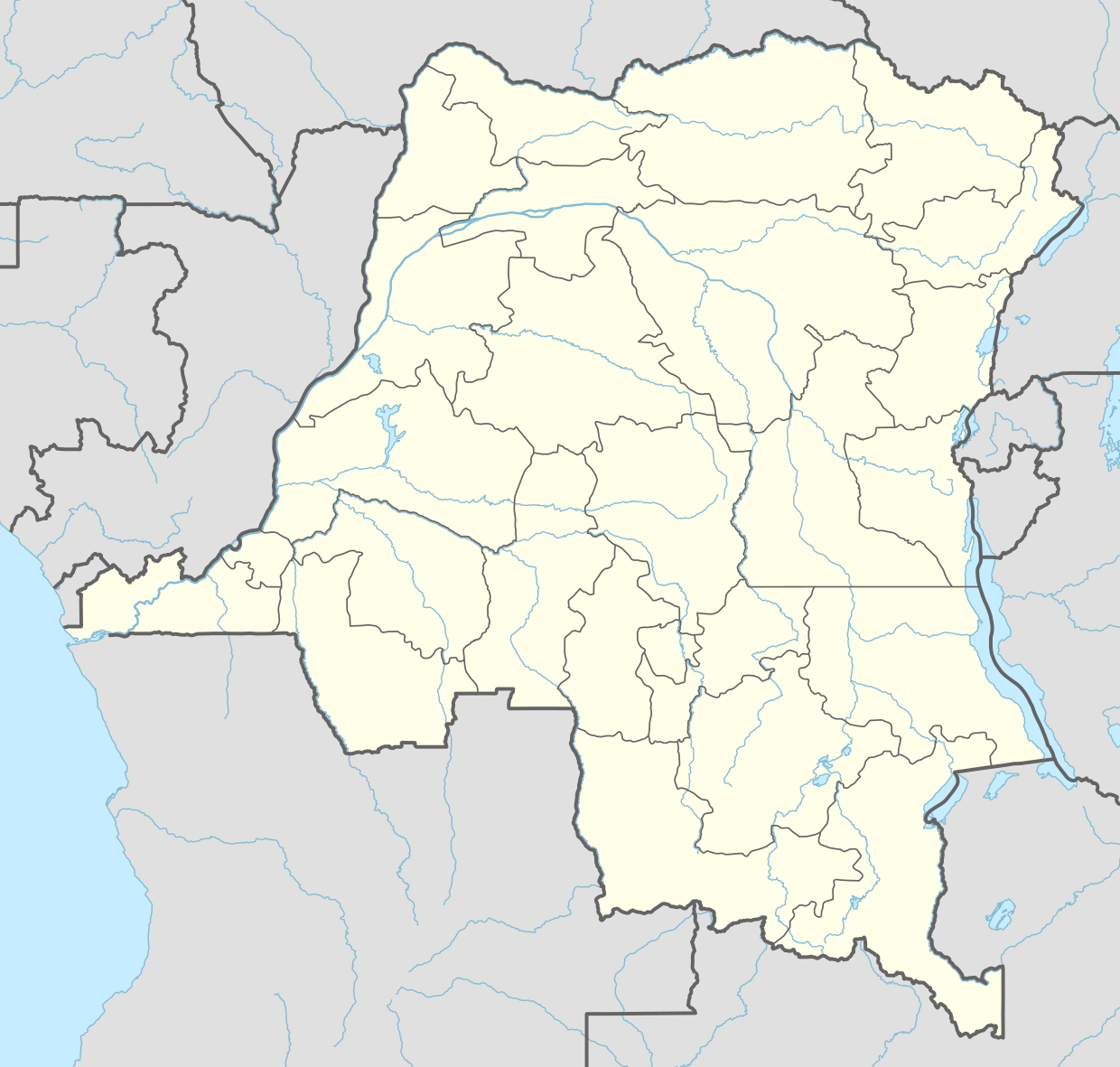
The outbreak involves the Bundibugyo strain of the Ebola virus, affecting both the Democratic Republic of Congo and Uganda [3]. A WHO spokesperson said the disease constitutes an emergency of international importance [4].
Data from the Democratic Republic of Congo indicates a severe toll. Reports on the death toll vary between more than 80 [5] and 88 people [6]. The number of suspected cases in the region is also disputed, with reports ranging from approximately 246 [7] to 336 cases [6].
The lack of pharmaceutical interventions complicates the response. A WHO spokesperson said, "No hay vacuna ni tratamientos aprobados para la cepa" — there are no vaccines or approved treatments for the strain [8].
Health officials are concerned that the current data may not reflect the full scale of the crisis. A WHO spokesperson said the magnitude of the outbreak could be much larger than what has been detected and reported so far [9].
The emergency declaration allows the WHO to coordinate international resources and mobilize funding to contain the virus. Efforts are currently focused on the Democratic Republic of Congo and Uganda to prevent further transmission to neighboring countries [3].
“The magnitude of the outbreak could be much larger than what has been detected and reported so far.”
The declaration of a Public Health Emergency of International Concern (PHEIC) is the WHO's highest alarm level. Because the Bundibugyo strain is rare and lacks a dedicated vaccine, the international community cannot rely on existing Ebola stockpiles used for more common strains. This creates a critical gap in the medical response, making containment and contact tracing the only viable tools to prevent a wider regional epidemic.


