The World Health Organization declared the Ebola outbreak in the Democratic Republic of Congo and Uganda a Public Health Emergency of International Concern on Sunday, May 17, 2026 [1, 2].
This designation triggers an international emergency response to contain a virus strain that currently has no known vaccine [4]. The lack of preventative medicine increases the risk of rapid transmission across borders in Central Africa.
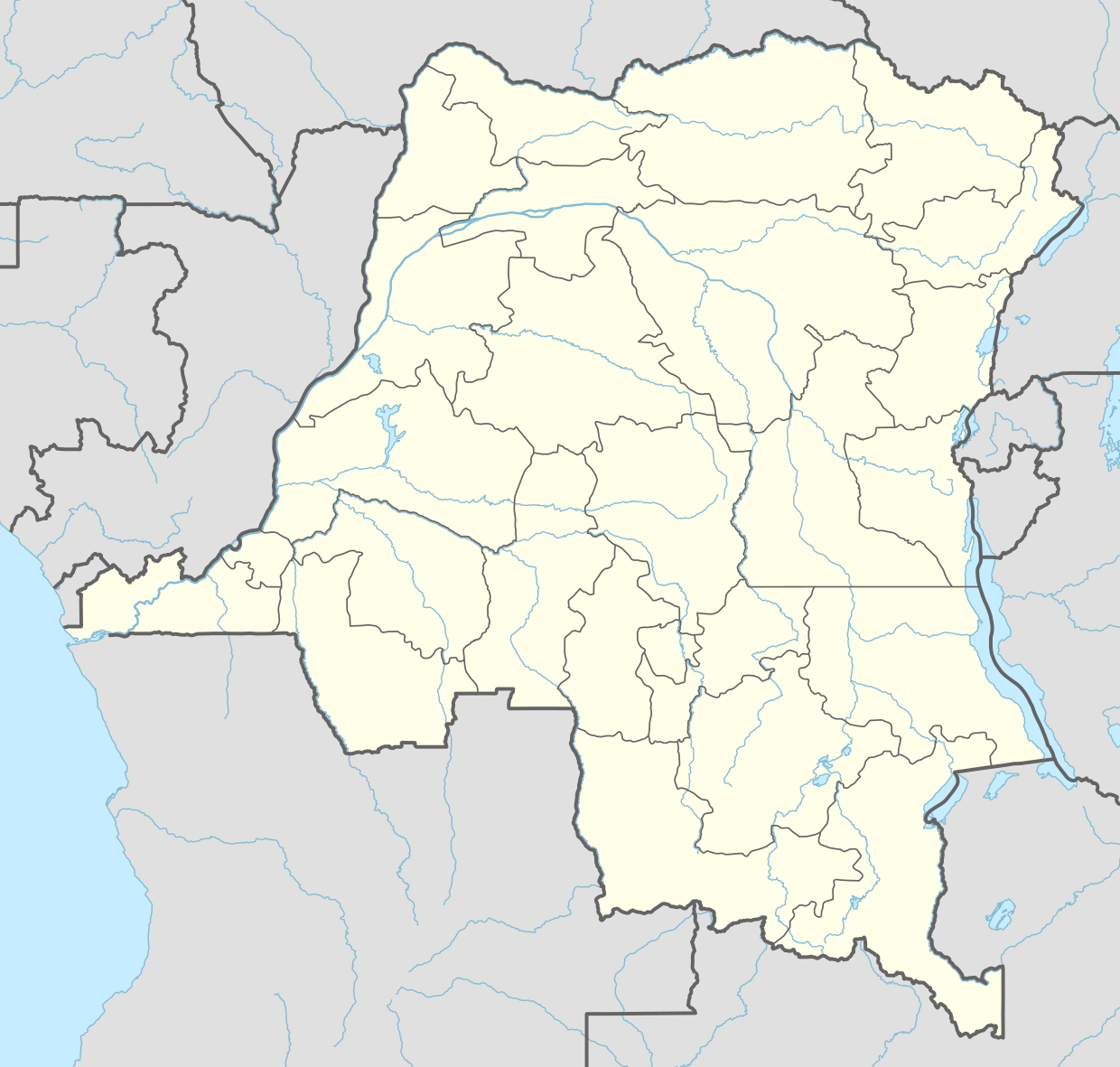
The outbreak is centered in the Ituri province of the Democratic Republic of Congo [3]. While some reports focus on the DRC, other accounts confirm the virus has also reached Uganda [1, 2].
Health officials have recorded 246 suspected cases of the disease [3]. The outbreak has already resulted in 65 deaths [3].
Because the strain is new, the WHO is coordinating with regional governments to implement containment protocols. These measures typically include contact tracing, and the establishment of isolation centers to prevent further community spread.
The emergency declaration allows the WHO to coordinate international resources and request specialized medical personnel. It also streamlines the movement of supplies into the affected regions of the DRC and Uganda [1, 2].
“The virus strain has no known vaccine.”
The declaration of a Public Health Emergency of International Concern (PHEIC) is the WHO's highest alert level. Because this specific strain lacks a vaccine, the global health community cannot rely on previous immunization strategies used in past Ebola outbreaks. This forces a reliance on non-pharmaceutical interventions and urgent vaccine development, increasing the pressure on the fragile healthcare infrastructures of the DRC and Uganda.


