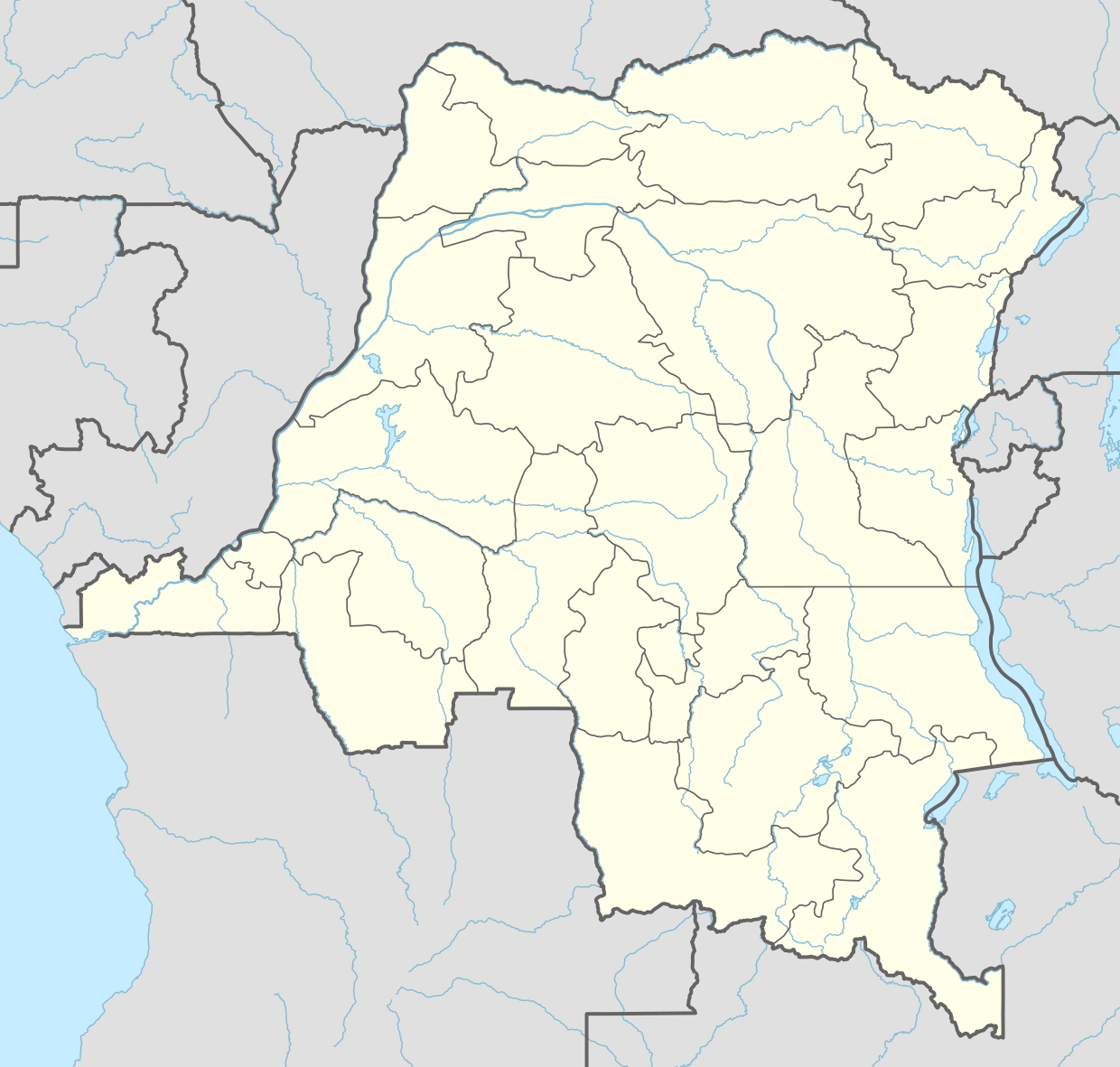
The World Health Organization declared a Public Health Emergency of International Concern on May 16, 2024 [1], following an Ebola outbreak in Africa.
This designation triggers international coordination and resource mobilization to prevent the virus from crossing borders and causing a wider regional epidemic. The outbreak is centered in the north-east Democratic Republic of Congo, but health officials said there is a significant risk that the virus will spread into neighboring Uganda [1].
According to the WHO, the current outbreak is caused by the Bundibugyo strain of Ebola [1]. This specific strain has been circulating for several weeks, creating a window of transmission that officials are now racing to close [1]. The declaration of a Public Health Emergency of International Concern is the highest alert level used by the organization to signal that a health event requires an immediate, coordinated international response.
Health teams are focusing their efforts on the north-east region of the Democratic Republic of Congo to contain the spread [1]. The proximity of the affected areas to the Ugandan border has increased the urgency of the response, as the Bundibugyo strain has historically posed challenges in containment within the region [1].
While the WHO has not yet released a specific case count in this emergency declaration, the organization said that the circulation of the virus for several weeks necessitated the formal alert [1]. The move aims to secure funding and technical support for surveillance, and vaccination efforts in the impacted zones [1].
“The World Health Organization declared a Public Health Emergency of International Concern on May 16, 2024”
The PHEIC designation indicates that the WHO views the Bundibugyo strain as a systemic threat rather than a localized cluster. Because the virus is active near the DRC-Uganda border, the international community must prioritize cross-border surveillance to prevent the outbreak from becoming a multi-country crisis.


