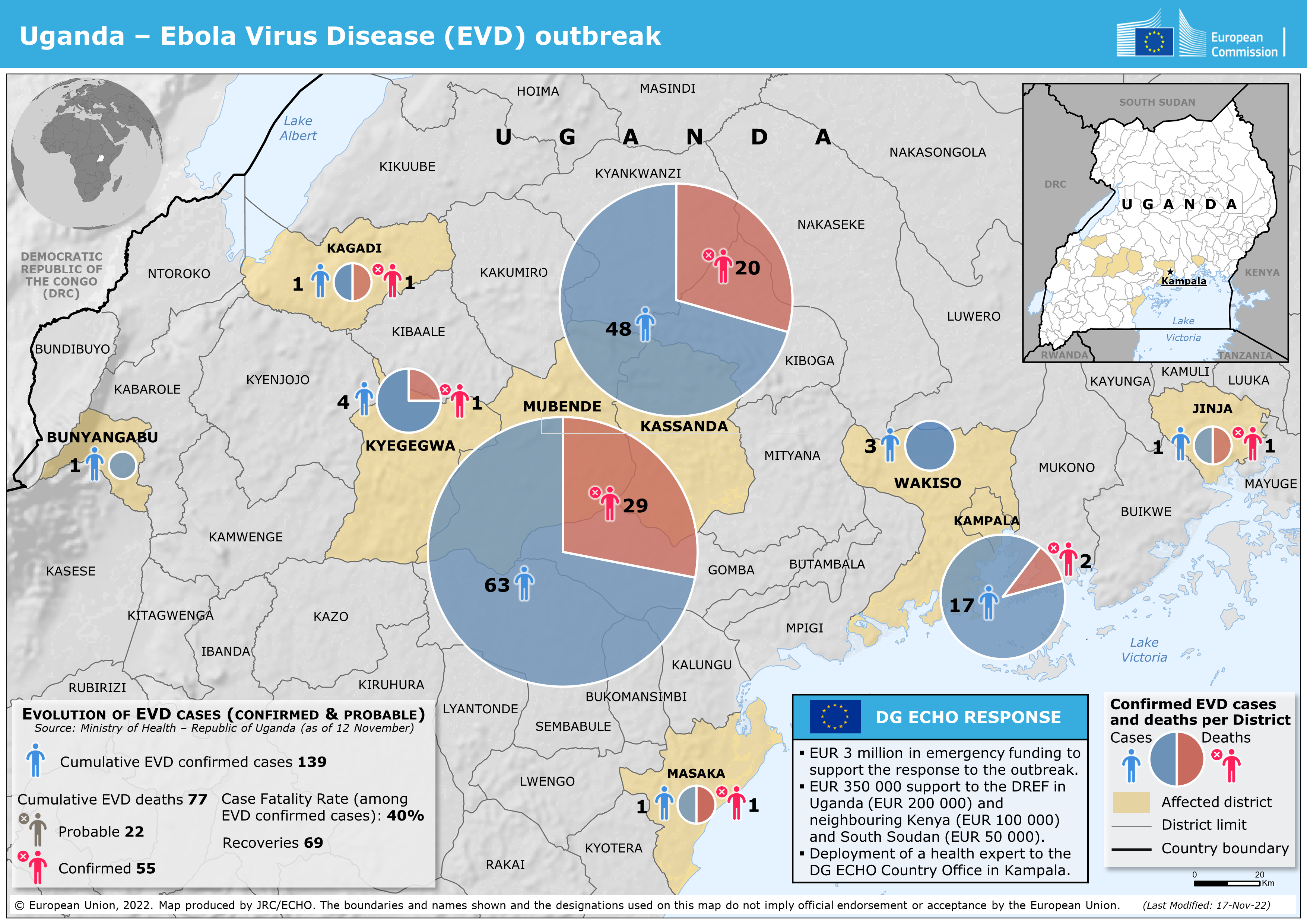
World Health Organization Director-General Tedros Adhanom Ghebreyesus said the Ebola outbreak in the Democratic Republic of Congo and Uganda is larger than confirmed cases.
The scale of the outbreak threatens to become a prolonged crisis because the virus is spreading rapidly in conflict-affected and hard-to-reach areas. This geographic spread increases the risk of cross-border transmission between the two neighboring nations.
Tedros said the scale and speed of the deadly outbreak "warrants serious concern." While confirmed numbers are lower, the actual impact on the ground is higher due to the difficulty of testing and tracking in unstable regions.
"Beyond the confirmed cases, there are almost 600 suspected cases and 139 suspected deaths," Tedros said [1].
The WHO is monitoring the situation closely to prevent further escalation. The high number of suspected infections, approximately 600 [1], suggests that the virus is circulating more widely than official laboratory results indicate. The death toll among suspected cases has reached approximately 139 [1].
International health agencies are tracking the movement of the virus to determine if further restrictions are necessary. However, some nations are not yet implementing drastic measures. The Public Health Agency of Canada said it is monitoring the severe Ebola outbreak but is not implementing a travel ban [3].
Efforts to contain the virus are complicated by the security situation in the Democratic Republic of Congo. Conflict in these regions often prevents health workers from reaching infected populations, which allows the virus to spread undetected for longer periods.
“The scale and speed of the deadly Ebola outbreak in the Democratic Republic of Congo and Uganda "warrants serious concern."”
The discrepancy between confirmed and suspected cases highlights a critical gap in surveillance and healthcare infrastructure in conflict zones. When outbreaks occur in hard-to-reach areas, the lag in confirmed data often masks the true trajectory of the disease, making containment efforts reactive rather than proactive. The potential for cross-border transmission between the DRC and Uganda complicates the regional response and necessitates coordinated international health diplomacy to prevent a wider epidemic.


